Sewage backup in Grand Rapids: clean it up safely and protect your claim
A sewage backup is two problems at once. There is the basement itself, which is now a health hazard and needs a proper biohazard cleanup. And there is the money: if you believe the city's sewer caused it, Grand Rapids gives you just 45 days to file a written claim. We handle the cleanup and give you the photos and paperwork both claims depend on. Our shop in Walker is about 10 minutes away.
Call or text (616) 822-1978, day or night.
Grand Rapids, MI at a glance
Restoration is a local trade. The age of the housing, the watershed, the sewer infrastructure, the lakeshore proximity — they all change how a job is scoped. Here is what shapes the work in Grand Rapids.
198,917 residents (city, Kent County). Approximately 10 minutes from our Walker, MI shop.
Grand Rapids Public Schools. We respond to losses across every attendance area in the district.
- Corewell Health (Spectrum) Butterworth Hospital
- Van Andel Institute
- Frederik Meijer Gardens
- Calvin University
- Heritage Hill
- East Hills
- Eastown
- Creston
- West Side
- Alger Heights
ZIP codes: 49503, 49504, 49505, 49506, 49507, 49508, 49525, 49546
Where Grand Rapids backups come from
Most basement backups start in one of two places, and which one it is decides who pays.
- Your own sewer line. The pipe that runs from your house to the city main is called the lateral, and it is the owner's responsibility. In older neighborhoods many are clay or cast iron, and tree roots, kitchen grease and "flushable" wipes clog them. A lateral blockage tends to back up when you run water inside the house, even on a dry day.
- The city main, during a storm. When heavy rain overloads the sewer under your street, sewage can push back up through the lowest drain in the house, usually a basement floor drain. The city's sewer separation work, finished in 2015, stopped sewage overflowing into the Grand River, but a hard storm can still overwhelm a local line.

The 45-day rule for claims against the City of Grand Rapids
Sewer backup claims against a Michigan city follow a state law, Public Act 222 of 2001. The City of Grand Rapids' own claims policy sets out what that means for you:
- File in writing within 45 days of discovering the backup. Claims filed after 45 days are not entitled to compensation, no matter how strong they are.
- Include your name, address and phone number, the address of the damaged property, the date you discovered the damage and a short description of what happened.
- Send it to the city's Risk Management office at 300 Monroe Ave NW, or email [email protected]. Questions go to (616) 456-4670.
Be realistic about the result. For the city to pay your full damages, the law requires you to show that its sewer had a defect, that the city knew or should have known about it, that it did not fix it in a reasonable time, and that the defect was a substantial cause of your damage. A backup caused by a blockage in your own lateral, or by a sump pump, gutter or downspout connected to the sewer, does not qualify.
The city also has a hardship program that can pay up to $1,000 when a backup was caused by a blockage in the city's main. It is paid at the city's discretion, once per property per backup, and you have to sign a full release of any further claim to receive it.
How we help: before anything is removed, we photograph the water line and the damage, log the date and time, and later give you a written scope and itemized estimate. That record is what a claim to the city or to your insurer depends on.
Your homeowners policy probably excludes this
A standard homeowners policy does not cover water that backs up through sewers or drains, and flood insurance does not cover it either. The coverage comes from an add-on, usually called a water backup or sewer backup endorsement, and it often has its own dollar limit. Check your declarations page. The City of Grand Rapids itself strongly encourages residents to carry this coverage. If you have it, we bill most major insurers directly.
How we clean up sewage safely
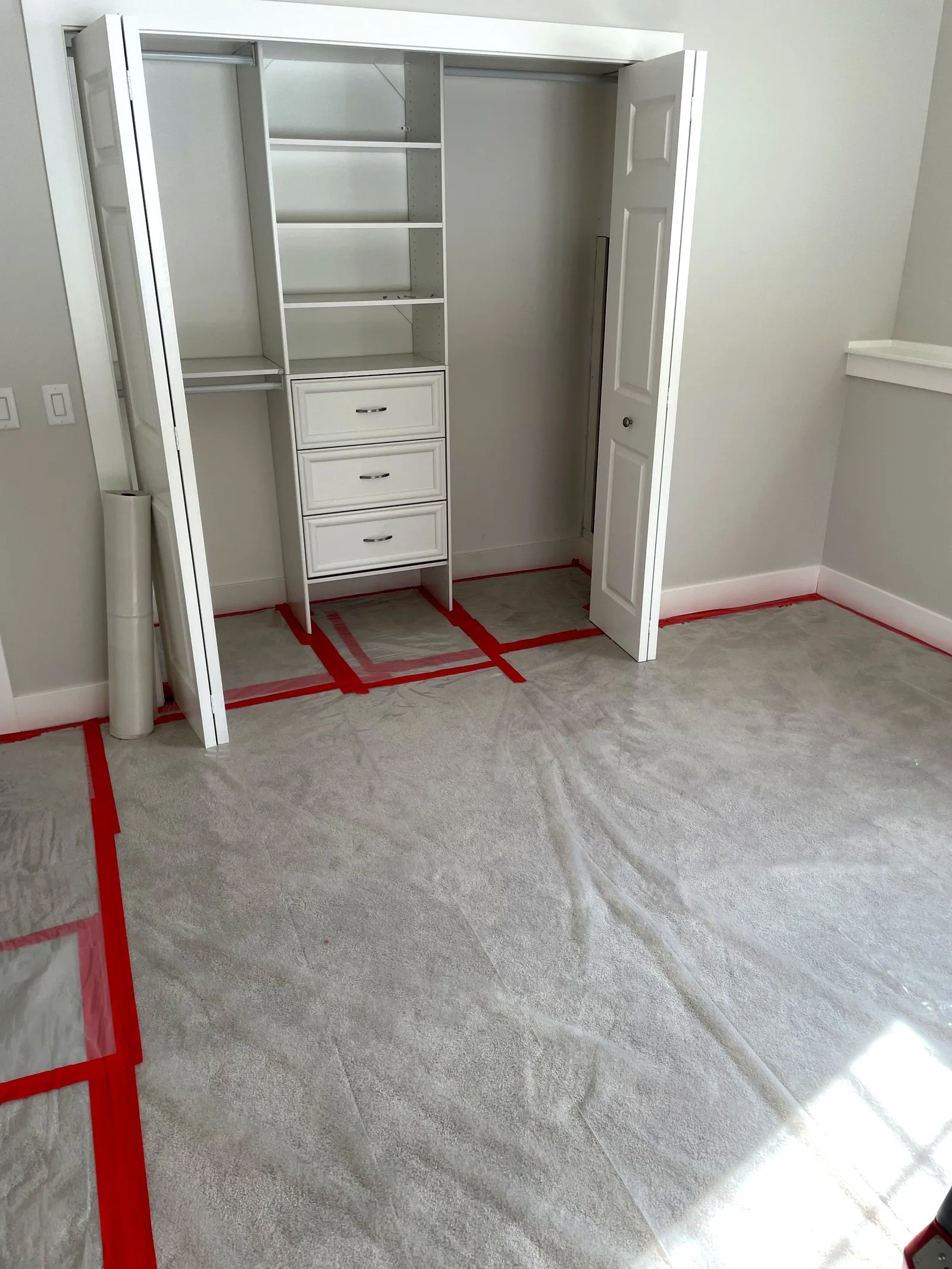
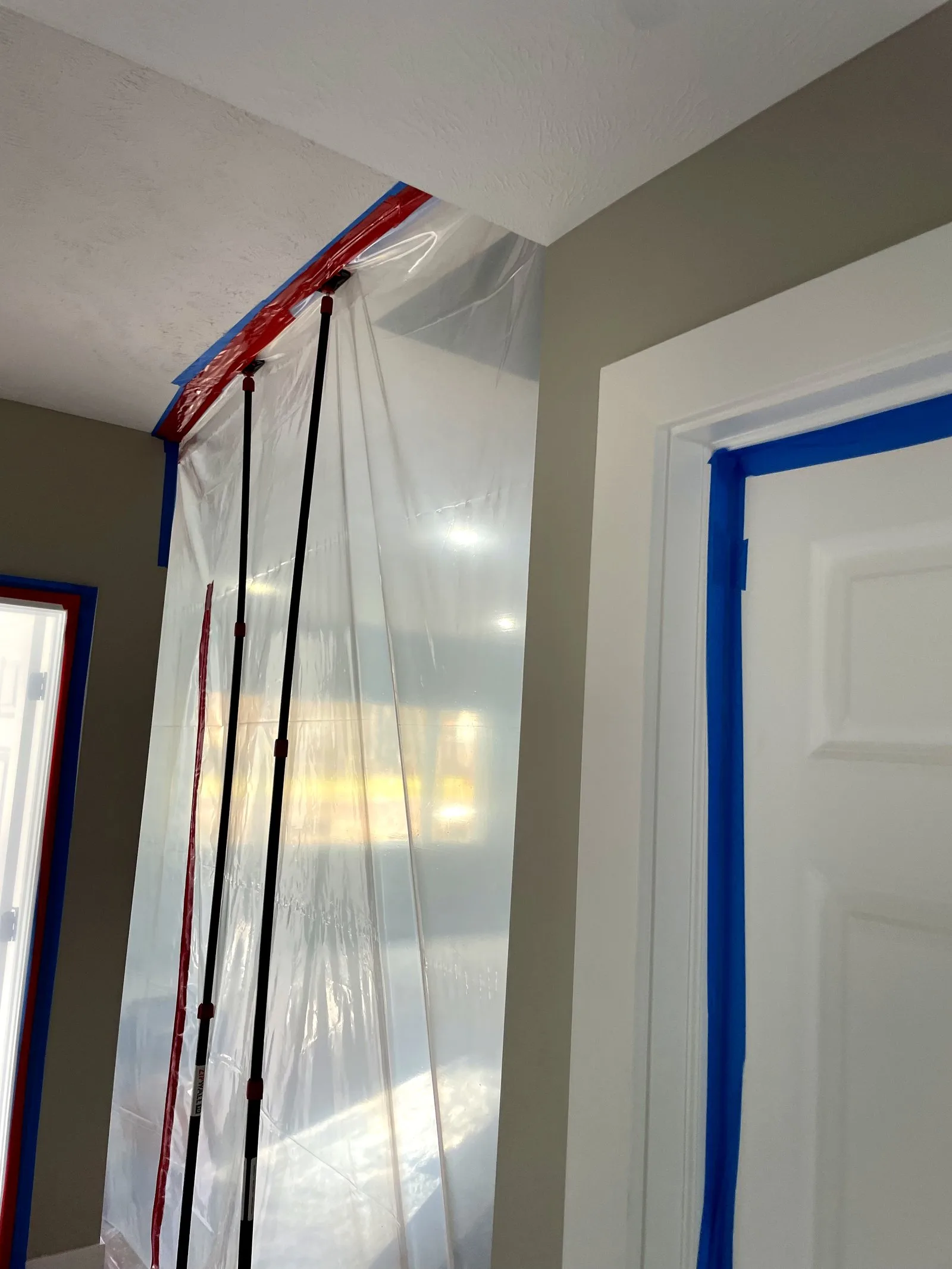
- Seal off the area. Our crew wears respirators, protective suits, gloves and boots. Plastic barriers and HEPA-filtered air machines keep contaminated air out of the rest of the house.
- Pump out the water and solids with truck-mounted extraction, and bag waste for proper disposal.
- Remove what cannot be saved. Under the industry standard for water damage (IICRC S500), sewage is Category 3 water. Carpet and pad, and drywall and insulation it soaked into, are removed rather than cleaned.
- Clean and disinfect what stays. Concrete, framing and other hard surfaces are scrubbed and treated with EPA-registered disinfectants.
- Dry to measured readings, logged every day, so mold does not follow the sewage.
- Test before you move back in. Independent lab samples confirm the area is clean.
- Rebuild under our Michigan Residential Builder's License.
What sewage cleanup costs
- A contained backup in one room: $3,500 to $9,500.
- A finished basement: $8,500 to $25,000 or more, mostly because carpet, drywall and insulation have to come out.
The biggest factors are how much of the basement was finished and how long the sewage sat before cleanup started. Our pricing guide has the details.
Stop the next one
- Backwater valve. It lets water leave the house but closes when sewage tries to come back in. City of Grand Rapids policy offers to pay up to 100 percent of the city's contract price for a backwater valve, a sump pump or disconnecting footing drains from the sewer, for properties that had a backup from an overloaded city sewer in the past ten years. The work is done by a contractor the city hires, first come, first served. Call 311 or (616) 456-3000 to ask whether your home qualifies.
- Have the lateral camera-inspected if the backup started when you ran water on a dry day. Roots and cracked pipe show up clearly on camera.
- Keep grease and wipes out of the drains, including the ones labeled flushable.
Sewage cleanup in every Grand Rapids neighborhood
We work across the city, including Ottawa Hills, Eastown, Alger Heights, Garfield Park, Belknap Lookout, the John Ball Park area and the rest of the West Side. East Grand Rapids is a separate city with its own page: sewage cleanup in East Grand Rapids. If clean water flooded your basement instead, see our Grand Rapids water damage page.
Family-owned since 1981, IICRC certified, and rated 4.6 out of 5 across 32 Google reviews.
Sewage Cleanup questions — Grand Rapids, MI
The city sewer backed up into my Grand Rapids basement. Will the city pay?
Possibly, but you must file a written claim with the city within 45 days of finding the backup, or you lose the right to compensation. Send it to Risk Management at 300 Monroe Ave NW or [email protected]. To be paid in full you have to show the city's sewer was defective and the city failed to fix it in time. The city can also pay up to $1,000 through a hardship program when its main was blocked.
Does homeowners insurance cover sewage backup in Michigan?
Not a standard policy. Sewer and drain backup is covered only if you added a water backup or sewer backup endorsement, and that endorsement usually has its own limit. Flood insurance does not cover it either. Check your declarations page, and if you have the coverage, we bill your insurer directly.
Can I clean up a sewage backup myself?
A very small amount on bare concrete can sometimes be handled with gloves, boots, a mask and a proper disinfectant. Once sewage reaches carpet, drywall, insulation or a finished basement, it needs professional removal. Those materials soak up bacteria and cannot be made safe by cleaning, and the industry standard calls for removing them.
How do I stop sewage from backing up again?
Find out where it came from first. If it backed up when you ran water on a dry day, have your sewer lateral camera-inspected for roots or a break. If it came up during a storm, a backwater valve is the main fix. The City of Grand Rapids has a program that can pay for a backwater valve or sump pump for homes with a recent backup from an overloaded city sewer. Call 311 to ask.