Water damage can happen without warning. A burst pipe at 2 AM, an appliance failure while you're at work, a basement flood during a spring storm. Every hour that passes allows water to migrate further, weakens structural materials, and raises the risk of mold growth beginning within 24-48 hours.
We're family-owned, IICRC-certified, and based in Walker, MI, 5 minutes from downtown Grand Rapids. We show up across West Michigan 24/7/365 with under-60-minute dispatch. We run the same Phoenix commercial drying equipment the big national chains run, but you're not dealing with a call center, you're dealing with Ryan and a crew he trained himself.
Why response speed matters
The IICRC S500 standard documents how water damage severity escalates over time. In the first few hours, water-saturated materials can often be dried in place. After 24 hours, category escalation begins. Clean water becomes contaminated, and soft materials like drywall and insulation may need to be removed. After 48 hours, mold colonization is a near-certainty in warm, wet environments. Our goal is to be on-site before the clock runs out.
Our 6-step water damage restoration process
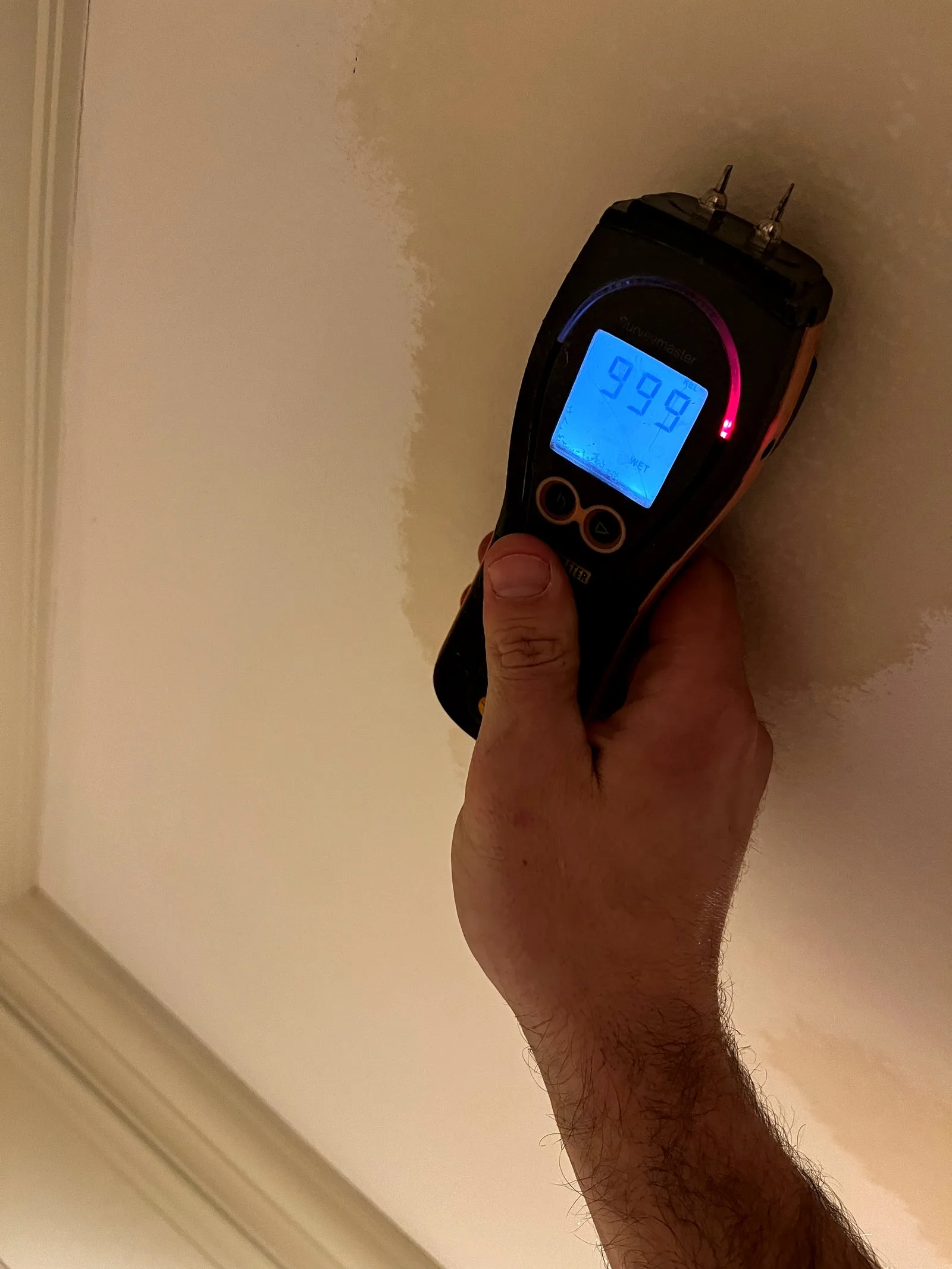
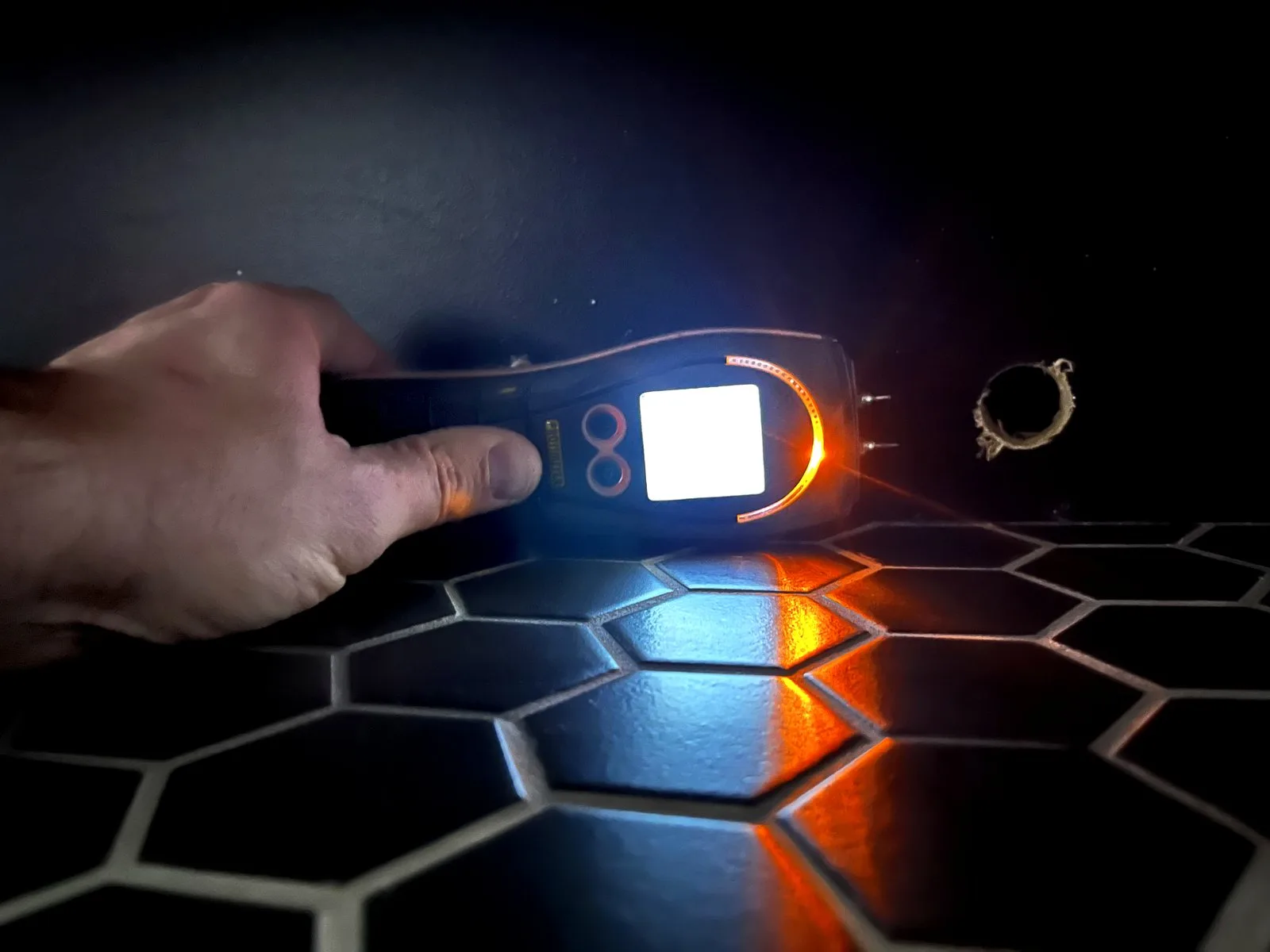
- Emergency assessment. We arrive with thermal imaging cameras and calibrated moisture meters to map all affected areas, including hidden moisture behind walls, under flooring, and in ceiling cavities.
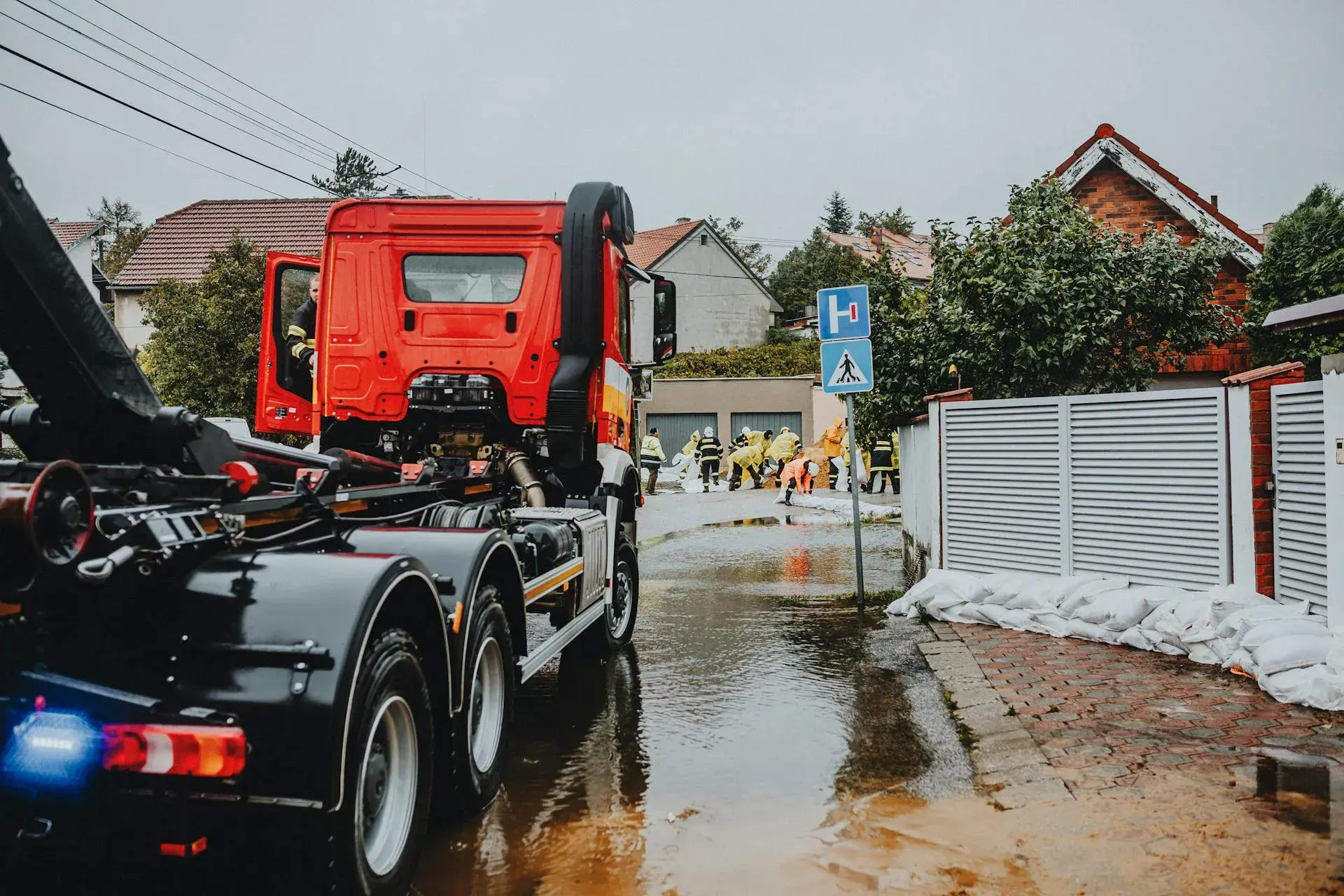
- Water extraction. Truck-mounted and portable extractors remove standing water quickly. IICRC Category 2 and 3 water requires containment protocols during extraction.
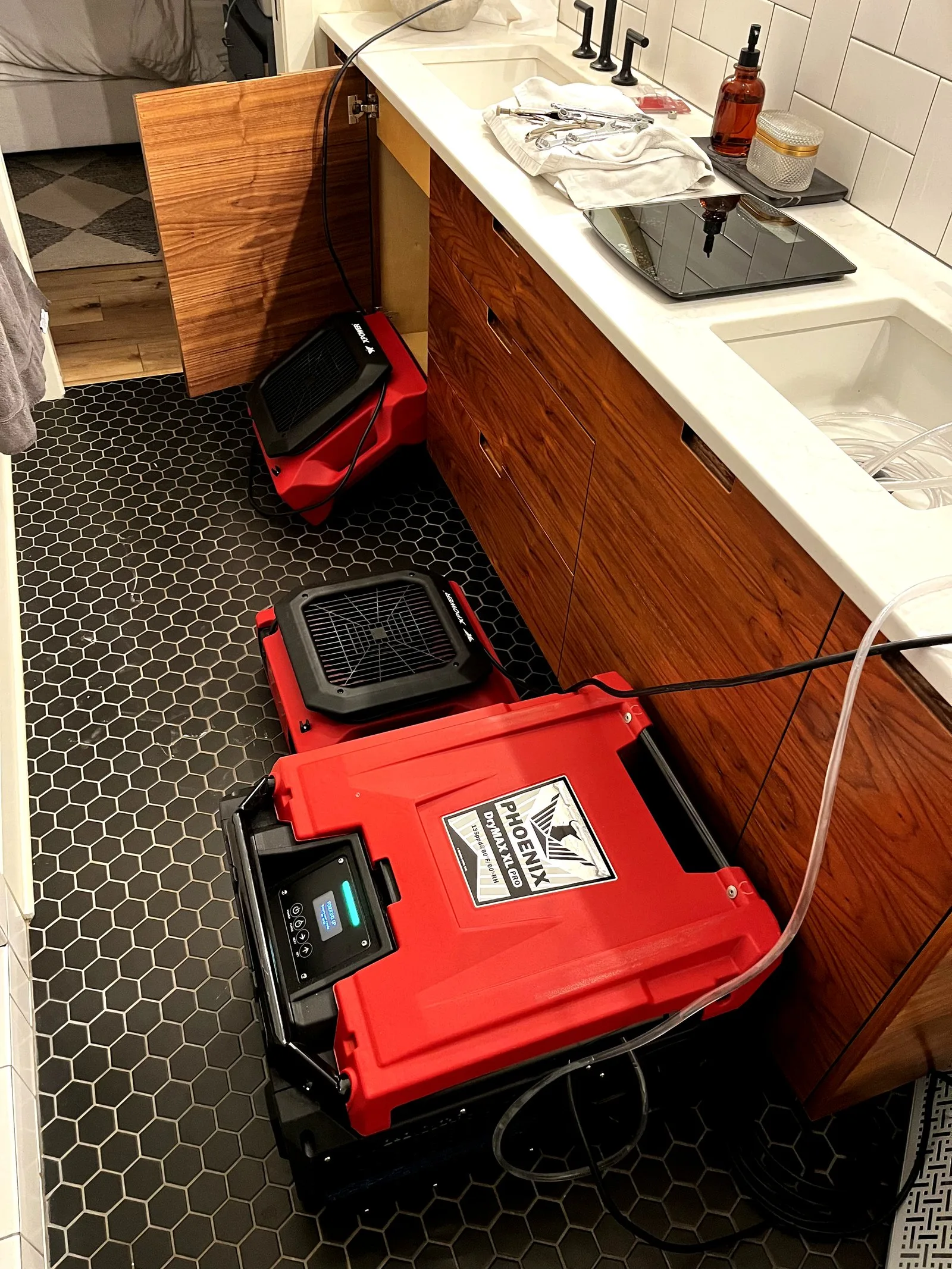
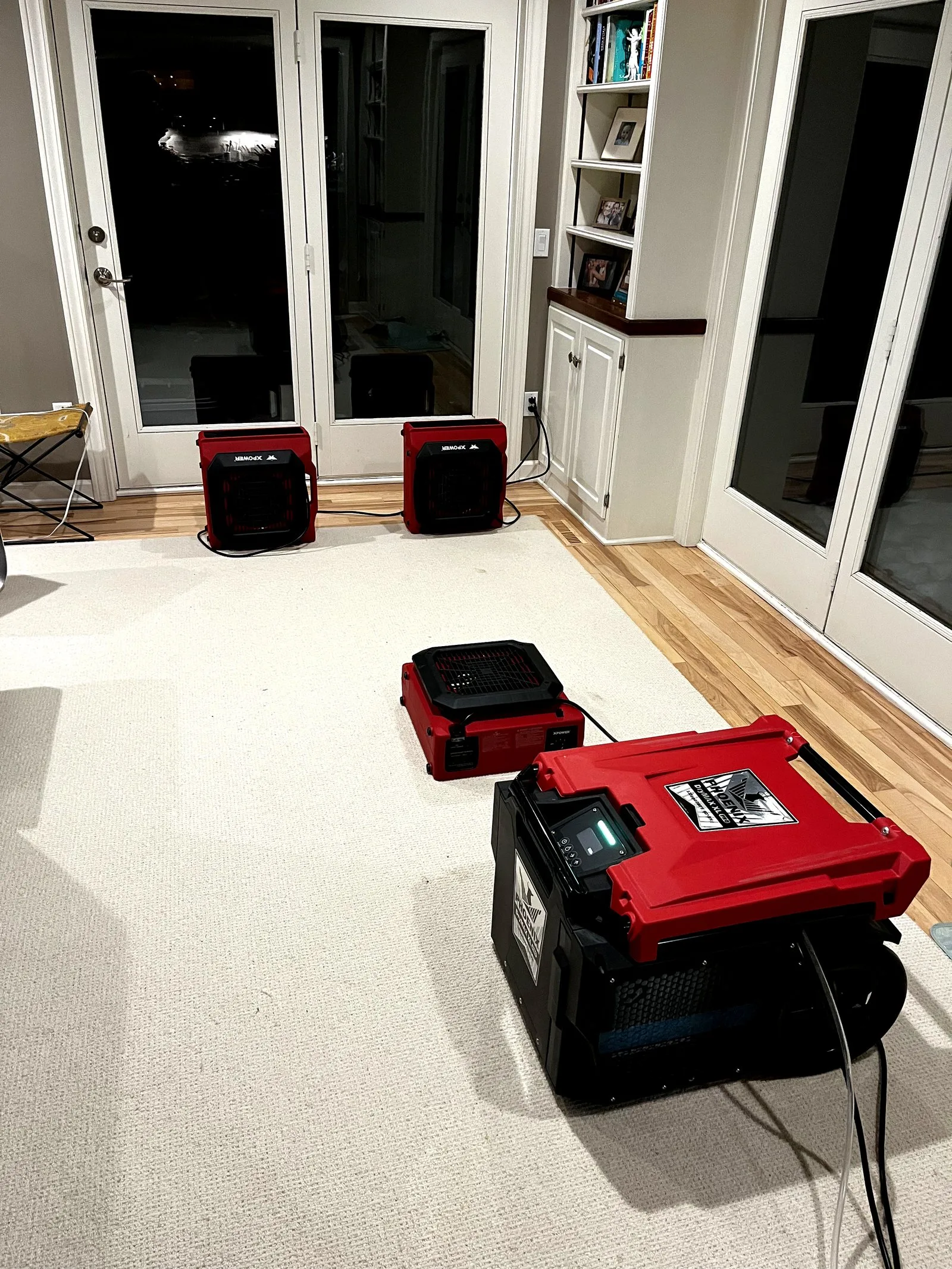
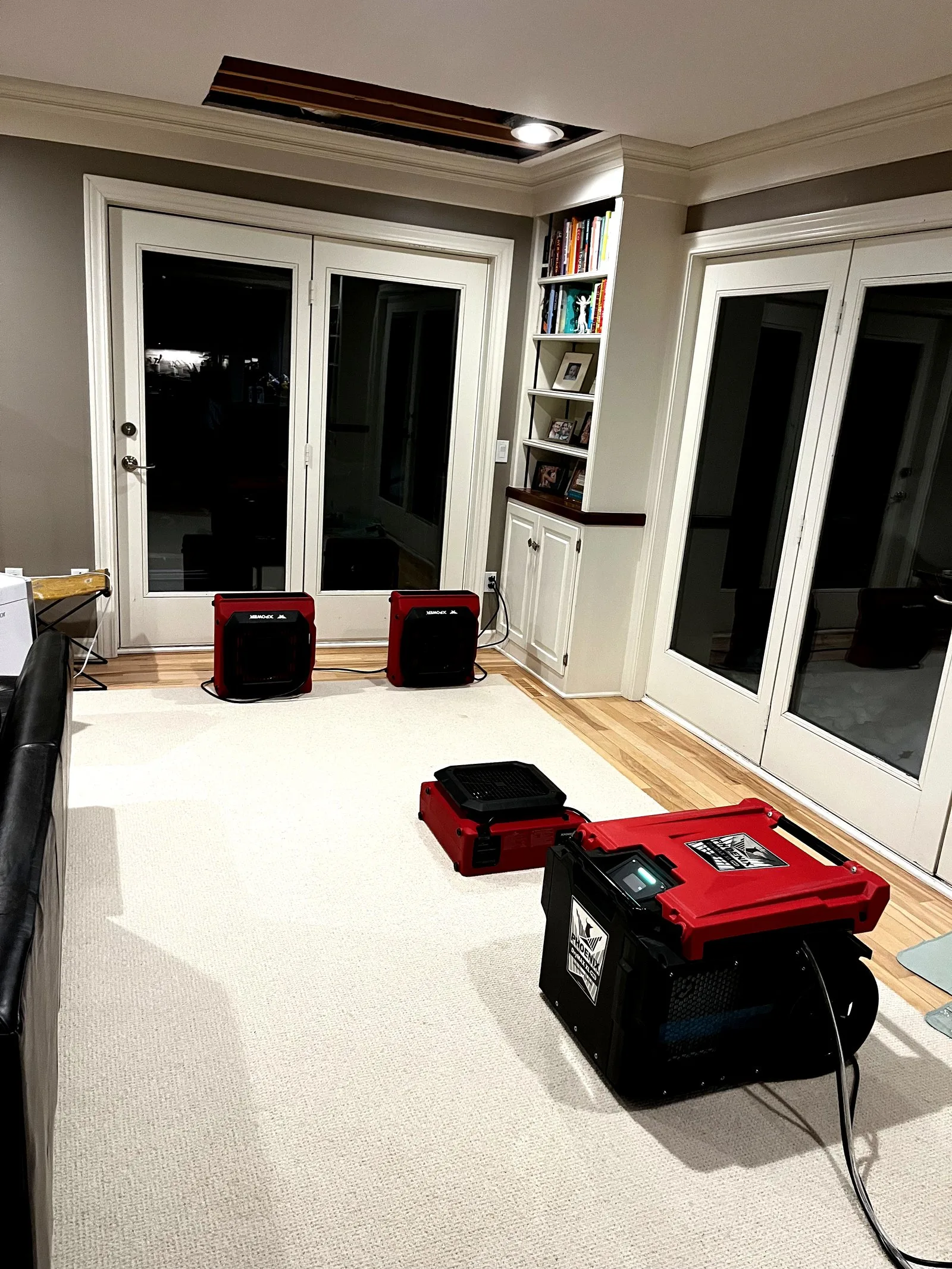
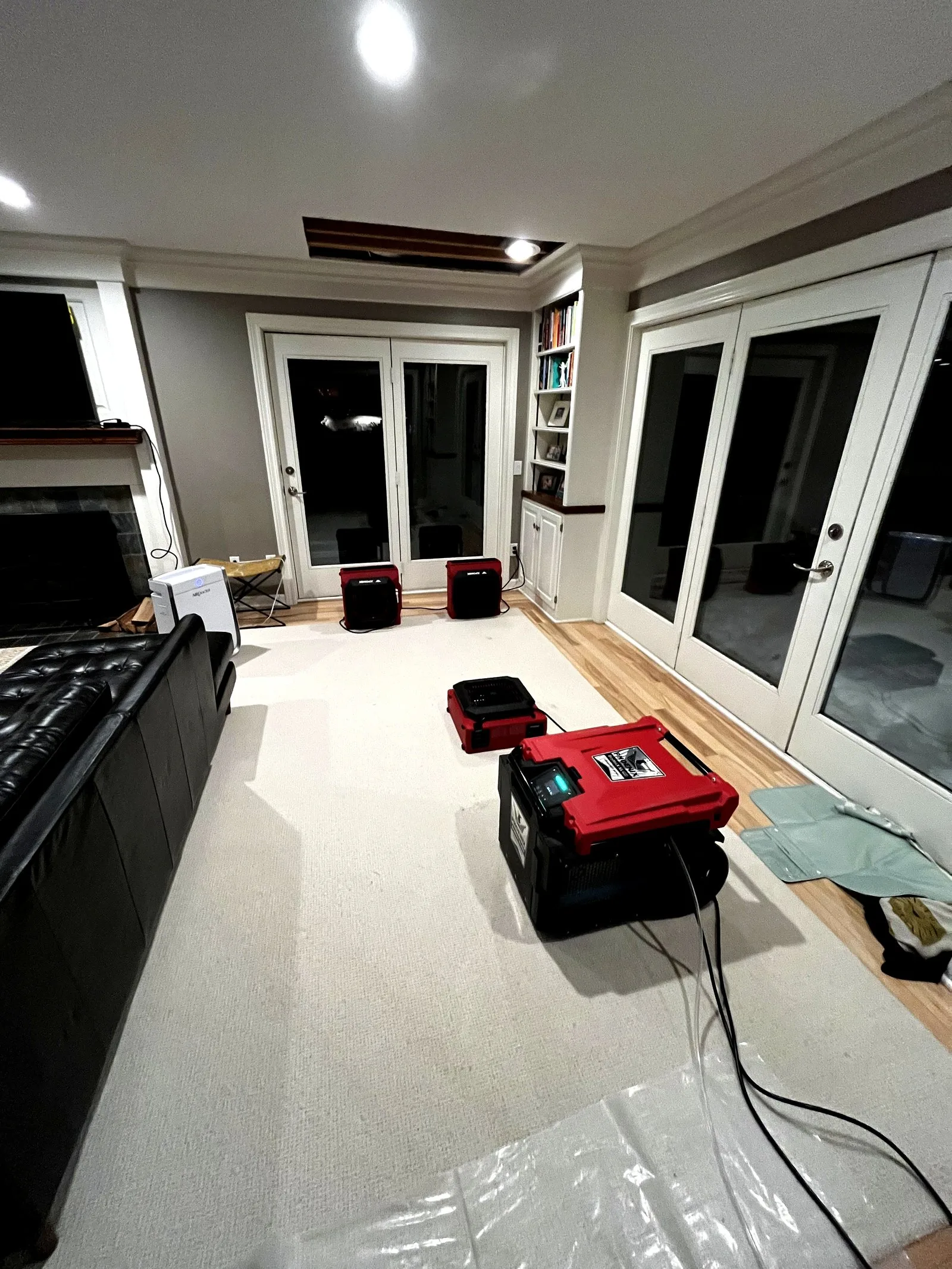
- Structural drying. Phoenix high-velocity air movers create optimal airflow across wet surfaces, accelerating evaporation into the air.
- Dehumidification. Phoenix LGR and desiccant dehumidifiers pull moisture from the air, lowering ambient humidity that would otherwise re-wet drying materials.
- Daily monitoring. We visit every day, log moisture readings, and adjust equipment placement until all materials reach the IICRC drying standard. You receive written daily reports.
- Reconstruction. Using our Michigan Builder’s License we rebuild what was removed (drywall, flooring, trim, cabinets) to bring your home fully back to pre-loss condition.
Common causes of water damage in West Michigan
Michigan winters drive sub-freezing temperatures into uninsulated crawlspaces and exterior walls, causing pipes to freeze and rupture.
Washing machines, dishwashers, water heaters, and refrigerators are among the most common sources of indoor flooding.
Sump pump failures, foundation cracks, and window well leaks are common in West Michigan's clay-heavy soils.
Storm damage, ice dams, and failing flashing allow water into attics and ceiling cavities, often going undetected for weeks.
What to do before we arrive
- Shut off the water source if you can safely reach the shutoff valve.
- Turn off electricity to rooms with standing water if the panel is accessible from a dry area.
- Move valuables (documents, electronics, photos) to dry areas or elevated surfaces.
- Do not run fans over Category 2 or 3 water. This spreads contamination. Let us assess first.
- Document everything with phone photos before moving or removing anything for your insurance claim.
Ryan Penny and Disaster Response went above and beyond. When my basement flooded, Ryan came over within an hour and assessed the situation. His crew was there the next morning and provided exceptional, reliable and expert service.
Basement flood · Grand Rapids, MI
Frequently asked questions
How fast can you respond to water damage in Grand Rapids?
We dispatch from Walker, MI with under-60-minute on-site response across most of West Michigan. Our crew is on call 24/7/365.
Do you bill my insurance company directly?
Yes. We prepare Xactimate scopes, document moisture and damage with photos, and bill major carriers (State Farm, Allstate, Farmers, Liberty Mutual, Auto-Owners, USAA, Nationwide, Travelers, Progressive) directly. You pay only your deductible.
How long does water damage drying take?
Typical residential structural drying takes 3-5 days when we begin within hours of the loss. Larger losses or saturated structural materials can take 7-10 days. We monitor moisture readings daily and document drying progress until materials reach IICRC drying targets.
What is the difference between Category 1, 2, and 3 water damage?
Category 1 is clean water from a sanitary source (broken supply line, overflowing sink). Category 2 is contaminated water with significant chemical or biological matter (washing machine overflow, dishwasher overflow). Category 3 is grossly contaminated water (sewage, flood water, stagnant standing water more than 48 hours old). Each category requires different containment, sanitization, and material removal protocols under IICRC S500.
Will you remove and replace damaged materials?
Yes. We hold a Michigan Builder’s License so the same crew handles mitigation AND reconstruction. No need to coordinate a second contractor for rebuild work.
Do I need to leave my home during water damage restoration?
In most cases no. We work in stages and contain affected areas. For Cat 3 sewage backups or large losses with structural integrity issues, we will help coordinate temporary housing through your insurance Loss of Use coverage.