Local Geography & Property Risks in Grandville, MI
Local topography significantly impacts property moisture. Contact Disaster Response for hyper-local assessment.
Specific Kent County Constraints
Pipe bursts, drainage issues, appliance failures.
Our Walker, MI headquarters is approximately 15 minutes from Grandville. This precise proximity is critical. It allows our IICRC-certified emergency team to navigate Kent County direct routes to reach your property before the 24-hour microbial threshold is crossed. Because we understand the exact environmental pressures of Grandville — whether dealing with clay soil hydrostatic pressure, local watershed flooding, or architectural age factors — our mitigation strategy prevents unnecessary demolition and drastically reduces your restoration costs. We do not use the same boilerplate drying approach for a historic home that we would for a 1990s build in Grandville; our science is customized to your geography.
IICRC-Certified Mold Removal for Grandville, MI
Michigan's climate makes mold a real risk for Kent County homeowners — humid summers, snowmelt-saturated soil, and older homes with less-than-perfect moisture barriers create conditions where mold establishes quickly. Our IICRC-certified team identifies the moisture source, removes the mold safely, and eliminates the conditions that allowed it to grow. We're approximately 15 minutes from Grandville.
We don't just treat visible mold — we find the moisture source, or the mold will return regardless of how thoroughly the surface is cleaned.
Holistic & Hypersensitive Mold Remediation
For our hypersensitive clients in Grandville, we partner with Lisa at Well Abode. Lisa is a Building Biologist who specializes in creating safe environments for those with CIRS (Chronic Inflammatory Response Syndrome) and mold sensitivities. Lisa leads the protocol writing for these cases, which our team executes with surgical precision to ensure your home is truly safe.
Real Job Photos — Grandville, MI
Our IICRC S520 Mold Remediation Process
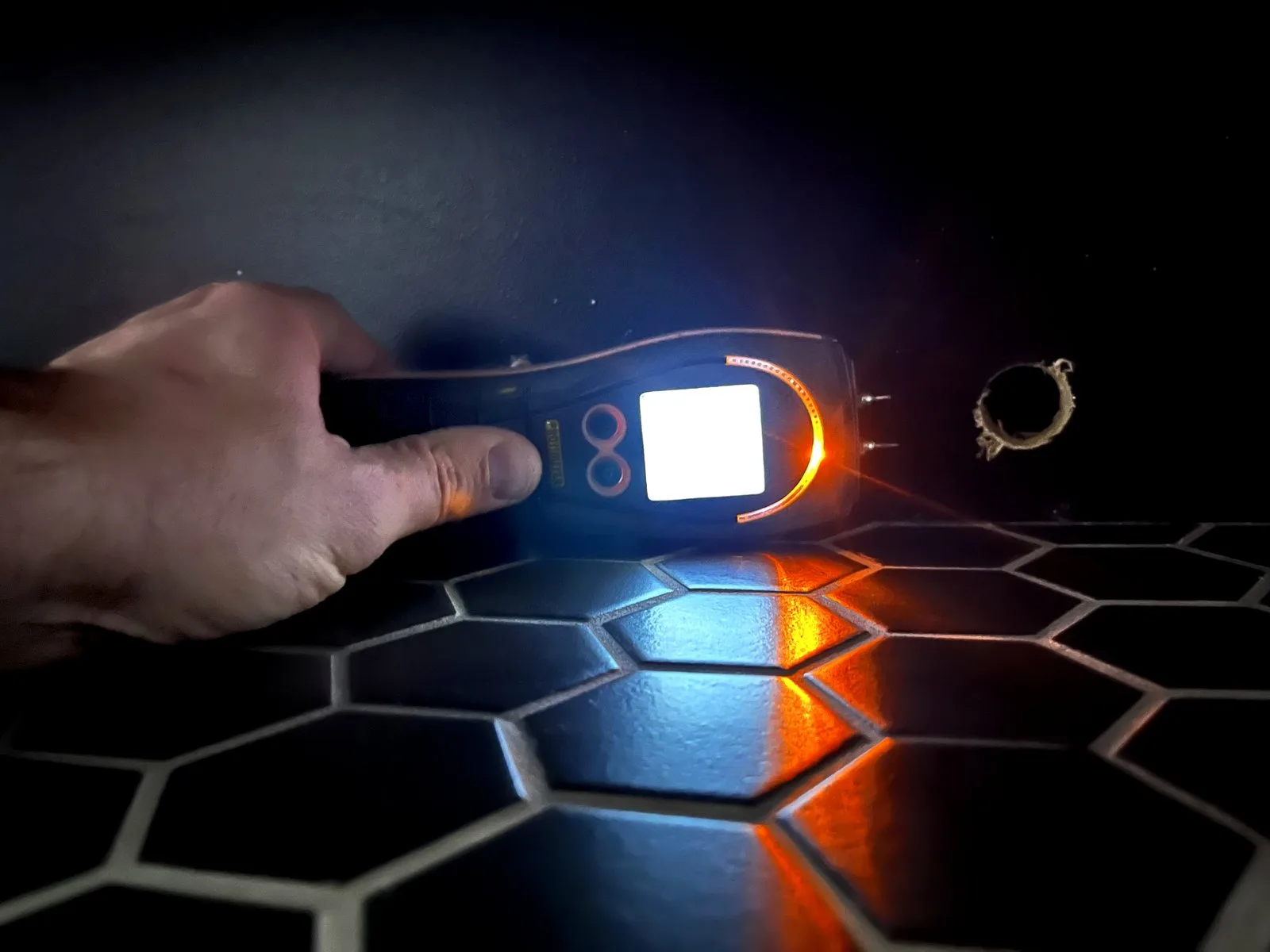
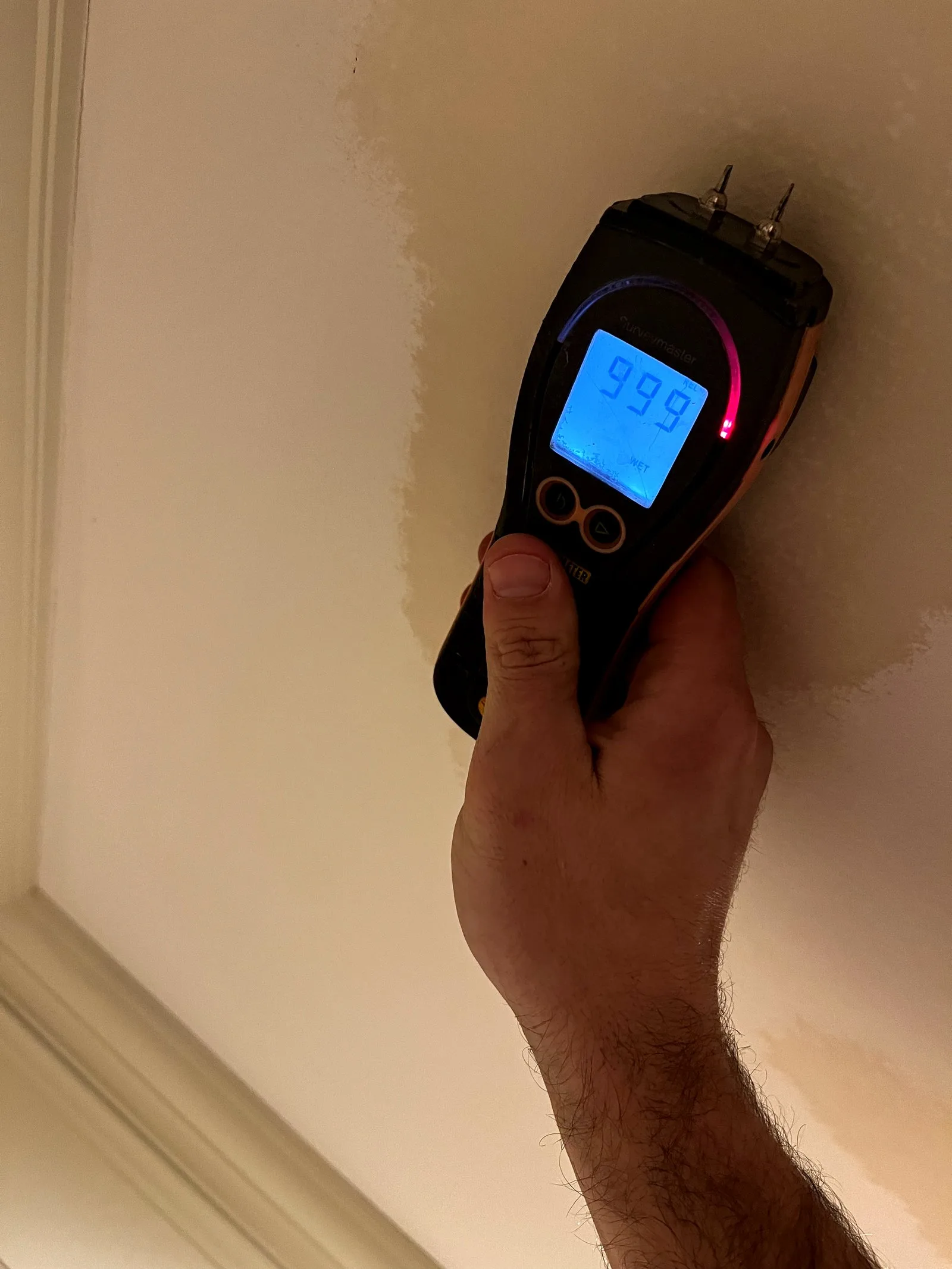
- Inspection & Moisture Mapping: Thermal imaging and moisture meters locate all active moisture — including hidden sources behind walls and under floors that are feeding the mold growth.
- Air Quality Sampling: Baseline spore trap samples identify mold species present and establish pre-remediation levels for comparison with post-clearance results.
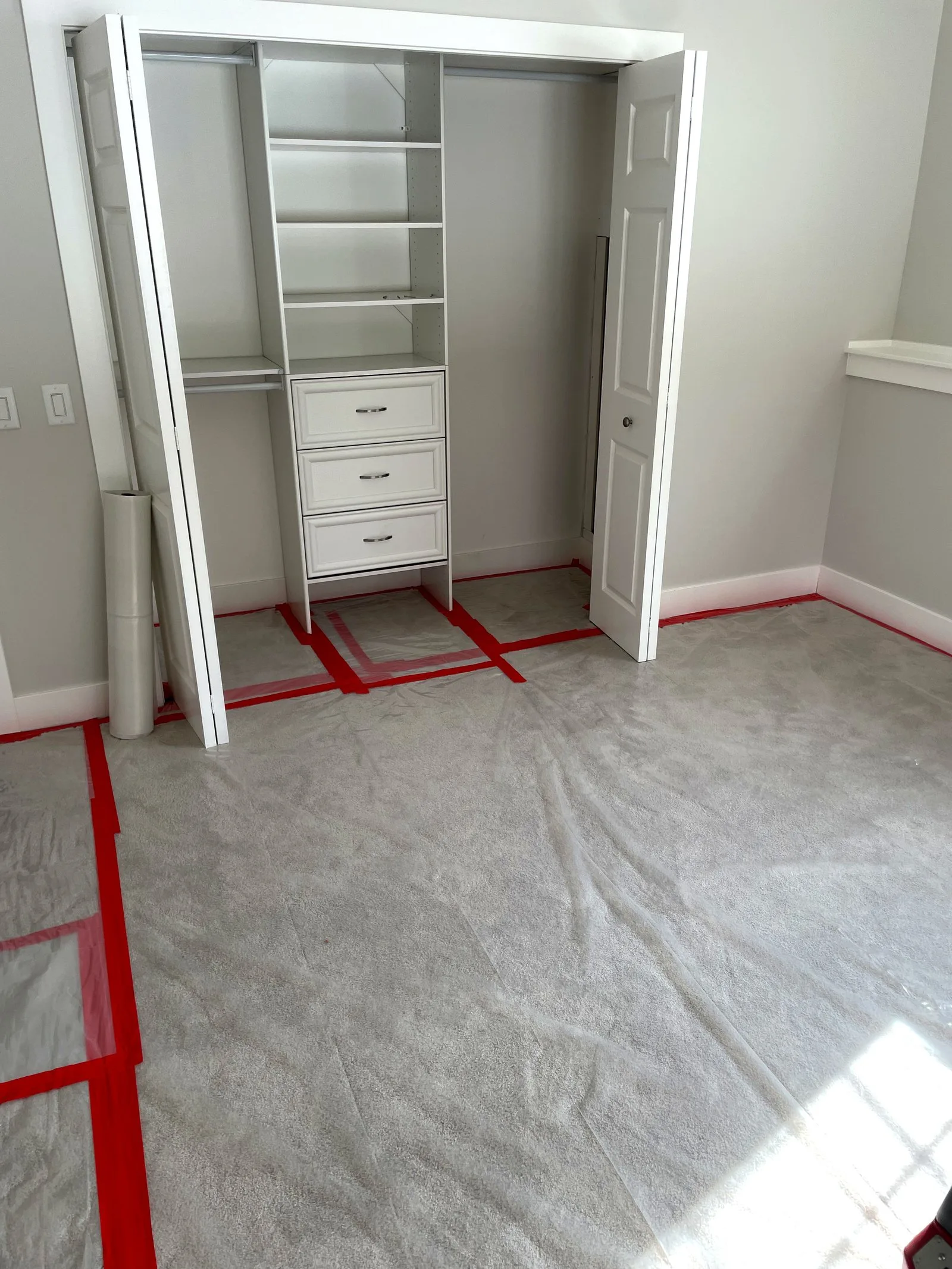
- Containment Setup: Poly barriers with zipper entries and HEPA-filtered negative air pressure machines isolate the work area. Spores disturbed during removal cannot travel to unaffected areas of your Grandville home.
- Mold Removal: All porous materials with mold growth — drywall, insulation, wood framing where indicated — are removed, double-bagged in poly, and disposed of per Michigan regulations.
- Antimicrobial Treatment: Structural surfaces are treated with EPA-registered antimicrobials. Remaining wood framing is encapsulated where required.
- Post-Remediation Air Testing: Independent lab air samples confirm spore counts are within normal outdoor baseline levels. Work is not complete until clearance is confirmed.
- Full Reconstruction: Michigan Builder's License — we install new drywall, insulation, flooring, and cabinetry to pre-loss condition. One company, complete project.
Where Mold Hides in Grandville, MI Homes
- Basements: Kent County's soil conditions and water table make basement moisture intrusion a persistent problem — mold grows on drywall, framing, and stored materials
- Crawlspaces: Inadequate vapor barrier allows ground moisture to condense on floor joists — often undiscovered for years
- Bathroom walls: Slow supply line leaks or poor ventilation behind tile — tile and grout appear fine while mold grows on the drywall behind
- Attics: Improper ventilation causes condensation on roof sheathing, especially in Michigan winters when warm attic air meets cold roof deck
- After any water event: Any water damage not professionally dried to confirmed moisture readings can produce mold within 24–48 hours
Insurance Coverage for Mold in Kent County
Insurance coverage for mold remediation is highly situational and depends on your specific policy language. Generally, mold is only considered for coverage if it resulted from a "sudden and accidental" water loss that is itself a covered peril. Even then, many policies have strict sub-limits or exclusions for mold. We provide the professional documentation required to submit a claim, but we always recommend verifying coverage details directly with your agent.
"Thorough, professional, and transparent about every step. Air test confirmed clear before they closed the walls."
— West Michigan homeowner · ★★★★★ Google Review
Mold Questions — Grandville, MI
Does homeowner's insurance cover mold in Grandville?
Coverage for mold remediation is complex and situational. Most standard policies only cover mold if it resulted from a "sudden and accidental" covered water loss. Even then, coverage is not guaranteed and often has low sub-limits. We provide the expert documentation required for a claim, but we always advise clients to verify their specific policy limits first.
What is post-remediation clearance testing?
Air samples taken after remediation are sent to an independent lab to verify spore counts are within normal outdoor baseline levels. This is the documented proof that remediation was successful. We require clearance testing on every job — it protects you and us.
What causes mold in Kent County basements?
Michigan's clay-heavy soils, high water table in many areas, and freeze-thaw cycles create persistent basement moisture pressure. Inadequate exterior waterproofing, cracks in foundation walls, and poor grading that directs water toward the foundation are the most common culprits.
Is black mold more dangerous than other mold?
All mold should be remediated professionally, regardless of color. "Black mold" (Stachybotrys) is one of many species that appears dark-colored — and many dangerous molds are not black. Species identification via air testing is part of our assessment.