Mold removal in Grand Rapids starts with finding the water
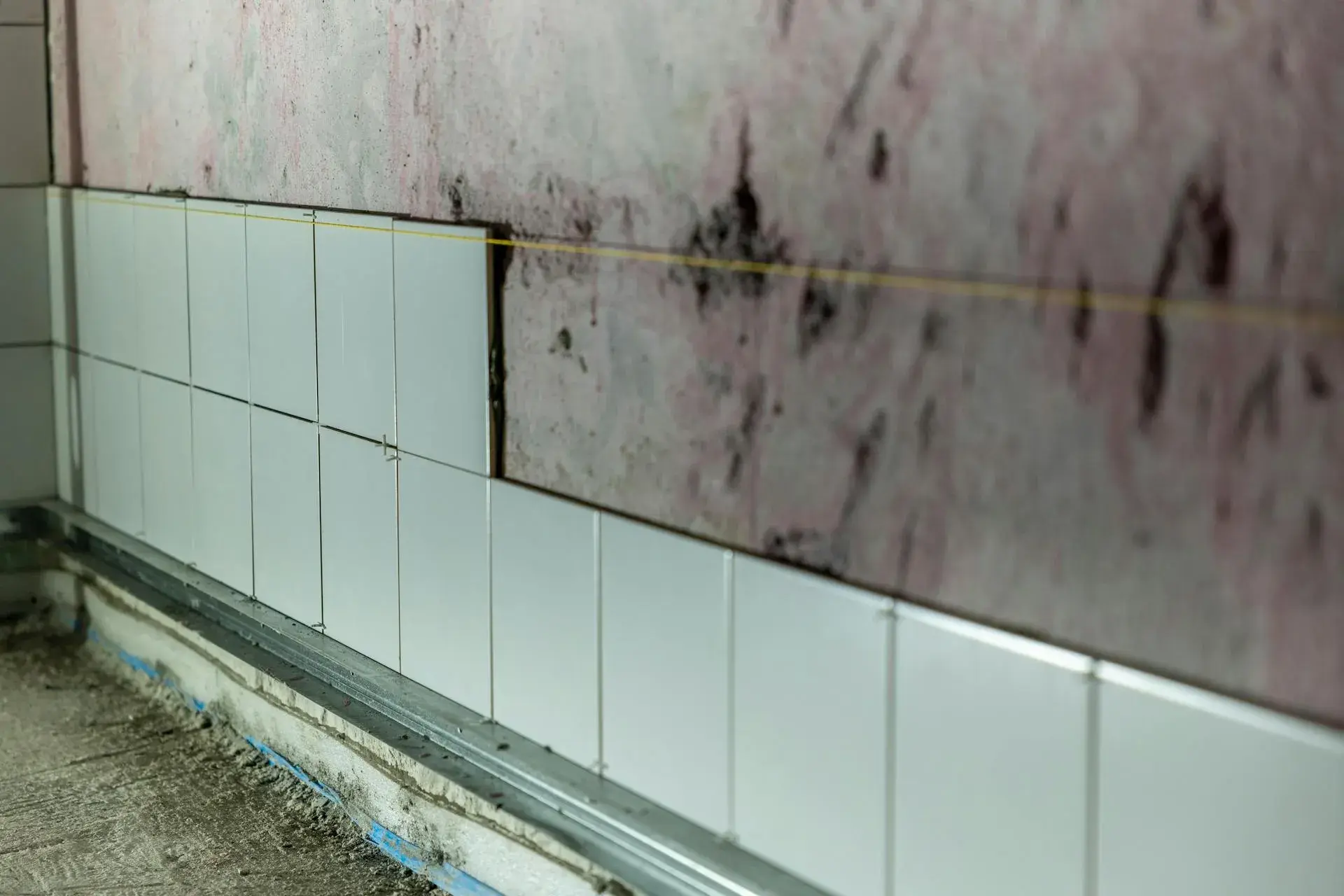
Mold is almost never the real problem. It is the sign of one. In Grand Rapids homes, the moisture behind it usually comes from an old basement that takes on water every spring, a slow leak in pipes that are older than anyone living in the house, or a roof that ice-dams every winter. Remove the mold without fixing the moisture and it comes back. We do both, and we prove the job worked with independent lab testing.
Our shop in Walker is about 10 minutes away. Call or text (616) 822-1978, any day, any hour.
Grand Rapids, MI at a glance
Restoration is a local trade. The age of the housing, the watershed, the sewer infrastructure, the lakeshore proximity — they all change how a job is scoped. Here is what shapes the work in Grand Rapids.
198,917 residents (city, Kent County). Approximately 10 minutes from our Walker, MI shop.
Grand Rapids Public Schools. We respond to losses across every attendance area in the district.
- Corewell Health (Spectrum) Butterworth Hospital
- Van Andel Institute
- Frederik Meijer Gardens
- Calvin University
- Heritage Hill
- East Hills
- Eastown
- Creston
- West Side
- Alger Heights
ZIP codes: 49503, 49504, 49505, 49506, 49507, 49508, 49525, 49546
Where we find mold in Grand Rapids homes
- Basements in pre-war homes. About 37 percent of Grand Rapids homes were built before 1940. Their stone and block foundations let moisture through, and finished basements trap it behind drywall and carpet.
- After any basement water that was not dried properly. Mold can start growing within 24 to 48 hours. A shop vac and a box fan rarely get wood framing and drywall dry enough to stop it.
- Inside walls after a slow leak. Older galvanized and cast iron plumbing can drip for weeks inside a plaster wall before anyone sees a stain.
- Attics. Ice dams and poor ventilation in older roofs leave the underside of the roof deck damp all winter. Black staining on the sheathing is a common find in spring.
- Bathrooms with no exhaust fan. Many older houses never had one, so steam from every shower soaks into the ceiling and the window trim.
Inspection and testing before anything is removed
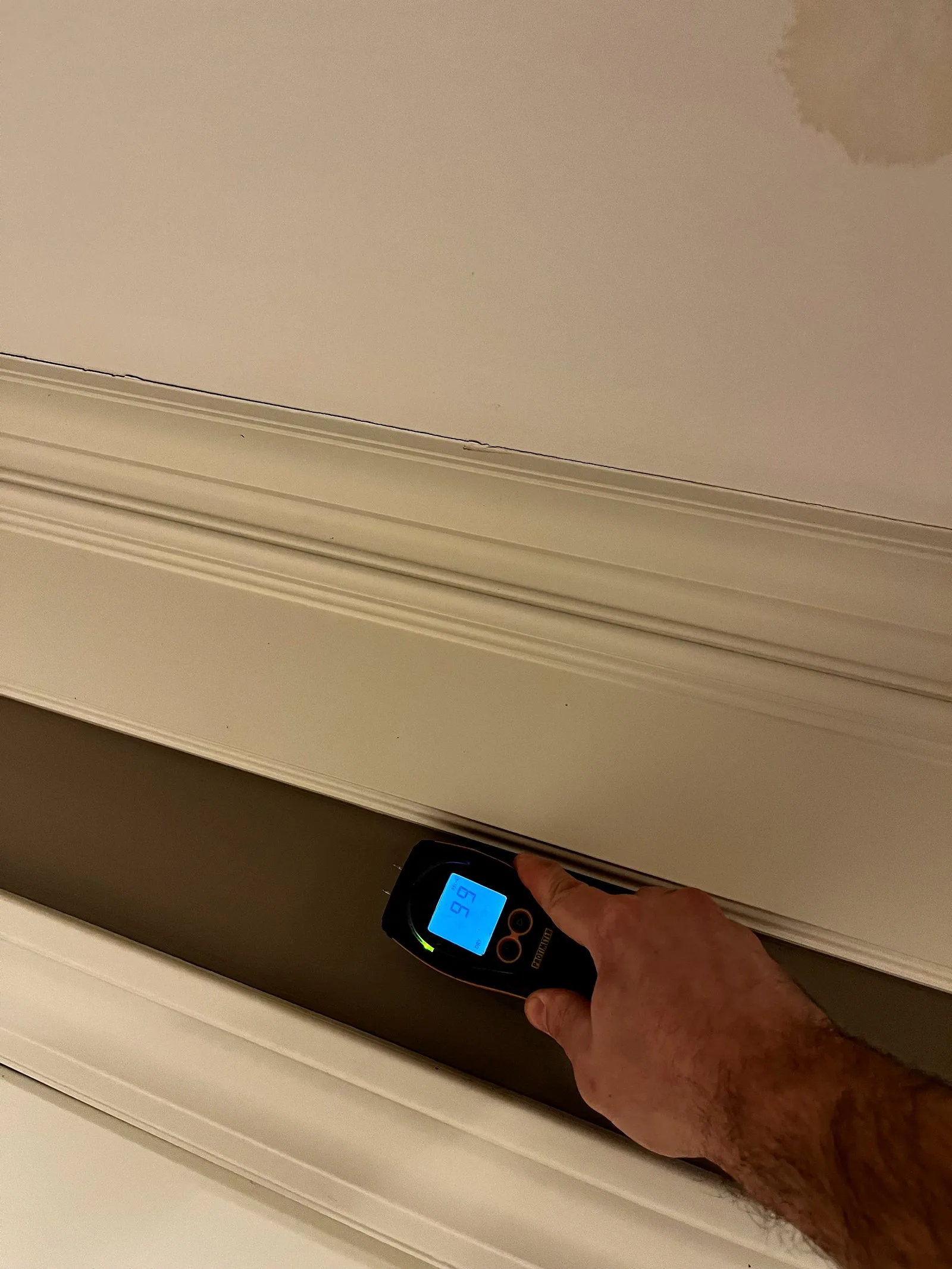
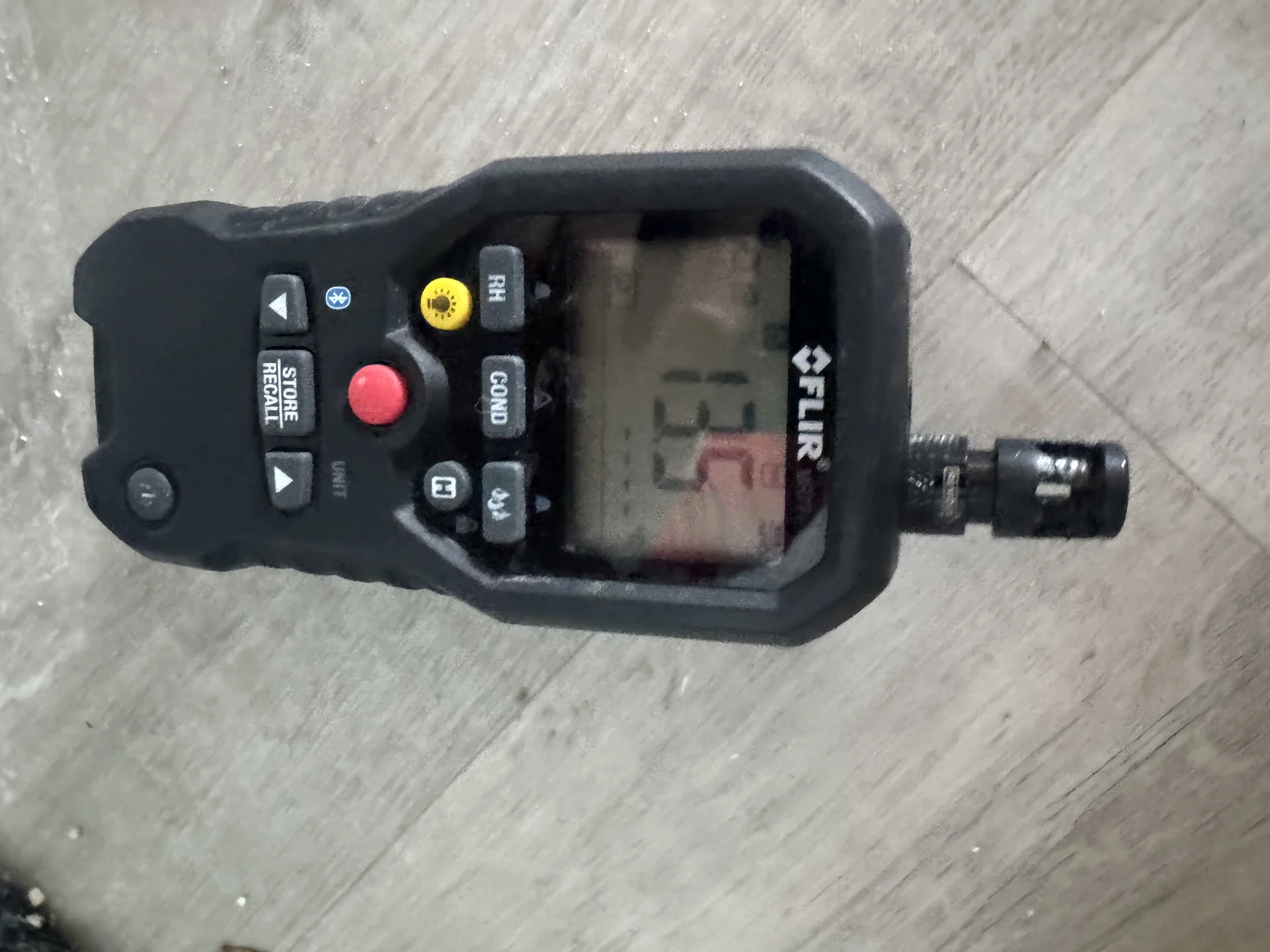
Not every musty smell needs a remediation crew. We start with an inspection: a thermal camera and moisture meters to find the water source, and air samples to see what is growing and how much. If the problem is small, we will tell you. If it needs professional removal, you get a written scope that shows exactly which areas and why.
When the work is done, an independent lab tests the air again. You get written clearance results showing spore counts back in line with the outdoor air. That paper matters for your insurance claim, for your peace of mind, and if you ever sell your home.
How we remove mold safely
- Contain the area with plastic barriers and HEPA-filtered air machines that keep spores from spreading to clean rooms while we work.
- Remove what cannot be cleaned. Moldy drywall, insulation and carpet come out, bagged and sealed inside the containment.
- Clean and treat what stays. Framing, joists and masonry are cleaned and treated, and sealed where needed.
- Fix the moisture. We dry the structure to measured readings and show you what caused the problem so it does not return.
- Prove it. Independent air testing confirms clearance before the containment comes down.
- Rebuild. Our Michigan Residential Builder's License covers putting the space back together.
For households with asthma, mold sensitivity or CIRS, we follow stricter protocols and partner with Lisa at Well Abode when needed.
What mold removal costs in Grand Rapids
Every job is priced after an inspection, but these industry-average ranges are a fair starting point:
- Contained mold, no visible growth (IICRC Condition 2): $2,500 to $7,500.
- Visible mold growth (IICRC Condition 3): $5,000 to $20,000 or more.
- Independent air clearance testing: $400 to $1,200.
The two things that drive the price most are how long the moisture went unnoticed and whether the mold reached framing or insulation. Catching it early is almost always cheaper. Our pricing guide has the details.
Serving every Grand Rapids neighborhood
We do mold inspection and removal across the city, including Heritage Hill, Eastown, East Hills, Creston, Alger Heights, Belknap Lookout, Heartside and the West Side. East Grand Rapids has its own page: mold remediation in East Grand Rapids. If your mold followed a flood or leak, our Grand Rapids water damage page covers the drying side.
Family-owned since 1981, IICRC certified, and rated 4.6 out of 5 across 32 Google reviews.
Mold Remediation questions — Grand Rapids, MI
Do I need mold testing before mold removal in Grand Rapids?
An inspection, yes. Testing depends on the situation. If mold is visible and the cause is obvious, we can often scope the job from the inspection alone. Air sampling helps when you smell mold but cannot see it, when someone in the home has health concerns, or when you need documentation. After removal, independent clearance testing is how you know the job worked.
What is the difference between mold removal and mold remediation?
Removal means taking away the mold you can see. Remediation is the whole job: sealing off the area so spores do not spread, removing moldy materials, cleaning what stays, fixing the moisture that caused it and testing afterwards to prove the area is clean. Some mold spores are always present in indoor air, so the goal is to bring levels back to normal and stop the growth from returning.
How much does mold remediation cost in Grand Rapids?
Most jobs fall between $2,500 and $7,500 when the mold is contained and caught early, and $5,000 to $20,000 or more when it has spread into framing or insulation. Independent clearance testing usually adds $400 to $1,200. We price every job after an inspection, so you get a written scope before any work starts.
Can a house with mold be saved?
Almost always, yes. Mold grows where there is moisture, so once the water source is fixed and the affected materials are removed or cleaned, the problem is solved. As the US Environmental Protection Agency puts it, the key to mold control is moisture control.
Will homeowners insurance pay for mold removal?
Sometimes. Most policies only cover mold that came from a sudden, covered water loss, like a burst pipe, and many cap mold coverage at a low limit. Mold from long-term leaks, humidity or ground water is usually excluded. We provide the documentation your adjuster needs and tell you honestly what we expect to be covered.
Is the black mold in my basement dangerous?
Color does not tell you how harmful mold is. Any mold growth in a living space can irritate the lungs, and some people react much more strongly than others. Do not scrub or sand it, which throws spores into the air. Keep the area closed off and have it inspected.
How fast can you come out for a mold inspection in Grand Rapids?
Our shop in Walker is about 10 minutes from most of Grand Rapids, and we answer 24 hours a day. If the mold follows a fresh leak, call right away. Drying the water quickly is the best way to keep the mold from spreading. Call or text (616) 822-1978.