
Water damage in Grand Rapids: what actually floods here
Grand Rapids is about 10 minutes from our shop on Northridge Drive in Walker, and it is where most of our water calls come from. Three things shape almost every job in this city: some of the oldest housing in West Michigan, a river that set a flood record in 2013, and a sewer system that ran storm water and sewage through the same pipes until 2015. Here is what that means for your home, and what we do about it.
We answer 24 hours a day, every day of the year. Call or text (616) 822-1978.
Grand Rapids, MI at a glance
Restoration is a local trade. The age of the housing, the watershed, the sewer infrastructure, the lakeshore proximity — they all change how a job is scoped. Here is what shapes the work in Grand Rapids.
198,917 residents (city, Kent County). Approximately 10 minutes from our Walker, MI shop.
Grand Rapids Public Schools. We respond to losses across every attendance area in the district.
- Corewell Health (Spectrum) Butterworth Hospital
- Van Andel Institute
- Frederik Meijer Gardens
- Calvin University
- Heritage Hill
- East Hills
- Eastown
- Creston
- West Side
- Alger Heights
ZIP codes: 49503, 49504, 49505, 49506, 49507, 49508, 49525, 49546
Older homes leak differently
Roughly 37 percent of homes in Grand Rapids were built before 1940, an unusually old housing stock for a city this size. Heritage Hill alone has about 1,300 houses, the oldest dating to 1844, and neighborhoods like Eastown, Creston, Belknap Lookout and the West Side are full of houses from the early 1900s.
That age shows up in the calls we get:
- Galvanized and cast iron pipes that corrode from the inside and let go without warning, often inside a wall where nobody sees the leak for days.
- Plaster and lath walls, which hold water longer than drywall. The good news is that plaster can often be dried in place if the drying is measured properly, instead of being torn out. We would rather save an original wall than replace it.
- Old stone and block foundations that let ground water in during long wet spells, especially in spring.
- Original hardwood floors that cup when water sits underneath them. Fast extraction and targeted floor drying can save boards that would otherwise be replaced.

The Grand River and the 2013 flood
On April 21, 2013 the Grand River crested at 21.85 feet in downtown Grand Rapids, the highest level ever recorded here and almost four feet above flood stage. The mayor declared a state of emergency, more than a thousand people were evacuated from Plaza Towers after its basement flooded, and homes across the city ran sump pumps for days.
A flood of that size is rare. What is common is the same recipe on a smaller scale: heavy spring rain on ground that is already frozen or soaked from snowmelt. That is when basements fill, window wells overflow and sump pumps that worked fine all year cannot keep up.
When the floor drain backs up after a storm
For decades, much of Grand Rapids carried sewage and storm water in the same pipes. The city finished a project of roughly $400 million in 2015 that eliminated all 59 points where that mix overflowed into the river. That fixed the river problem, but a hard storm can still overload the sewer line that serves your street, and when it does, water comes up through the lowest drain in the house.
If the water came up through a floor drain or toilet, treat it as sewage (Category 3 water) even if it looks clear. Keep children and pets out, do not run fans that spread the air around, and call us. That is a different cleanup from a burst pipe, with different safety steps. Our Grand Rapids sewage cleanup page explains what is involved.
Worth knowing: the City of Grand Rapids has a program (Administrative Policy 11-01) that can help eligible homeowners pay for a backwater valve and for disconnecting footing drains from the sanitary sewer. If your basement has backed up before, ask the city whether your property qualifies. It can stop the next one.
Winter: burst pipes and ice dams
January is usually the snowiest month in Grand Rapids, and the cold snaps bring the same calls every year: pipes that freeze and split in outside walls, unheated porches and crawlspaces, and ice dams on older roofs that push melt water under the shingles and into ceilings.
If a pipe bursts, shut off the main water valve first. It is usually in the basement, close to where the water line comes in from the street. Then turn off power to any wet area if you can do it safely, and call us.
What we do when we get to your Grand Rapids home
- Make it safe and stop the water. We find the source, shut it off and check for electrical risks before anyone walks through wet rooms.
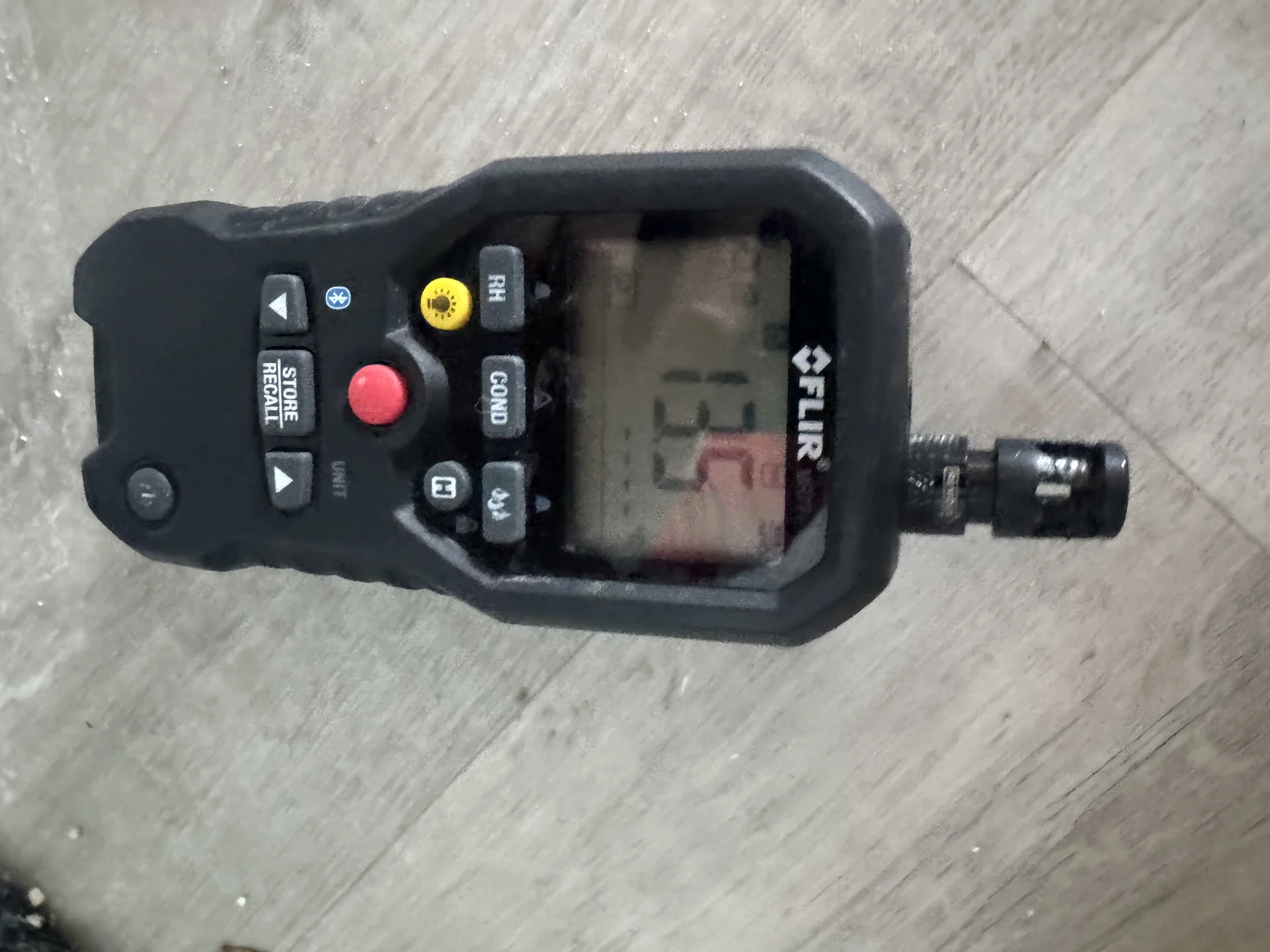
- Measure before we move anything. A thermal camera and moisture meters show where the water went, including behind plaster and under floors. You get a written moisture map.
- Get the water out. Truck-mounted extraction pulls far more water than any rental machine, which shortens drying by days.
- Dry to a number, not a feeling. Air movers and LGR dehumidifiers run until every reading reaches the dry standard. We check them every day and log the results.
- Handle the paperwork. Photos, daily readings and a line-item estimate go to your adjuster. We bill most major insurers directly.
- Put it back together. We hold a Michigan Residential Builder's License, so the same team handles the repairs.
The full drying process is explained on our water damage restoration page.
Every Grand Rapids neighborhood, day or night
We cover the whole city, from Heritage Hill and Heartside to Creston, Alger Heights, East Hills, Eastown, Belknap Lookout and the West Side, across ZIP codes 49503, 49504, 49505, 49506, 49507, 49508, 49525 and 49546. Coming from Walker, the West Side and downtown are usually our quickest drives.
Looking for the city around Reeds Lake? East Grand Rapids is its own city with its own page: water damage restoration in East Grand Rapids.
Family-owned since 1981 and rated 4.6 out of 5 across 32 Google reviews.
Water Damage Restoration questions — Grand Rapids, MI
How fast can you get to my home in Grand Rapids?
Our shop is in Walker, about 10 minutes from most of Grand Rapids. We answer 24 hours a day, every day of the year, including holidays. Call or text (616) 822-1978.
My basement floor drain backed up after a storm. Is that sewage?
Treat it as sewage. Water that comes up through a floor drain or toilet during a storm usually comes from an overloaded sewer line, which makes it Category 3 water even if it looks clear. Keep people and pets out of the area and call us. It needs a different cleanup than a burst pipe.
Will homeowners insurance cover a flooded basement in Grand Rapids?
It depends on where the water came from. Sudden leaks such as a burst pipe or a failed water heater are usually covered. Sewer or drain backup is usually covered only if your policy has a water backup endorsement. Rising water from outside, like the 2013 Grand River flood, needs a separate flood policy. We document everything and talk it through with your adjuster.
Can the plaster walls in my older Grand Rapids home be saved?
Often, yes. Plaster holds water longer than drywall, but it can usually be dried in place if the drying is measured with moisture meters and monitored every day. We only recommend removing plaster when readings show it will not dry or when it was soaked by sewage.