Ice dam leaks are covered. Carriers fight them anyway.
Why ice dam claims face the most adjuster pushback of any winter water loss in Michigan — and the documentation that wins the dispute.
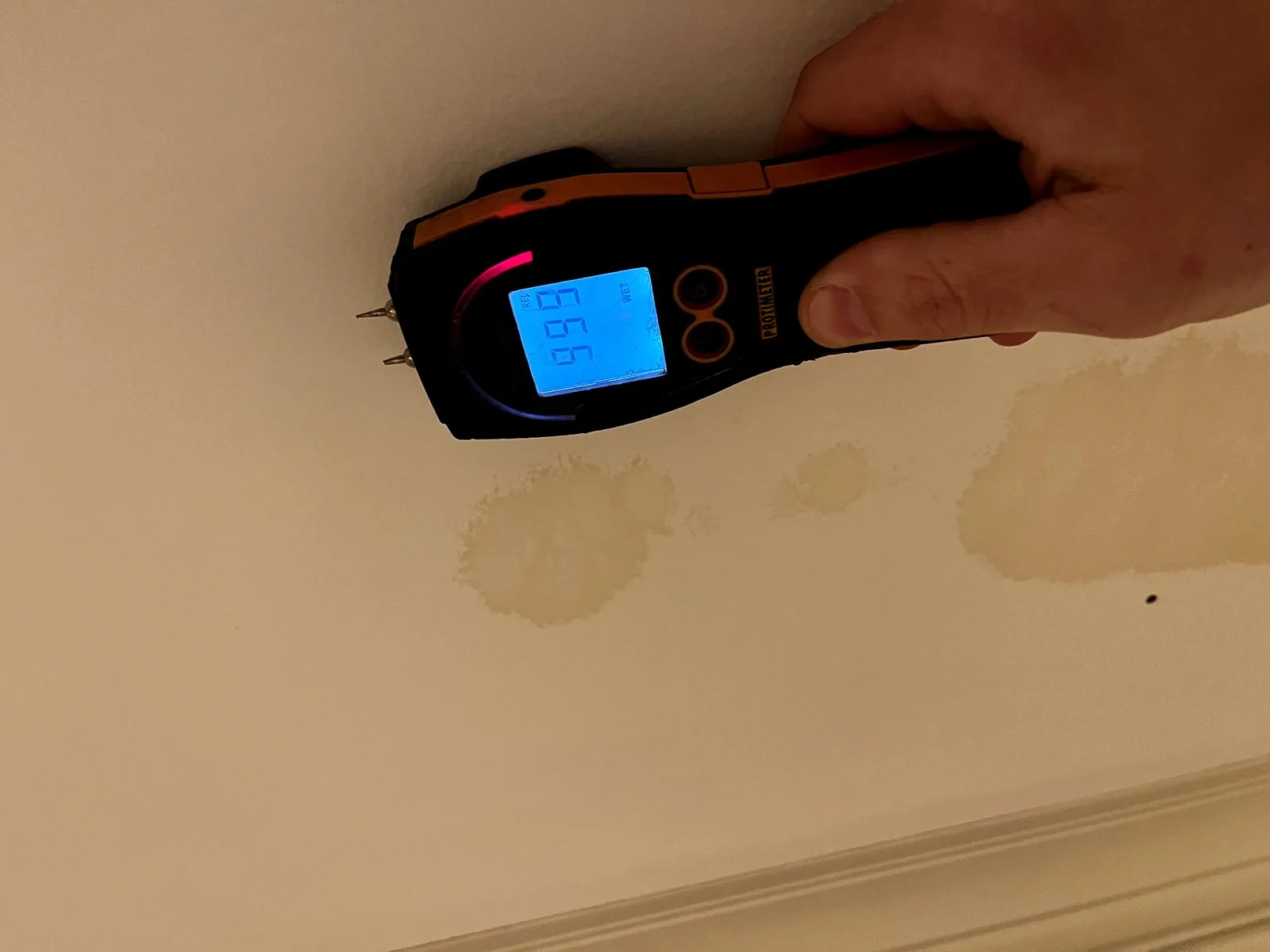 Ice dam ceiling damage — Walker MI, January 2025
Ice dam water damage is covered under standard Michigan HO-3 policies as a sudden and accidental loss. The frequent denial reason is the "maintenance" argument — the carrier claims poor attic insulation caused the dam. Documentation of the specific weather event and the home’s reasonable maintenance history defeats most denials.
Ice dams are a Michigan classic. Heavy snow, then a thaw, then another freeze, and suddenly there’s a ridge of ice along your eaves and water dripping from the corner of your bedroom ceiling. The leak is not subtle. The damage to drywall, insulation, and contents below is real. And the call to your insurance company, which seems like it should be straightforward, is often where the trouble starts.
Here is why insurance carriers in Michigan fight ice dam claims more aggressively than almost any other winter water loss, and the specific documentation that wins the dispute.
Why Carriers Fight This Claim
Standard HO-3 policies cover sudden and accidental water damage. Ice dam water entering your ceiling clearly fits that definition. The carrier’s argument is not that the loss is not covered — it is that the cause of the loss was a maintenance issue, which moves the claim from "covered peril" to "excluded maintenance defect."
The maintenance arguments carriers raise:
- Inadequate attic insulation — "your attic was R-19 when current code is R-49"
- Poor attic ventilation — "your soffit vents were blocked"
- Heat leakage from living space — "your bath fan vents into the attic"
- Missing ice & water shield — "the eaves should have had ice protection underlayment"
- Gutter neglect — "clogged gutters allowed snow to back up"
Each of these can shift the loss into "homeowner failed to maintain the property in reasonable condition" — which is excluded under almost every Michigan HO-3 policy. The carrier’s play is to document the maintenance gap, not to dispute the water damage itself.
How the Damage Actually Happens
Three conditions create an ice dam:
- Snow on the roof, especially the upper portion that sits above heated living space
- Heat from inside the home reaching the underside of the roof deck through gaps in the attic floor or insufficient insulation
- Cold outside air keeping the eaves below freezing
The roof deck warms above 32°F where it sits over heated space. The snow on top melts. The meltwater runs down the slope toward the eaves — which are still below freezing because they overhang the unheated soffit. The water refreezes there, building a ridge of ice. Subsequent meltwater is dammed behind that ridge and pools on the roof. Capillary action and gravity force the standing water up under the shingles, into the roof deck, and through any opening into the attic and ceiling cavities below.
Ice itself does not damage roofs the way most homeowners assume. The water behind the ice does.
"In February 2025 we ran six ice dam responses in a single 72-hour stretch after the polar vortex and quick thaw. One Walker homeowner had three ceiling leaks and $11,200 of damage. State Farm initially denied the claim citing inadequate insulation. We submitted attic insulation depth photos showing R-38 (above the 1990s code that applied when his home was built), the NWS temperature swing data for the event, and the original framing inspection report. Claim approved at full scope two weeks later."
The Documentation That Wins the Dispute
- Photos of the ice dam itself — from the ground, showing the ridge of ice along the eaves. Do this during the event, not after the thaw.
- NWS temperature data for the loss period — demonstrate the thaw/refreeze pattern that drives ice dam formation. Available free at weather.gov.
- Attic insulation depth photos — tape measure in the frame. Confirms that the home meets the insulation standard that applied when it was built.
- Soffit ventilation photos — confirm vents are clear of insulation, blocking, or ice.
- Maintenance history — recent gutter cleaning receipts, any roofing work performed, attic inspections. Shows reasonable maintenance.
- Original construction year & code applicable — carriers cannot retroactively apply current code to older homes.
The denial letter is not the final answer. Half the ice dam claims we’ve helped overturn started with a denial.
What Restoration Does on an Ice Dam Job
- Locate every wet area with thermal imaging and moisture meter
- Open ceiling drywall where saturated (limited demo — we map first, cut second)
- Remove wet attic insulation in the affected bays
- Dry the structural framing and roof deck underside with directed air movers and dehumidification
- Replace insulation, drywall, paint after dry standard
- Coordinate with a roofing contractor for the underlying roof issue if needed
Long-Term Prevention
- Air-seal the attic floor — close all penetrations between the heated space and the attic with foam or fire-rated caulk. The single highest-impact fix.
- Increase attic insulation to R-49 minimum — current Michigan code, easily blown over existing insulation
- Verify soffit-to-ridge ventilation — baffles, ridge vents, soffit vents all clear and balanced
- Install ice & water shield on the next reroof — from eave 2’ past the exterior wall line, plus all valleys
- Heat cable on high-risk eaves — $300–$800 installed, plug-in, only run during high-risk events
- Snow rake from the ground — pull snow off the lower 4’ of roof after major storms; never go on the roof yourself
Active ice dam leak?
Document the dam from the ground first — do not climb the roof. Then call. We coordinate steam removal and start interior drying same-day.
(616) 822-1978Frequently Asked Questions
Does insurance cover ice dam damage in Michigan?
Standard HO-3 covers water damage from ice dams as a sudden and accidental loss. The frequent denial reason is the 'maintenance' argument, which good documentation usually defeats.
What is an ice dam and how does it cause leaks?
An ice dam forms when warm air escapes through the attic, melts snow on the roof's upper section, and the meltwater refreezes when it reaches the cold eave. Water dammed behind the ridge is forced under shingles into the attic and ceiling cavities.
How do I prevent ice dams in Michigan?
Seal air leaks between the heated living space and the attic, increase attic insulation to R-49 minimum, install ice & water shield underlayment along the eaves during the next reroof. Heat cables along the eaves are a temporary fix for high-risk roofs.
Should I knock the icicles off my roof?
No. Knocking icicles can pull shingles off and create new water entry paths. If you have an active ice dam causing interior leaks, hire a professional ice dam steam removal service.
How much does ice dam water damage cost to fix?
Localized ice dam leaks run $2,800 to $6,400. Whole-house ice dam events with attic insulation replacement and multiple ceiling leaks run $9,200 to $24,000.