A tree through the roof. The next four hours.
How West Michigan storm damage goes from a $10K claim to a $60K claim between midnight and the next morning — and what to do to stop it.
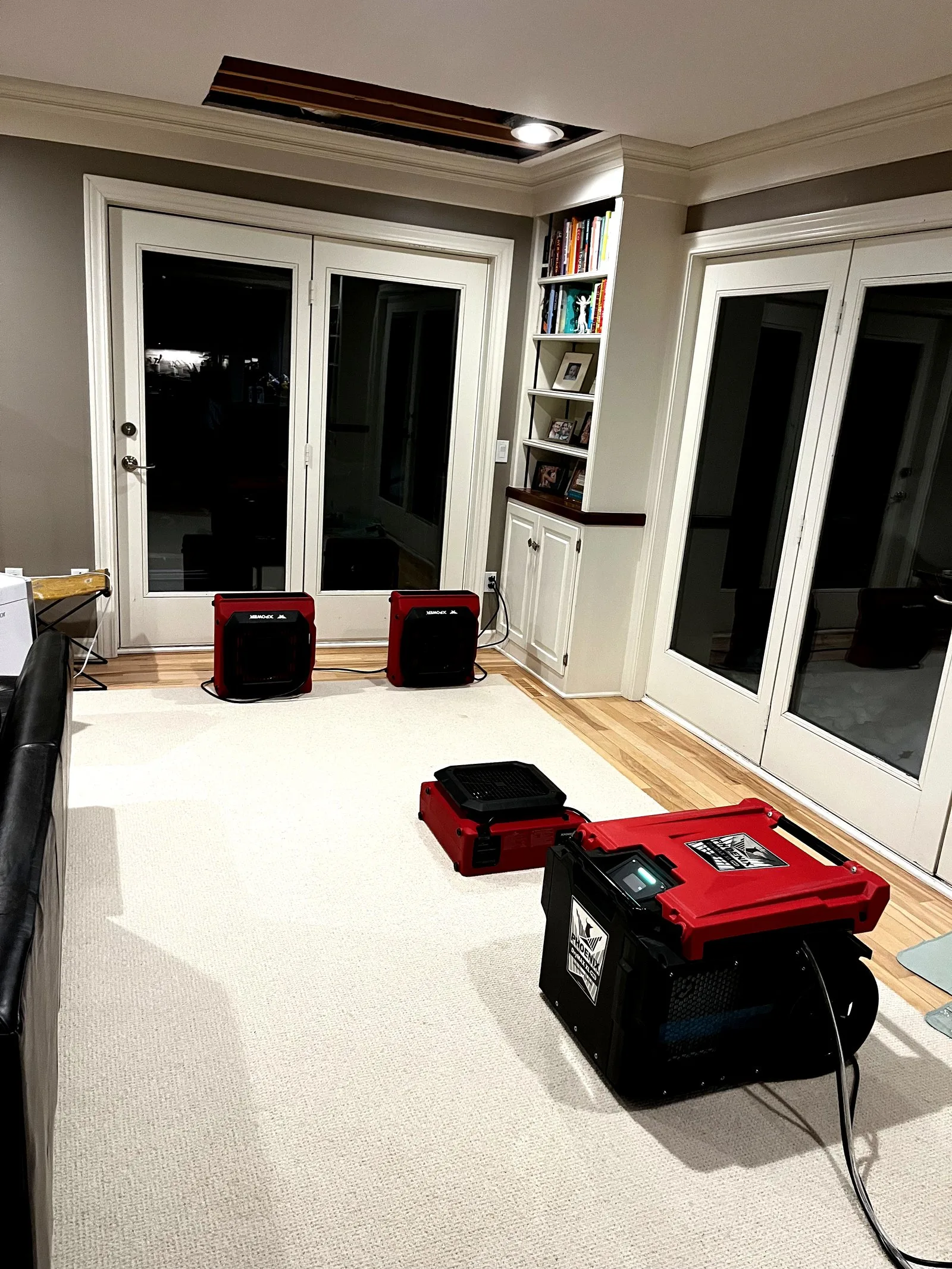 Emergency response after August 2024 storm — Kentwood MI
The first four hours after storm damage determine your claim outcome. Evacuate affected areas, document with photos immediately, call a restoration contractor for emergency tarp-over within 24 hours, and capture wind-event evidence (NOAA alerts, weather station data) for the claim file. Insurance covers wind damage under HO-3; flood damage requires separate NFIP coverage.
West Michigan runs two serious storm seasons: the April/May tornado and straight-line-wind window, and the July/August severe thunderstorm window with derechos that can push 80+ mph gusts across Kent and Ottawa counties. In 2024 we responded to 47 storm-damage calls in the three days following the August 25th derecho event. Every one of those jobs was shaped by what the homeowner did in the first four hours.
Here is the playbook, in the order it matters.
The First 4 Hours
1. Safety first — evacuate affected zones
A tree through the roof is often holding up what it damaged. Do not walk under the impact zone. Evacuate the room, close the door, and treat the area as a structural hazard until professionally assessed. If power lines are involved, call 911 and stay 50+ feet back — a downed line energizes everything metal around it.
2. Document from outside and inside
Exterior photos of the tree, the roof opening, shingle damage, fence damage, anything wind-touched. Interior photos of water entry points, damaged ceiling, wet contents. A continuous video walkthrough with time-stamped audio narration is the single strongest piece of storm-claim documentation.
3. Save the weather evidence
Screenshot the NOAA/NWS storm warning that was in effect. Save the weather underground or similar page showing the wind speeds at your nearest station. Screenshot any hail/tornado reports for your zip code. These become part of the claim file and short-circuit any adjuster dispute about whether the wind event was significant.
4. Call a restoration contractor for emergency services
Roof tarp-over, water extraction, debris removal, temporary board-up of broken windows. Emergency mitigation is always covered under HO-3 and starts before the adjuster arrives. The 24-hour window is critical — an unsecured opening that allows additional water entry during the next rain gives the carrier grounds to deny that secondary damage as unmitigated.
5. File the claim — but do not start negotiating scope yet
Call your carrier, open the claim number, note when the adjuster will arrive. Do not start discussing scope reductions on the phone. Your contractor has the technical language and carrier relationships to handle the scope conversation once the adjuster is on site.
What Restoration Actually Does After Storm Damage
Phase 1 — Emergency Mitigation (hours 1–24)
- Tarp the roof — minimum 6-mil poly, secured with furring strips, overlapping the damaged area by 2+ feet on all sides
- Extract standing water from interior
- Board up broken windows, openings
- Debris removal from inside the home
- Category assessment on any water (storm water is often Cat 3 by the IICRC's definition because of runoff contaminants)
- Emergency drying equipment deployment
Phase 2 — Structural Drying (days 2–7)
Same as any Category 2/3 water loss. Flood-cut drywall to the wet line, remove soaked insulation, daily moisture readings, LGR dehumidification until dry standard confirmed.
Phase 3 — Structural Repair & Reconstruction (weeks 2–8)
Tree extraction (coordinated with tree service), roof deck repair, shingle replacement, drywall rebuild, insulation replacement, paint, flooring, finish. Builder license #2101187907 covers the full rebuild; no separate general contractor handoff.
The Wind vs. Flood Distinction
This matters more than almost anything else for your claim.
Wind damage (including wind-driven rain that entered through a wind-created opening) is covered under your standard HO-3 policy. Tree fall, torn shingles, broken windows, structural damage from wind pressure.
Flood damage — rising water, storm surge, surface runoff entering at ground level — is excluded from every standard HO-3 in Michigan and requires separate flood insurance through NFIP or a private flood carrier.
When both happen during the same storm (which is common — wind damages the roof, rain enters through it, and flood water also enters through a ground-level door), the adjuster determines which peril caused each element. Good documentation of sequence helps. Photos showing the wind damage first and the flood water later reinforce that the upper-floor damage is wind/wind-driven rain (covered) vs. the basement damage being flood (covered only if you have NFIP).
"During the August 2024 derecho we responded to a Cascade Township home with a 60-foot oak through the master bedroom roof. Wind event at 2:15 AM. Homeowner called 911 for a gas leak, evacuated, but did not call us until 9 AM. Six hours of rain through the opening turned a $28,000 tarp-and-rebuild into a $71,400 full-house drying + mold remediation."
Real West Michigan Storm Costs (2024–26)
| Scenario | Typical Cost |
|---|---|
| Torn shingles, minor roof repair, no interior water | $3,200–$8,400 |
| Tree strike, contained roof opening, fast tarp | $14,200–$26,800 |
| Tree strike, delayed response, multi-room water damage | $42,000–$85,000 |
| Wind uplift — multiple shingles lost, attic damp | $8,400–$22,000 |
| Broken windows, interior rain entry | $6,800–$18,400 |
The tree through your roof is not the expensive part. The next six hours of rain is.
Storm damage right now?
Emergency tarp-over, debris removal, extraction. Crew deployed within 60 minutes across Kent & Ottawa County.
(616) 822-1978Frequently Asked Questions
Does homeowners insurance cover a tree falling on my house in Michigan?
Yes, if the tree fall was caused by wind, storm, hail, or other covered peril. Standard HO-3 covers both the tree removal from the structure and the resulting structural and water damage.
What should I do immediately after a tree hits my roof?
Evacuate the affected area, call 911 if anyone is injured or if power lines are involved, document with photos before moving anything, and call a restoration contractor for emergency tarp-over.
Is wind-driven rain covered the same as water from a burst pipe?
Covered differently but usually still paid. HO-3 covers wind-driven rain when the wind first created an opening. Documentation of the wind event is critical.
How quickly do I need to tarp a damaged roof?
Within 24 hours. Most HO-3 policies require the homeowner to take reasonable steps to prevent further damage. Professional emergency tarp-over costs $600-$1,800 and is always covered as emergency mitigation.
What's the difference between wind and flood damage for insurance?
Wind damage (including wind-driven rain through a wind-created opening) is covered by HO-3. Flood damage (rising water, storm surge, surface runoff) is excluded from HO-3 and requires NFIP flood insurance.