A grease fire, 90 seconds. And a $5,800 cleanup.
Why kitchen protein smoke is the most underestimated fire event in Michigan — and what it actually takes to get the smell out for good.
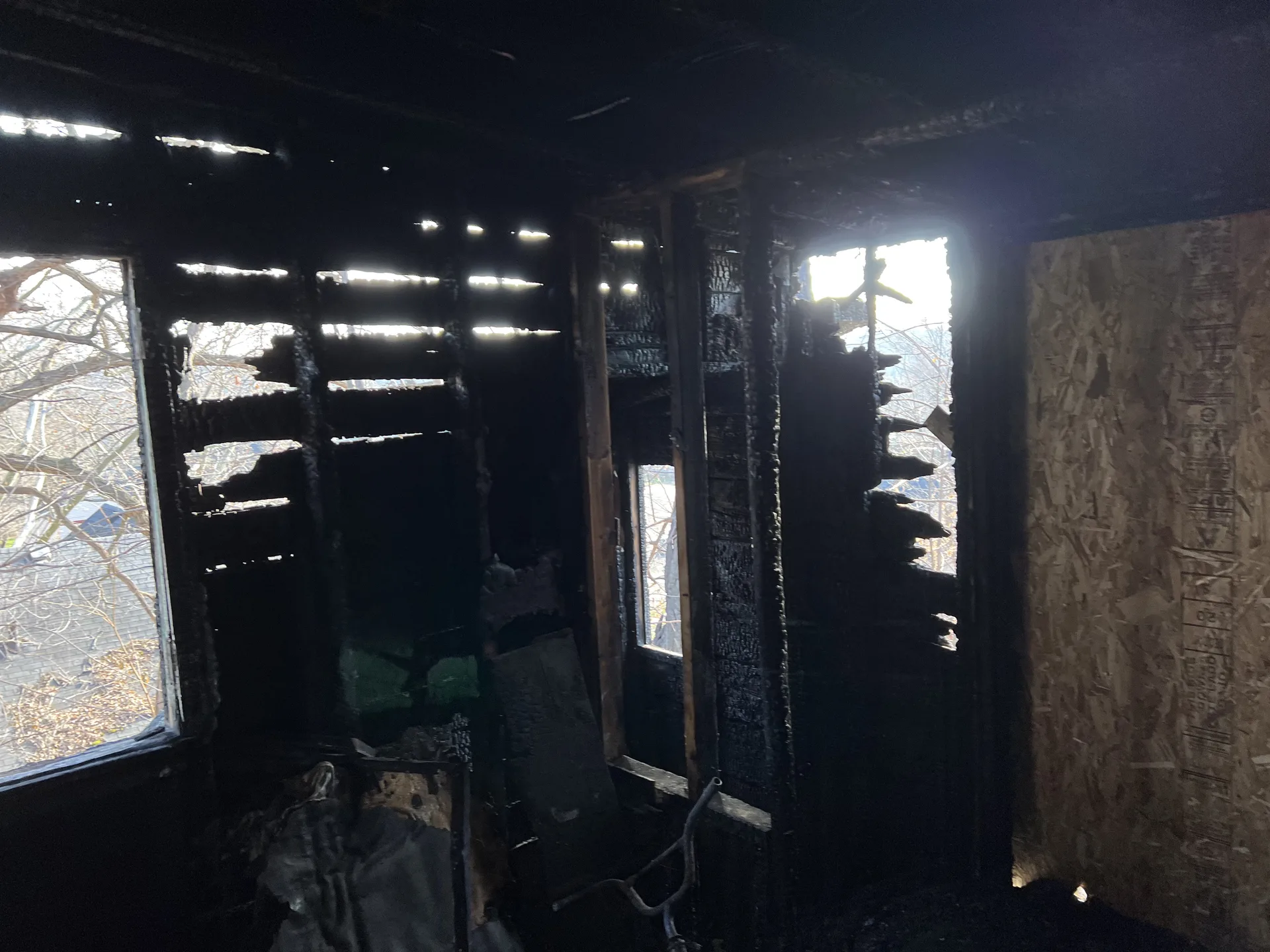 Protein smoke film on upper cabinets — Caledonia kitchen, November 2025
Kitchen grease fires produce protein smoke — particles so small they spread through the whole house via HVAC in minutes. Standard cleaning smears the residue deeper. Proper cleanup requires enzyme cleaners, full HVAC decontamination, and thermal fogging — typically $3,400–$7,200 even with no structural damage.
Most Grand Rapids kitchen fires are small. A pan of bacon forgotten on the stove. A grease flare-up in the deep fryer. The flames are usually out within a minute or two — often before the fire department is even called. The fire itself is barely an event.
The smoke from the fire is the event. Protein smoke from burned food is the most misunderstood and underestimated contamination in residential fire restoration. It spreads invisibly, embeds everywhere, and returns every summer until it is treated correctly. This article is what we tell every Grand Rapids homeowner who calls thinking the fire was no big deal.
Why Protein Smoke Is Different
Regular smoke from wood or synthetic materials produces visible soot deposits. You can see where it went. Protein smoke produces a nearly invisible light-yellow or tan film that coats surfaces uniformly throughout the home. You cannot see it, but you can smell it — an acrid, slightly rancid odor that intensifies when the room warms up.
Three characteristics make protein smoke uniquely problematic:
- Particle size. 0.1–1 micron. Small enough to pass through standard furnace filters and into the conditioned air space.
- Distribution speed. A 90-second kitchen fire distributes protein smoke throughout a 2,200 sq ft home within 3–4 minutes via return air pathways.
- Heat sensitivity. The residue re-volatilizes when warmed. Odor returns every spring when HVAC heating cycles or summer humidity reactivates the embedded particles.
"A Caledonia homeowner had a 90-second grease fire on her stove in November 2025. No flames past the range hood. She cleaned the kitchen thoroughly with bleach and vinegar, ran a Costco air purifier for a week, and thought she was done. By February 2026 the smell was back. We tested — protein smoke residue throughout the HVAC supply trunk. Full remediation: $5,840. Could have been $900 of HEPA + enzyme cleaning if we had been called week one."
The First 30 Minutes After the Fire
1. Confirm the fire is out
Never pour water on a grease fire — it causes a steam explosion that spreads the fire. Smother with a lid, use a Class K or BC extinguisher, or pour baking soda. Do not re-enter the kitchen until the fire department (if called) has cleared it.
2. Shut off the range
Gas valve off or electric breaker off. Eliminates re-ignition risk while cleanup begins.
3. Brief ventilation
Open doors and a couple of windows for 10–15 minutes to clear visible smoke. Then stop. Longer ventilation pulls particles deeper into HVAC returns and throughout the home. The instinct to "air out for hours" works against you with protein smoke.
4. Shut off the HVAC system
Critical. Turn the furnace or AC off at the thermostat immediately. If it continues running, the return pulls protein smoke from the kitchen through the air handler and distributes it into every room. One hour of HVAC operation during a kitchen fire costs $3,000–$6,000 of extra cleanup.
5. Photograph the kitchen first, then adjacent rooms
Wide shots and close-ups. Look specifically at the tops of upper cabinets, the ceiling above the stove, and the return-air register — protein smoke deposition is most visible there.
6. Call a fire restoration contractor
Before you clean anything. The wrong cleaner smears protein residue into porous surfaces and makes professional remediation twice as expensive.
What Professional Cleanup Actually Does
- HEPA vacuuming — every surface in the home, not just the kitchen. Attic deck, light fixtures, baseboards, tops of upper cabinets.
- Enzyme cleaner on hard surfaces — specialized formulations that break down protein residue molecularly. Multiple passes on heavily deposited areas.
- HVAC decontamination per NADCA standards — mechanical agitation of the duct interior with HEPA-filtered negative-air collection, plus coil cleaning on the air handler.
- Filter replacement — furnace filter replaced, and usually one follow-up replacement at the 30-day mark as residual particles clear the system.
- Thermal fogging — vaporized petroleum-based deodorizer penetrates the same pathways the smoke took. Most effective treatment for residual protein odor.
- Textile cleaning — clothing, linens, upholstery in the main living areas laundered with ozone treatment or pack-out for specialty cleaning.
- Air sample verification — indoor air tested against outdoor control to confirm particulate count has returned to normal.
Real Costs
| Scenario | Sq Ft | Typical Cost |
|---|---|---|
| Minor grease fire, HVAC caught early | 1,400 sq ft | $3,420 |
| Grease fire, HVAC ran during event | 2,100 sq ft | $5,840 |
| Grease fire, full-home deposition, late call | 2,600 sq ft | $7,240 |
| Grease fire w/ cabinet char and drywall demo | 1,800 sq ft | $14,200 |
| Range fire w/ soffit damage and attic smoke | 2,400 sq ft | $22,400 |
The single most expensive decision after a kitchen grease fire is leaving the HVAC running "to clear the smoke." It does the opposite.
Insurance
Kitchen fires are covered under standard Michigan HO-3 policies as a fire peril, with deductible applied. Smoke damage throughout the rest of the home is covered under the same claim. Contents pack-out for cleaning (clothing, linens, kitchen items) is a separate Xactimate line and is covered. Loss of Use coverage pays for temporary housing if the home requires rebuild work.
The claim pitfall we see most often: homeowners clean the visible kitchen soot themselves before calling, then find the smell through the rest of the house weeks later. The carrier may argue the smoke damage is new (not part of the original claim) and deny the whole-house remediation. Always document the entire house on day one, even if visible damage is limited to the kitchen.
Just had a kitchen fire?
Shut off the HVAC, take photos of every room, then call. Protein smoke remediation gets exponentially cheaper when we're on site the same day.
(616) 822-1978Frequently Asked Questions
What is protein smoke?
Protein smoke is produced when food containing animal or vegetable protein is burned. The residue is almost invisible but carries extreme odor and spreads through the entire home via the HVAC system. Requires enzyme-based cleaners and full house treatment.
Why does a small kitchen fire make my whole house smell?
Protein smoke particles are small and lighter-than-air. They follow the HVAC return airflow and distribute through every room within minutes. The kitchen is the visible source; your HVAC is the distribution mechanism.
Will bleach or Febreze remove kitchen grease smoke smell?
No. Bleach damages surfaces and does not neutralize protein residue. Febreze masks the odor temporarily while VOCs continue off-gassing. Enzyme-based restoration cleaners are the only treatment that eliminates the odor permanently.
How much does kitchen fire cleanup cost in Grand Rapids?
A contained grease fire with no char damage runs $3,400 to $7,200 for full-house protein smoke remediation, HVAC cleaning, and thermal fogging. A fire that damaged cabinets or drywall adds $8,000 to $18,000+ for demo and reconstruction.
How long until my family can live in the house after a kitchen fire?
For contained grease fires with no structural damage, reoccupation is typically 3 to 7 days. For fires with char damage requiring demo and rebuild, temporary housing is often needed for 2 to 6 weeks and is usually covered under Loss of Use.