Does homeowners insurance cover water damage in Michigan? Usually, if it was sudden.
What a standard Michigan homeowners policy pays for, what it leaves out, and the one add-on most West Michigan basements are missing.
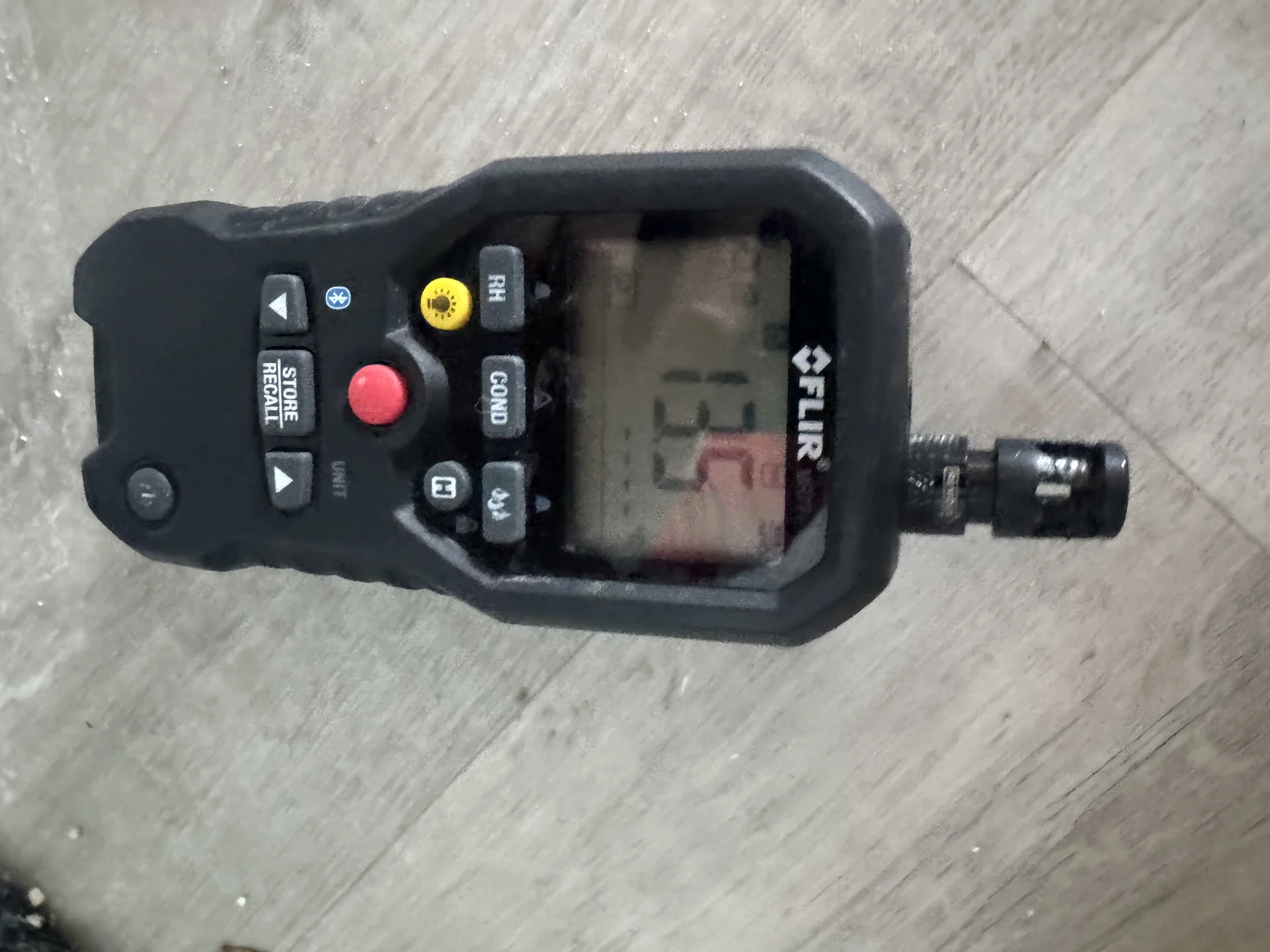 Moisture readings taken on day one become part of your claim file
Usually yes for sudden, accidental water from inside your home, such as a burst pipe, a broken washing machine hose or a water heater that gives out. Usually no for flooding from outside, slow leaks that went on for weeks, and damage from wear or poor upkeep. Water that backs up through a floor drain or comes from a failed sump pump is not covered by a standard policy unless you added a water backup endorsement.
Almost every call we take starts with two questions. How bad is it? And will insurance pay for it? We can usually answer the first one within an hour of arriving. The second one depends on two things: where the water came from, and what your policy says.
This guide walks through the general rules for Michigan homeowners. It is not legal advice, and every policy is a little different, so keep your declarations page (the summary page at the front of your policy) close by while you read.
The simple rule: sudden, from inside, not neglected
Insurers sort water damage by its cause, not by how much water there is. A standard homeowners policy (most Michigan homes have the common "HO-3" form) is built to pay for accidents. The Insurance Information Institute lists sudden, accidental water from plumbing, heating and air conditioning systems and household appliances among the perils most homeowners policies cover. Freezing of those systems is on the same list.
What a standard policy is not built for is water coming in from outside, damage that built up slowly, or problems caused by wear and poor upkeep. Three questions get you most of the way to an answer:
- Was it sudden? A pipe that burst this morning, yes. A drip under the sink that has been rotting the cabinet since spring, no.
- Did it start inside the house? A broken washing machine hose, yes. Rain water running across the yard and in through a basement window, no. That is flood.
- Could normal upkeep have prevented it? If the honest answer is clearly yes, expect the insurer to push back.
Covered, not covered, or covered only with an add-on
| Where the water came from | Standard policy | What decides it |
|---|---|---|
| Burst supply pipe, broken washing machine or dishwasher hose, cracked toilet tank | Usually covered | Your normal policy, minus your deductible |
| Water heater that suddenly fails | Water damage usually covered | The cleanup is usually covered. Replacing the worn-out heater itself often is not |
| Frozen pipe that bursts in January | Usually covered | As long as you kept the house heated, or shut off and drained the water while it was empty |
| Rain that gets in through a hole a storm tore in the roof | Often covered | The storm damage is what counts. A roof that leaked because it was worn out usually is not covered |
| Slow leak that went on for weeks | Usually not covered | Many policies exclude "continuous or repeated" leaks. Some set the line at 14 days |
| Sewer or floor drain backing up | Not covered | Needs a water backup endorsement |
| Sump pump that fails or cannot keep up | Not covered | Needs a water backup endorsement that includes sump overflow |
| Flood water from rivers, heavy rain or snow melt | Not covered | Needs a separate flood insurance policy |
Water damage that is usually covered
Burst and broken pipes
This is the classic covered claim. A supply line splits, water sprays for an hour, and the drywall, flooring and cabinets below are soaked. The policy pays to dry out and repair the damage, minus your deductible. Check how your policy treats the pipe itself. Many pay for the damage the water caused but not for repairing the part that failed.
Appliances that break
Washing machine hoses, dishwasher lines, refrigerator ice maker lines and water heaters are some of the most common sources we see. When one of them fails suddenly, the water damage is normally treated like a burst pipe. If your washer still has rubber hoses, swapping them for braided steel ones is one of the cheapest ways to avoid a claim.
Frozen pipes
West Michigan winters freeze pipes every year, and frozen pipes are on the standard list of covered perils. The catch is a condition in most policies: you have to take reasonable care to keep the home heated, or shut off the water and drain the pipes if the home is empty. A cottage or rental left unheated over a cold snap is where these claims go wrong. Our frozen pipe guide covers what to do in the first hour.
Water damage that is usually not covered
Flooding from outside
Both the Insurance Information Institute and Michigan's Department of Insurance and Financial Services (DIFS) say the same thing: standard homeowners policies do not cover flood. That includes rivers rising, flash flooding after a storm, and snow melt pooling against the foundation and seeping in.
Flood coverage is a separate policy, most often through the National Flood Insurance Program (NFIP), which you buy through an insurance agent. Plan ahead. According to FEMA, an NFIP policy normally takes 30 days to start, with a few exceptions such as buying it as part of a new or renewed mortgage. If your agent does not sell flood insurance, the NFIP referral line is 800-427-4661.
Slow leaks and seepage
A leak that dripped for weeks inside a wall or under a sink is usually excluded. Policies word this as "continuous or repeated seepage or leakage," and some forms set the line at 14 days or more. Adjusters look for signs of time: dark staining, rotted wood, rusted fasteners and old mold. Fix small leaks as soon as you see them, and take a photo when you do.
Wear, tear and poor upkeep
A worn-out roof, cracked caulk around a tub, a failing shower pan or water seeping through old foundation cracks are treated as maintenance, not accidents. The water damage those cause is usually not covered.
The add-on most West Michigan basements are missing
Here is the one that catches people. When water comes up through a floor drain, or a sump pump fails during a storm, it is not a burst pipe and it is not flood. It is called water backup, and it is not covered by a standard homeowners policy. It is not covered by flood insurance either. The Insurance Information Institute and DIFS both say this coverage has to be added to your policy as an endorsement.
Insurers use different names for it, such as water backup, sewer and drain backup, or sump overflow. It usually costs little to add, but it often comes with its own lower dollar limit, so check the amount and not just whether you have it. If you have a finished basement or a sump pump, call your agent and ask. It is a five-minute call that can decide whether a basement cleanup is covered or comes out of your pocket. For basements in particular, see does homeowners insurance cover basement flooding.
Grand Rapids homeowners: if a city sewer backed up into your basement, you may also be able to claim against the city, but the city requires a written claim within 45 days. Our Grand Rapids sewage cleanup page explains the steps.
Mold follows the water
Mold is usually treated as part of the water claim, not as its own event. If mold grows because a covered pipe burst and the house was not dried in time, it is often included in the claim. If it grew from high humidity or a leak nobody fixed, it usually is not. Many policies also put a lower dollar limit on mold, sometimes listed under the word "fungi," so look for that in your policy.
This is a big reason speed matters. The EPA's target is to dry wet materials within 24 to 48 hours, and mold that grew because nobody dried the house is easier for an insurer to question. Our article on how long it takes for mold to grow after water damage explains the timeline.
Do not just say "flood"
When you call your insurer, describe what happened instead of putting a label on it. DIFS specifically advises Michigan homeowners not to simply call water damage a "flood." The word has a narrow meaning in insurance, and water in your house can have several causes, such as a broken pipe, storm rain getting in, a sewer backup or a failed sump pump, some of which your policy may cover.
Say what you saw. "Water was spraying from the wall behind the washer." "Water came up through the floor drain during the storm." Then ask your insurer which coverage applies.
The cause of the water decides the claim. The amount of water almost never does.
What to do in the first 24 hours
- Stop the water and stay safe. Shut off the main water valve. If water is near outlets or the electrical panel, stay out of that area and call for help.
- Take photos and video before you clean. Every room, every wet item and the source of the water. Our documentation checklist explains exactly what adjusters look for.
- Report the claim. Call your insurer's claims line or your agent, and have your policy number ready.
- Stop the damage from getting worse. Your policy expects you to take reasonable steps to protect the home. Getting it dried out quickly is part of that. Keep every receipt.
- Do not throw anything away yet. Keep damaged items until your insurer says you can discard them, and photograph them either way.
Michigan rules that protect you
- 30 days to tell you what they need. Under Michigan law (MCL 500.2006), after you file a claim your insurer has 30 days to tell you in writing what it needs as proof of loss, unless it settles the claim within that time.
- Pay on time, or pay interest. If a covered claim is not paid within 60 days after the insurer receives satisfactory proof of loss, the same law adds 12% yearly interest on the late amount.
- There is a deadline to sue. Michigan law (MCL 500.2833) sets a time limit for lawsuits over a homeowners claim, generally one year after the loss. If your claim is denied, talk to an attorney sooner rather than later.
- Free help from the state. DIFS answers insurance questions and takes complaints at 877-999-6442, 8 a.m. to 5 p.m. Monday to Friday, or online at michigan.gov/difs.
How we help with the insurance side
We are a restoration company, not your insurance agent or your lawyer, so we cannot promise what your policy will pay. What we can do is give your adjuster clear evidence of what happened and what it took to fix it:
- Moisture readings and thermal images that show where the water went, including inside walls
- Photos of the source, the damage and every day of drying
- Daily drying logs that show the equipment ran and the house is truly dry
- An estimate written in Xactimate, the software most insurers use
- Direct billing to your insurance company, so you are not stuck in the middle
Water in your house right now?
Stop the water, take a few photos, then call us. We answer 24/7 with an average response under 60 minutes across Kent and Ottawa County.
(616) 822-1978Frequently Asked Questions
Does homeowners insurance cover a flooded basement in Michigan?
It depends on where the water came from. A burst pipe or failed water heater in the basement is usually covered. Water from a backed-up floor drain or a failed sump pump needs a water backup endorsement. Water coming in from outside, such as rising ground water or a river, counts as flood and needs a separate flood policy. Our basement flooding insurance guide goes through each case.
Is a burst pipe covered by homeowners insurance?
Usually yes, when it bursts suddenly. Frozen pipes are usually covered too, as long as you kept the home heated or shut off and drained the water while it was empty.
Does homeowners insurance cover sump pump failure in Michigan?
Not under a standard policy. You need a water backup endorsement that includes sump overflow or failure. Check your declarations page or ask your agent, and check the dollar limit as well.
Is a slow leak under the sink covered?
Usually not. Most policies exclude damage from leaks that went on for weeks. Fix small leaks as soon as you notice them, and take a photo when you do.
How long does an insurance company have to pay a claim in Michigan?
Michigan law (MCL 500.2006) says the insurer must tell you within 30 days what it needs as proof of loss. If a covered claim is not paid within 60 days after it receives satisfactory proof of loss, it owes 12% yearly interest on the late amount.
Should I call my insurance company or a restoration company first?
Call both the same day. Stop the water and take photos first. Your policy expects you to prevent further damage, and drying the house quickly is part of that.
This article explains general rules for standard Michigan homeowners policies. It is not legal or insurance advice. Your own policy wording and your insurer's decision apply to your claim. Sources include the Insurance Information Institute, Michigan DIFS, FEMA and the Michigan Insurance Code. Last reviewed October 2026.