Mold in your attic: what causes it, how to get rid of it, and how to stop it coming back.
Why attics grow mold in a Michigan winter, the signs to look for, when you can deal with it yourself, how it gets cleaned up, and how to keep your attic dry.
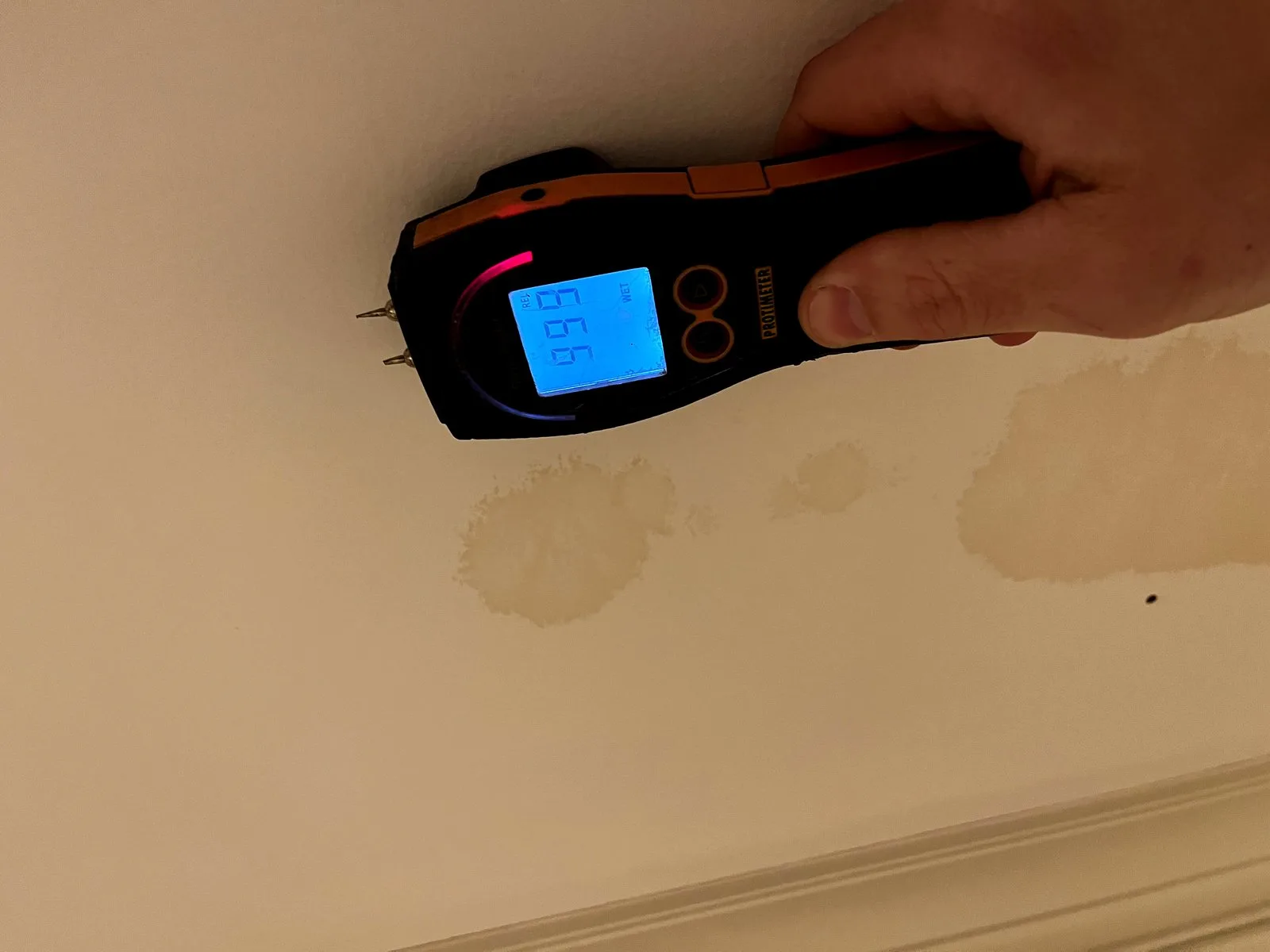 A moisture meter checks water stains on a ceiling.
In a Michigan winter, most attic mold comes from inside the house, not from the roof. Warm, damp air leaks up through gaps in the ceiling, or a bathroom or kitchen fan blows straight into the attic, and the moisture condenses and freezes on the cold roof boards. To get rid of it for good, fix the moisture first: seal the air leaks, send every fan outside, and repair any roof or ice dam leak. Then clean the mold off the wood and replace wet insulation. Small patches under about 10 square feet can be a homeowner job; larger areas, wet insulation or rotted wood need a professional.
Attic mold is easy to miss because few people go up there in winter. It usually shows up as dark staining on the underside of the roof boards, often found during a home inspection, a roof replacement or when a ceiling stain appears below. The good news is that it almost always has a cause you can find, and once the cause is fixed, the mold can be cleaned up and kept away.
Signs of mold in the attic
- Dark spots or staining on the underside of the roof boards (the sheathing) and on rafters. Mold can be black, gray, green or white, and often looks blotchy or fuzzy.
- Frost or ice on the underside of the roof boards in cold weather, or frosty patches in the insulation.
- Darkened, dirty-looking insulation. It acts like a filter where house air is leaking through, so dirty spots show you where the leaks are.
- Wet or matted insulation, or water stains on the ceilings of the rooms below, especially during a thaw.
- A musty smell in the attic or in upstairs rooms.
What causes attic mold in Michigan
Mold needs moisture, and a healthy attic should be cold and dry in winter. When it is not, the moisture usually comes from one of four places.
- Warm, damp air leaking up from the house. Cooking, showers, laundry and even breathing add moisture to the air; a typical family adds about three gallons of water a day. That warm air rises and slips into the attic through gaps around light fixtures, wiring and plumbing holes, the attic hatch, chimneys and flues, duct chases and open spaces above kitchen cabinets and bath vanities. When it reaches the cold roof boards, it condenses or turns to frost, and the wood stays damp for weeks. This is the most common cause in cold climates.
- Bathroom, kitchen or dryer vents that end in the attic. Fans sometimes blow into the attic instead of outdoors. Every shower then sends a cloud of moist air straight onto the roof boards.
- Roof leaks and ice dams. Damaged shingles, flashing around chimneys and vents, or water backing up behind an ice dam can soak the roof boards and insulation. A long-running roof leak can rot the wood as well as grow mold. Our guide to ice dam leaks covers what to do when one is leaking.
- Little or no attic ventilation. Soffit and roof vents help an attic dry out. When they are missing or blocked, moisture has nowhere to go.
Ventilation matters, but it is rarely the whole answer. If a lot of house air is leaking into the attic, more vents or a powered attic fan will not keep up, and a powered fan can make things worse by pulling even more warm, damp air out of the house and into the attic. The lasting fix is to stop the leaks.
Can you deal with it yourself?
Usually yes, if all of these are true:
- the moldy area is smaller than about 10 square feet, roughly a 3 by 3 foot patch;
- the insulation is dry and the wood is solid, not soft or crumbly;
- you can move around the attic safely; and
- nobody in the home has asthma, other breathing problems or a weak immune system.
Call a professional when:
- mold covers more than about 10 square feet, which in an attic often means large areas of the roof boards;
- the insulation is wet or damp, which usually means a roof leak;
- rafters, joists or roof boards look rotted, soft or sagging;
- a bathroom, kitchen or dryer vent is blowing into the attic and needs rerouting;
- the attic has vermiculite insulation, a light, flaky, pea-size gray material. It may contain asbestos, so do not disturb it until it has been tested by an approved lab;
- you see old knob and tube wiring, which can be a fire hazard when it is covered by insulation; or
- heating or cooling ducts in the attic may be moldy.
Staying safe in the attic
- Wear an N-95 respirator, goggles without vent holes, gloves, long sleeves and a hat.
- Step only on the joists or truss bottoms, never on the ceiling drywall or the insulation between them, or you can fall through the ceiling.
- Watch for roofing nails poking down through the roof boards.
- Use a good work light, and keep the hatch closed behind you so dust does not drift into the house.
Mold in your attic?
We find where the moisture is coming from, remove the mold and replace damaged materials across Grand Rapids and West Michigan.
(616) 822-1978How attic mold gets cleaned up
- Stop the moisture. Repair roof leaks, reroute fans to the outside, and plan the air sealing. Cleaning before the cause is fixed only buys a few months.
- Dry everything out. Wet wood is dried, and wet insulation is removed. Wet fiberglass or cellulose insulation is thrown away and replaced, not dried in place.
- Remove the mold from the wood. Surface mold is scrubbed or wiped off with detergent and water, and the dried area is vacuumed with a HEPA vacuum. On larger jobs, professionals seal off the attic from the house and keep it under negative air pressure while they work, so spores and dust do not drift downstairs.
- Deal with damaged wood. Roof boards or framing that mold has weakened are replaced. If you think the structure itself is damaged, have it checked by a professional or a structural engineer.
- Do not paint over it. Paint put on a moldy surface is likely to peel, and the mold carries on underneath. Clean and dry first.
- Seal, then insulate. Once the attic is clean and dry, seal the air leaks and put back or add insulation.
The mold has to be removed, not just killed. Dead mold can still cause allergic reactions. Bleach is not recommended for routine mold cleanup; if you ever use it on a hard surface, never mix it with ammonia or other cleaners, and keep the area well ventilated. Do not use outdoor fungicides inside a home.
The job is done when the moisture source has been fixed, there is no visible mold, no moldy materials left and no musty smell (some staining on the wood may remain), and no new frost or damp shows up when you check again later in the winter.
How to stop attic mold coming back
- Seal the air leaks between the house and the attic first. Start with the big ones: open spaces above kitchen cabinets and bath vanities, behind knee walls in finished attics, the attic hatch, plumbing and wiring holes, recessed lights and the gap around chimneys and flues. Around hot metal flues and chimneys, use aluminum flashing and high-temperature caulk, not spray foam, and keep insulation away from the pipe.
- Send every fan outdoors. Bathroom, kitchen and dryer vents should run through a sealed duct all the way outside, never into the attic. An attic is not "outside", even though it has vents.
- Use your bathroom fan. Run it during showers and for about 15 minutes after. Check that it actually pulls air, and repair or replace it if it does not.
- Keep winter humidity on the low side. In cold weather, indoor humidity needs to be lower than in summer to avoid condensation. If your windows run with water or frost on the inside, the house is too humid. Go easy with humidifiers.
- Keep the natural vents working. Soffit and roof vents help the attic dry out, so keep them open. Powered attic fans are not a fix for winter moisture.
- Keep the roof and gutters in good shape, and deal with ice dams early, because they are a sign of heat leaking into the attic too.
- Check the safety items after sealing. A tighter house can affect gas or oil appliances that vent naturally, so have them checked for proper drafting, and test for radon afterwards.
Air sealing an attic is a tough DIY project. An energy auditor or weatherization contractor can use a blower door test and a thermal camera to find the leaks, and many utilities offer rebates for air sealing and insulation.
If an ice dam or attic leak has already stained a ceiling, wait until the ceiling and walls are fully dry before repairing them, and fix the cause at the same time, or the damage will come back. Our guide to water leaking from your ceiling covers what to do first.
Do you need a mold test?
Usually not. If you can see mold on the roof boards, a test will not change what needs to happen: fix the moisture and remove the mold. There are no official limits for mold in homes to test against. What helps more is finding where the moisture is coming from, with moisture meters, a thermal camera and a careful look at the leak points.
Does insurance cover attic mold?
It depends on what caused it. If the mold came from a sudden, covered event, such as an ice dam leak or storm damage to the roof, your homeowners insurance may cover the water damage and the mold repairs that come with it. Mold from long-term condensation, a fan venting into the attic or poor upkeep is usually treated as a maintenance problem and is not covered. When you call your insurer, describe the cause, for example: "Water from an ice dam leaked into the attic. Will my policy cover the repairs?" Our guide to whether homeowners insurance covers mold in Michigan explains it in detail.
Hiring help in Michigan
Michigan does not license or certify mold remediation companies, so ask any company how much attic mold work they have done, check their references, and get the plan in writing, including how they will fix the moisture, not just the mold. Michigan’s health department also answers questions about mold on 800-648-6942.
For mold in a Grand Rapids area attic, we can find where the moisture is coming from, remove the mold and wet insulation, replace damaged wood, and repair ceilings below. See our mold removal service in Grand Rapids. If the mold is in your basement instead, see how to get rid of basement mold.
Frequently Asked Questions
What do you do if you find mold in your attic?
Do not just spray it and close the hatch. First work out where the moisture is coming from: warm, damp air leaking up from the house, a bathroom or kitchen fan that blows into the attic, or a roof or ice dam leak. Take photos, check whether the insulation is wet and whether the wood feels soft, and then decide whether it is a small job you can clean yourself or one for a professional.
How serious is mold in an attic?
It depends on how much there is and how long it has been there. A little surface mold on the roof boards is mainly a sign of a moisture problem that needs fixing. Mold that has been feeding on wet wood for a long time, for example from an old roof leak, can weaken the wood. Soft, crumbly or sagging roof boards or rafters need a professional, and sometimes a structural engineer.
Can you live in a house with mold in the attic?
Usually yes while it is being dealt with, but it should not be left. Keep the attic hatch closed and avoid storing things up there until it is cleaned. If heating or cooling ducts run through the attic and you think they are moldy, do not run the system until it has been checked. Anyone with asthma, allergies or breathing problems should talk to a doctor if they have symptoms.
Can I remove mold in the attic myself?
Sometimes. A small patch, less than about 10 square feet, on wood you can reach safely can often be cleaned by a homeowner wearing an N-95 mask, goggles and gloves. Call a professional if the mold covers a large area, the insulation is wet, the wood is rotted, the attic has light, flaky, gray vermiculite insulation, or anyone in the home has breathing problems.
Will mold in the attic go away on its own?
No. Cold weather does not kill mold; it goes dormant and grows again when conditions are damp and mild. Even dead mold can still cause allergic reactions, so it has to be cleaned off, and the moisture that caused it has to be fixed or it will come back.
What can I spray in my attic to kill mold?
Spraying alone is not the fix. Dead mold still has to be removed, and the moisture still has to be stopped. Bleach is not recommended for routine mold cleanup, and outdoor fungicides should never be used inside a home. Small areas are cleaned by scrubbing the wood with detergent and water, letting it dry, and vacuuming with a HEPA vacuum.
How much does attic mold removal cost?
It depends on how much of the roof is affected, whether the insulation has to come out, how easy the attic is to get into, and what it takes to fix the cause, such as sealing air leaks or rerouting a bathroom fan. The cleanup is only part of the job. The best way to know is to have the attic looked at and get a written scope.
Will insurance pay for mold in the attic?
It depends on the cause. If the mold came from a sudden, covered event, such as an ice dam leak or storm damage to the roof, the water damage and the mold repairs may be covered. Mold from years of condensation, a bathroom fan venting into the attic, or poor upkeep is usually treated as a maintenance problem and is not covered.