Does homeowners insurance cover mold? When it is covered, when it is not, and what to do in Michigan.
What the standard policy actually says, how common Michigan causes are treated, and the steps that protect a claim you are entitled to.
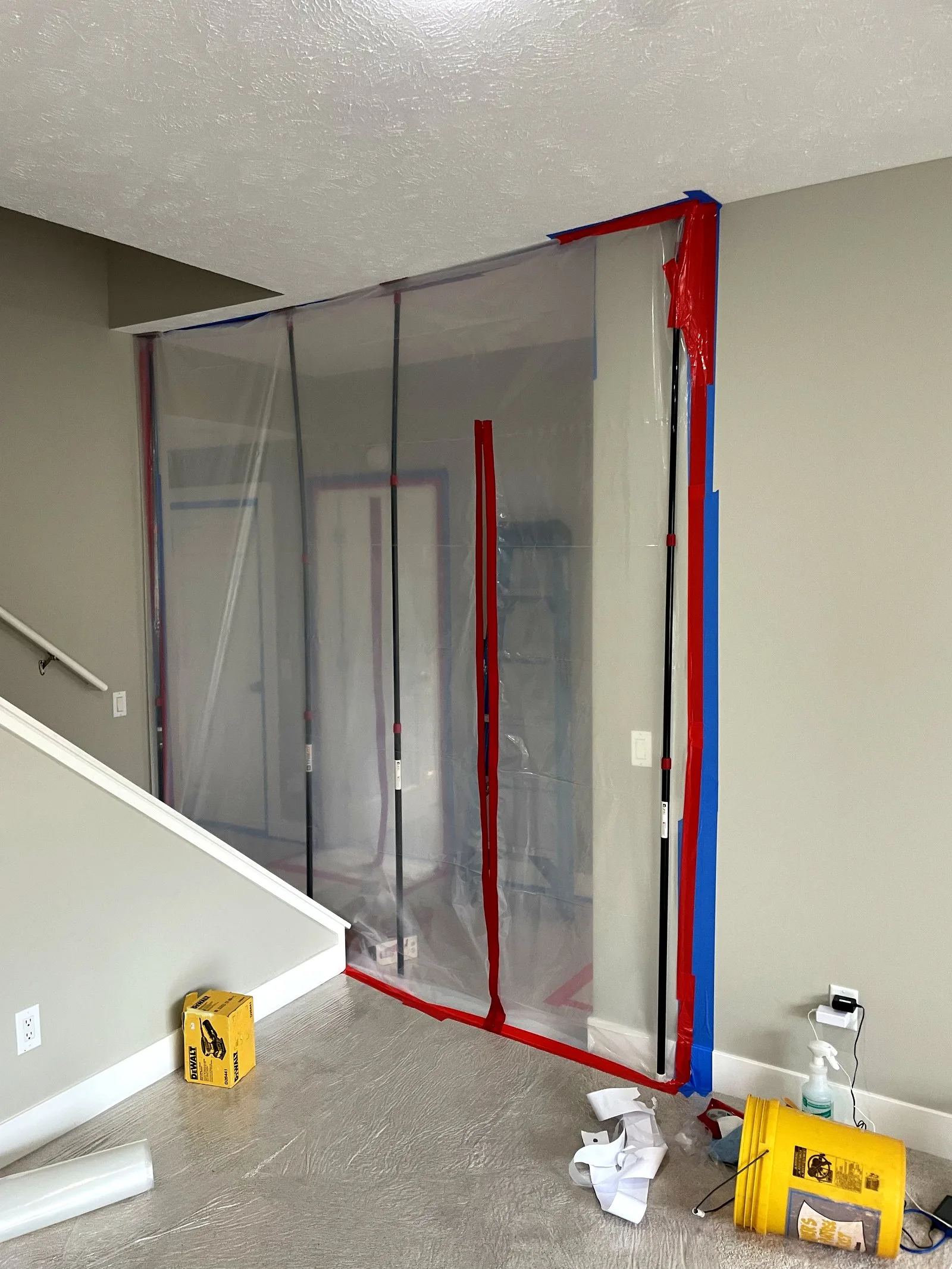 A containment wall on one of our water damage jobs in Middleville. Containment keeps dust and debris in the work area while damaged materials are removed.
Sometimes. Homeowners insurance usually pays for mold only when it comes from a sudden, covered water event, such as a pipe that bursts or an appliance that leaks. The standard policy form excludes mold in general but covers mold hidden inside walls, ceilings or floors from that kind of leak. Mold from slow leaks, humidity, flooding or groundwater is usually not covered. What caused the mold decides the claim, so stop the water, document it and tell your insurer promptly.
Finding mold raises two questions at once: how bad is it, and who pays? This guide answers the second one. It covers what a standard homeowners policy actually says about mold, which common Michigan situations are usually covered and which are not, and what to do so you do not hurt a claim you are entitled to.
Our sources are the standard homeowners policy form itself, the National Association of Insurance Commissioners (NAIC), the Insurance Information Institute, FEMA, the EPA, and Michigan’s health and insurance departments. Every policy is different, so treat this as a guide to the questions to ask, not as a promise about your claim. We are a mold remediation and water damage company, so this is work we sell.
The short answer: what caused the mold decides it
The Insurance Information Institute puts it simply: mold, like rot and insects, is a home maintenance issue that standard homeowners policies generally do not cover, but if the mold is the direct result of a covered peril such as a burst pipe, the cost of removing it may be covered. The NAIC’s consumer guide adds that most policies offer limited or no coverage for mold.
Michigan’s Department of Health and Human Services makes the same point from the homeowner’s side: your insurance may cover the cause of your mold problem, such as a broken pipe, and so possibly the repairs, which might include the mold. It also notes that there are no laws about mold in Michigan homes.
What the standard policy actually says
The NAIC says the “special form” is the most popular kind of homeowners policy. The standard version of it is the HO-3 form, and we read the HO 00 03 05 11 edition (copyright Insurance Services Office, 2010). It says:
- Mold is excluded. The policy does not cover loss caused by “mold, fungus or wet rot.”
- With one exception. It does cover mold, fungus or wet rot that is hidden within the walls or ceilings, beneath the floors or above the ceilings, if it results from an accidental discharge or overflow of water or steam from a plumbing, heating, air conditioning or fire sprinkler system, or a household appliance.
- A sump pump does not count as plumbing or an appliance for this purpose, and neither do roof drains, gutters or downspouts.
- Slow damage is excluded: wear and tear, deterioration, mechanical breakdown, rust, dry rot, and faulty maintenance.
- Outside water is excluded: flood and surface water, water that backs up through sewers or drains or overflows from a sump, and water below the ground that seeps through the foundation.
- Neglect is excluded: failing to use all reasonable means to save and preserve the property at and after the time of a loss.
Insurers file their own versions of these forms, and many add an endorsement that changes the mold rules or sets a dollar limit. Look in your policy and endorsements for the words mold, fungi, wet or dry rot and bacteria, and check your declarations page for any separate mold limit.
Common Michigan situations
This is how the standard form treats the causes we see most often. Your policy may differ.
- A pipe, water heater or appliance hose suddenly leaks and mold grows inside the wall or under the floor. This is the case the standard form covers. The water damage itself is a covered loss too.
- A pipe freezes and bursts. Covered under the standard form only if you used reasonable care to keep the heat on, or shut off the water and drained the system. See our guide to finding and thawing a frozen pipe.
- The sump pump fails or a drain backs up. Excluded from the standard form. Many insurers sell a separate water backup endorsement, and Michigan’s insurance department notes that sewer backup or a failing sump pump may be covered depending on your policy.
- Water seeps through the basement walls or floor. Groundwater is excluded. Our guide to basement flooding and insurance explains why seepage often falls between homeowners and flood policies.
- The roof leaks. The NAIC says a homeowners policy “isn’t a maintenance contract” and gives repairing a roof when it begins to leak as an example of upkeep that is the homeowner’s job. A roof torn open by wind or hail is a different case. Ice dams are a common Michigan problem; see ice dam leaks and insurance.
- Humidity, condensation or a damp crawl space. Usually treated as maintenance and excluded. See water in your crawl space.
- A flood. Not covered by homeowners insurance. The Insurance Information Institute says federal flood insurance may cover mold if it is directly attributable to a flood, but the FEMA flood policy excludes mold that results from failing to inspect and maintain the property after the flood recedes.
Is “black mold” treated differently?
No. Coverage follows the cause, not the color. The EPA notes that molds come in many colors, that if mold is visible, testing is usually unnecessary, and that there are no federal limits for mold that a test could be compared against. If mold is growing, the EPA’s advice is the same whatever it looks like: clean it up and fix the water problem.
Why waiting can cost you the claim
Mold claims are often lost on timing rather than on the policy wording. The standard form lists your duties after a loss. They include:
- giving the insurer prompt notice;
- protecting the property from further damage, making reasonable and necessary repairs to do that, and keeping an accurate record of what you spent;
- and cooperating with the investigation.
The insurer can refuse coverage if not doing these things harms its position. The policy also pays the reasonable cost of measures taken only to protect covered property from further damage.
Drying is the key protective step. The EPA says that if wet materials are dried within 24 to 48 hours after a leak, in most cases mold will not grow. Our article on how long mold takes to grow after water damage explains why that is a deadline for drying, not a clock for mold.
Found mold after a leak?
We find the hidden moisture, dry the structure and remove mold, 24/7 across Kent and Ottawa County. We are there in under 60 minutes on most calls, and we bill your insurer directly.
(616) 822-1978What to do if you find mold
- Find and stop the water. The EPA says that if you clean up mold but do not fix the water problem, it will most likely come back.
- Take photos and notes before you clean anything: the mold, the source of the water and any damaged belongings. Our guide to documenting a water damage claim has a checklist.
- Tell your insurer promptly, and describe the cause. The Michigan health department suggests focusing on why you have mold. Its example: “I have water damage due to a broken pipe. Will my policy cover the repairs for the damaged walls and floor in my basement?”
- Protect the house and keep receipts. Michigan’s insurance department says to take steps to prevent further loss, keep receipts for supplies, and not throw out damaged items until the insurer tells you to. It also says to contact your insurer before hiring a contractor.
- Decide who cleans it. The EPA says a moldy area under about 10 square feet is usually a job you can handle yourself. For more than that, or a lot of water damage, it points to its professional remediation guidance and says any contractor should have experience with mold. If the water was sewage, use a professional. Do not run the heating or cooling system if you suspect it is contaminated with mold.
Is it worth filing a claim?
The NAIC notes that how often you claim and the kind of claims you file can affect your premium and whether your policy is renewed. Most insurers report claims to a shared database known as CLUE. If the repair will cost not much more than your deductible, you might decide to pay for it yourself. If the damage is large and the cause is covered, a claim is what the policy is for.
If your insurer says no
- Ask which policy wording they relied on, and compare it with your policy and endorsements.
- Try to resolve it with the insurer first. The NAIC suggests not feeling rushed to agree, and says it may help to have your contractor meet you and the adjuster.
- If you disagree about the amount, the NAIC suggests checking your policy for an appraisal clause, or hiring an attorney or a licensed public adjuster.
- Call the state. Michigan’s Department of Insurance and Financial Services (DIFS) can help when a claim dispute cannot be resolved: 877-999-6442, Monday to Friday, 8 a.m. to 5 p.m.
- If you think a contractor caused the mold, the Michigan health department says to ask the contractor to fix it first, then contact the Attorney General’s Consumer Protection Division at 877-765-8388.
Can you add mold coverage?
Often, yes. The NAIC says you might be able to buy endorsements to cover mold and sewer or drain backups and sump pump overflow, because most policies offer limited or no coverage for these. Its list of questions to ask an agent includes “What types of water damage are not covered? Is mold damage covered?” Ask before you need it, and check the limit.
Frequently Asked Questions
Does homeowners insurance cover mold?
Only in some cases. The standard homeowners policy form (ISO HO-3) excludes mold, fungus and wet rot, but covers mold hidden inside walls, ceilings or floors when it comes from an accidental leak or overflow from plumbing, heating, air conditioning, a fire sprinkler system or a household appliance. Slow leaks, humidity, flooding and groundwater are generally not covered. Your own policy may differ, so check it.
Does homeowners insurance cover black mold?
The same rules apply whatever the color. Coverage depends on what caused the mold, not on what it looks like. The EPA notes that molds come in many colors, and that if mold is visible, testing it is usually unnecessary.
Does homeowners insurance cover mold from a roof leak?
It depends on why the roof leaked. The NAIC says a homeowners policy is not a maintenance contract and gives repairing a roof when it begins to leak as the homeowner’s job. Damage that follows a sudden event, such as wind or hail tearing open the roof, is a different case. Ask your insurer how your policy treats it.
Does homeowners insurance cover mold in a crawl space?
Usually only if the water came from a covered event, such as a burst pipe. Mold from damp ground, condensation or groundwater seeping in is generally excluded under the standard form as wear and tear, deterioration, or water below the surface of the ground.
Should I tell my insurance company about mold?
If the mold may come from a covered water event, yes, and promptly. The standard policy requires prompt notice of a loss and says the insurer may refuse coverage if a late report harms its position. The Michigan Department of Health and Human Services suggests focusing on why you have mold, for example the broken pipe that caused the water damage.
How do I get my insurance to pay for mold?
Show that the water came from a covered event, report it promptly, stop the water and protect the house from further damage, and keep photos, notes and receipts. Read your policy for the words mold, fungi, wet or dry rot and bacteria, and for any mold limit on the declarations page.
Does flood insurance cover mold?
Sometimes. The Insurance Information Institute says federal flood insurance may cover mold only if it is directly attributable to a flood. The FEMA flood policy excludes mold that results from failing to inspect and maintain the property after the flood recedes.
Does homeowners insurance cover mold testing?
The standard policy form we read does not mention testing. The EPA says that if mold is visible, sampling is usually unnecessary, and that there are no federal limits for mold to test against. Ask your insurer before you pay for tests you want them to cover.