Water leaking from your ceiling? Who to call, and what to do before they get there.
What to do in the first few minutes, how to tell if it is the plumbing or the roof, when a wet ceiling can be saved, and what insurance usually covers.
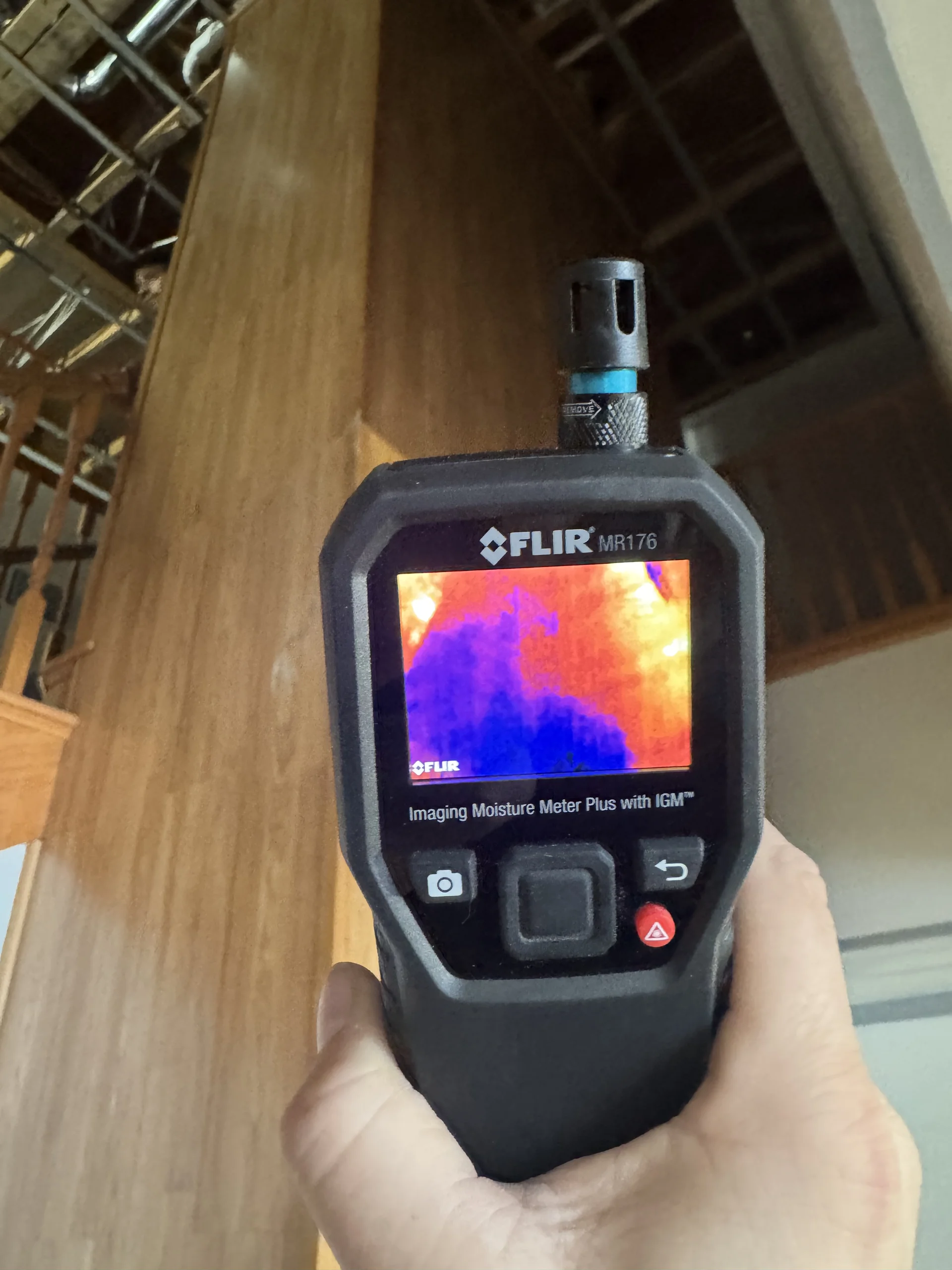 Checking for hidden moisture with a thermal imaging meter on one of our water damage jobs in Cascade, with the ceiling already opened above. The stain is rarely the whole story.
Keep people out from under a wet or sagging ceiling. If water is near a light or outlet, turn off that circuit at the breaker if you can do it with dry hands and dry feet. Stop the water: stop using the bathroom or appliance above, or close the main water shut-off. Catch the drips, move your things and take photos. Then call the right people: a plumber if the leak is below a bathroom, kitchen or laundry room, a roofer if it only leaks when it rains or snow melts, an electrician if a fixture got wet, and a water damage company to dry the ceiling and the room below.
Water coming through a ceiling is really two problems. Something is letting water out, and that has to be found and fixed. And everything the water has already soaked, the drywall, the insulation above it, the walls and floor below, has to be dried before it starts to rot or grow mold. This guide covers what to do in the next few minutes, how to work out where the water is coming from, who to call for each part, and what insurance usually covers.
We are a water damage restoration company in Grand Rapids, so drying out ceilings after leaks is work we sell. We have tried to be clear about which jobs belong to a plumber, a roofer or an electrician.
What to do right now
- Keep people out from under it. A ceiling that bulges or sags is holding water and can come down. Keep children and pets out of the room.
- Deal with the electricity. If water is coming through a light fixture or is near switches, outlets or wiring, do not touch them. Turn off that circuit at the breaker panel, but only if you can reach it with dry hands and without standing on a wet surface. If you cannot, stay out of the room and call an electrician.
- Stop the water. If the drip gets worse when someone uses the bathroom, kitchen or laundry upstairs, stop using them and close the shut-off valve on that fixture if there is one. If water keeps coming with everything turned off, a pipe under pressure may be leaking: close your home’s main water shut-off.
- Catch it and protect your things. Put buckets or bins under the drips, move furniture, rugs and electronics out of the way, and lay down towels.
- Take photos and note the time. Photograph the ceiling, the drip, the room below and anything damaged before you clean up. Note when you first saw it. Keep receipts for anything you buy or pay for to stop the damage.
- Call the right people. See the list below.
If the ceiling is sagging
A sag or bulge means water has collected on top of the ceiling. Wet drywall and plaster are heavy, so this is a real collapse risk. A ceiling that has sagged has got wet and will have to be replaced, so the goal is to get the water out safely, not to save that section.
You will see advice online to poke a hole in the middle of the bulge. Do not do that: striking the center can bring the whole ceiling down at once. If you have to drain it before help arrives:
- turn off the power to that area first;
- wear eye protection, and a hard hat if you have one;
- put a bin or tarp underneath, use a long stick or pole, and stand well back from the bulge;
- start making small holes at the outer edge of the bulge, so the water drains out slowly.
If the bulge is large, is near a light fixture, or you are not sure, leave it, keep everyone out of the room and call for help. Water from an overflowing toilet or a sewer line should also be left to a professional, because it can be contaminated. Our guide to Category 3 water explains why.
Where is the water coming from?
Look at what is above the wet spot, and when it leaks. Those two things usually point to the cause.
- Below a bathroom. A worn wax ring under the toilet, a tub or shower drain, a shower valve inside the wall, or failed caulk and grout. If it only drips when someone showers or flushes, a drain or fixture is likely.
- Below a kitchen or laundry room. A dishwasher, refrigerator or washing machine supply hose, or a sink drain.
- Top floor, only when it rains or snow is melting. The roof, flashing, a vent or a skylight. In a Michigan winter, a stain along an outside wall after days of snow and thaw is often an ice dam leak.
- Along an outside wall during a cold snap. A pipe that froze and split. See how to find a frozen pipe.
- Below an attic furnace or air handler, in summer. A clogged air conditioning condensate drain line or an overflowing drip pan.
- A basement ceiling. A supply or drain pipe running through the joists, or a bathroom, kitchen or water heater on the floor above.
A good test: if the drip stops when nobody is using water upstairs, look at drains and fixtures. If it keeps going with everything off, a pressurized supply pipe is more likely, so keep the main water shut off until a plumber has looked.
The stain is not always under the leak. Water runs along joists and pipes and can show up several feet from where it got in.
Water coming through your ceiling?
We find where the water went with moisture meters and thermal imaging, remove only what cannot be dried, and dry the ceiling, walls and floors, 24/7 across Kent and Ottawa County. We are there in under 60 minutes on most calls, and we bill your insurer directly.
(616) 822-1978Who to call
Most ceiling leaks need two kinds of help: someone to stop the source and someone to dry what already got wet.
- A plumber if the leak is below a bathroom, kitchen or laundry room, gets worse when water is used upstairs, or keeps running with everything off. The plumber fixes the pipe, drain, seal or hose.
- A roofer if it only leaks during rain or snowmelt, or on the top floor near an outside wall. After storm damage, a tarp may be needed first to keep more water out.
- An electrician if water came through a light fixture or reached switches, outlets or wiring. Fixtures, switches, outlets and junction boxes that got soaked usually have to be replaced, and the circuit should be checked before the power goes back on.
- A water damage restoration company if the ceiling, insulation, walls or floors are wet, the stain is more than a small spot, the leak may have run for a while, or the water was dirty. They measure where the water went, dry the structure and remove what cannot be saved. If you are in the city, see our page on water damage restoration in Grand Rapids.
- Your landlord first, if you rent (more below).
- Your insurance company if the damage is more than a small spot. Our claim tips cover what to photograph and keep.
Can a wet ceiling be saved?
Often, yes, if three things are true: the water was clean (from a supply pipe, not a toilet or sewer line), drying starts quickly, and the drywall has not sagged or pulled away from the framing. Then it can often be dried in place.
It usually has to come out if it has sagged, if the insulation above it is soaked, if it sat wet behind a slow leak for a long time, or if the water was dirty. Ceiling tiles and other soft materials that have gone moldy may have to be thrown away. Our guide to water-damaged drywall explains how to tell, and how the repair is done.
Speed matters. Wet materials that are dried within 24 to 48 hours of a leak usually do not grow mold. That is a deadline for drying, not a promise that mold appears on day three. Our guide to how fast mold grows after water damage explains more.
The size of the stain does not tell you how much is wet. The top side of the drywall, the insulation and the framing can be wet well beyond the stain. A moisture meter or a thermal camera shows where the water actually went. Where water is trapped, small holes can let air into the cavity before anything bigger is opened.
Do not paint over a stain until the leak is fixed and the ceiling and the space above it read dry. Paint can hide a leak that is still going, and paint put over mold is likely to peel.
If you rent
Tell your landlord or property manager straight away, and follow up in writing so there is a record. In Michigan, your landlord must make needed repairs within a reasonable time after being told about them, though a lease longer than one year may have waived that, so read yours. For an urgent leak, a landlord is allowed to come in without giving you notice. Photograph your own belongings separately from the damage to the unit, and check whether your renters insurance covers them.
Does insurance cover a leaking ceiling?
It depends on what caused it. Many homeowners policies use the standard HO-3 form, and this is how it usually works. Your own policy may be worded differently, so read it and call your insurer.
- A sudden plumbing or appliance leak: the water damage is usually covered, including tearing out and replacing part of the building when that is needed to reach and fix the pipe. The pipe, fixture or appliance that leaked is usually not.
- A slow leak: wear and tear, deterioration, rust and corrosion are excluded. If a stain built up over months, expect questions.
- A frozen pipe: usually covered only if you kept the heat on, or shut off the water and drained the pipes.
- A roof leak: damage to the house is often covered unless the insurer says it comes from wear or poor upkeep. Your belongings are covered for rain or snow coming in only if wind or hail first made an opening in the roof or a wall. Ice dams are their own story: see our ice dam guide.
- Hidden mold: mold is generally excluded, but the standard form does cover mold hidden inside walls or above ceilings when it comes from an accidental leak from a plumbing, heating or air conditioning system or a household appliance.
Report the damage promptly, take photos before cleanup, and do not throw damaged items away until your insurer says you can. Our guide to water damage and insurance in Michigan goes further.
How to stop it happening again
- Check under sinks, around toilets and behind the washer now and then, and replace cracked or bulging supply hoses.
- Keep air conditioning drain lines clear and the drip pan clean before summer.
- Keep the heat on in winter, including when you travel. Our frozen pipe guide covers how warm to keep the house.
- Keep warm air out of the attic. Sealing gaps around lights, pipes and fans is the lasting fix for ice dams.
- Keep gutters clear so roof water drains away.
- Know where your main water shut-off and breaker panel are before you need them.
Frequently Asked Questions
Who do I call for a water leak in my ceiling?
It depends on where the water is coming from. Call a plumber if the ceiling is below a bathroom, kitchen or laundry room, or if the drip gets worse when water is used upstairs. Call a roofer if it only leaks when it rains or snow is melting. Call an electrician if water is coming through a light or near wiring. Call a water damage restoration company to dry the ceiling, the insulation above it and the room below. Most ceiling leaks need the source fixed and the water dried, so you often need two of these.
Is a leaking ceiling an emergency?
Treat it as urgent if water is actively dripping, the ceiling is sagging, or water is near a light fixture, outlet or switch. Keep people out of the room, turn off the power to that area if you can do it safely, and stop the water. A dry stain that is not growing is less urgent, but it still means water got in at some point, so have it checked.
Do plumbers fix ceiling leaks?
Plumbers fix the leak itself: the pipe, drain, toilet seal, shower valve or appliance hose that is letting water out. Drying the wet ceiling, insulation, walls and floors below is drying work, and replacing ruined drywall is a repair job after that. Ask the plumber to find and fix the source first, then have the rest checked for moisture.
Can a ceiling collapse from a water leak?
Yes. Wet drywall and plaster are heavy, and water can pool on top of a ceiling until it sags. A sagging ceiling has got wet and will need to be replaced. Do not stand under it, and keep children and pets out of the room.
Should I poke a hole in a sagging ceiling to drain it?
Only if you have to, and never in the middle. Turn off the power to that area first, wear eye protection and a hard hat, use a long stick and stand well back. Start making holes at the outer edge of the bulge so the water drains slowly. Striking the center can bring the whole ceiling down. If the bulge is large, near a light fixture, or you are not sure, leave it and call for help.
Does homeowners insurance cover a leaking ceiling?
Often, if the cause was sudden and accidental, such as a burst pipe or an appliance hose that let go. Standard policies usually exclude wear and tear, deterioration and slow leaks, and do not pay to fix the pipe or appliance that leaked. Rain damage to your belongings is usually covered only if wind or hail first made an opening in the roof or a wall. Check your own policy and call your insurer.
Can I just paint over a water stain on my ceiling?
Not yet. Fix the leak first, then make sure the drywall and the space above it are dry. Paint can hide a leak that is still going, and paint put over mold is likely to peel.
What if water is coming through a light fixture?
Do not touch the switch or the fixture. Turn off that circuit at the breaker panel if you can reach it without standing on a wet floor and with dry hands. If you cannot, keep everyone out of the room and call an electrician. Light fixtures, switches, outlets and junction boxes that have been soaked usually have to be replaced, and an electrician should check the circuit before the power goes back on.