How to get rid of mold on basement walls, and stop it coming back.
How to tell what you are looking at, find the water behind it, clean concrete, drywall and wood safely, decide about bleach, and keep your basement dry.
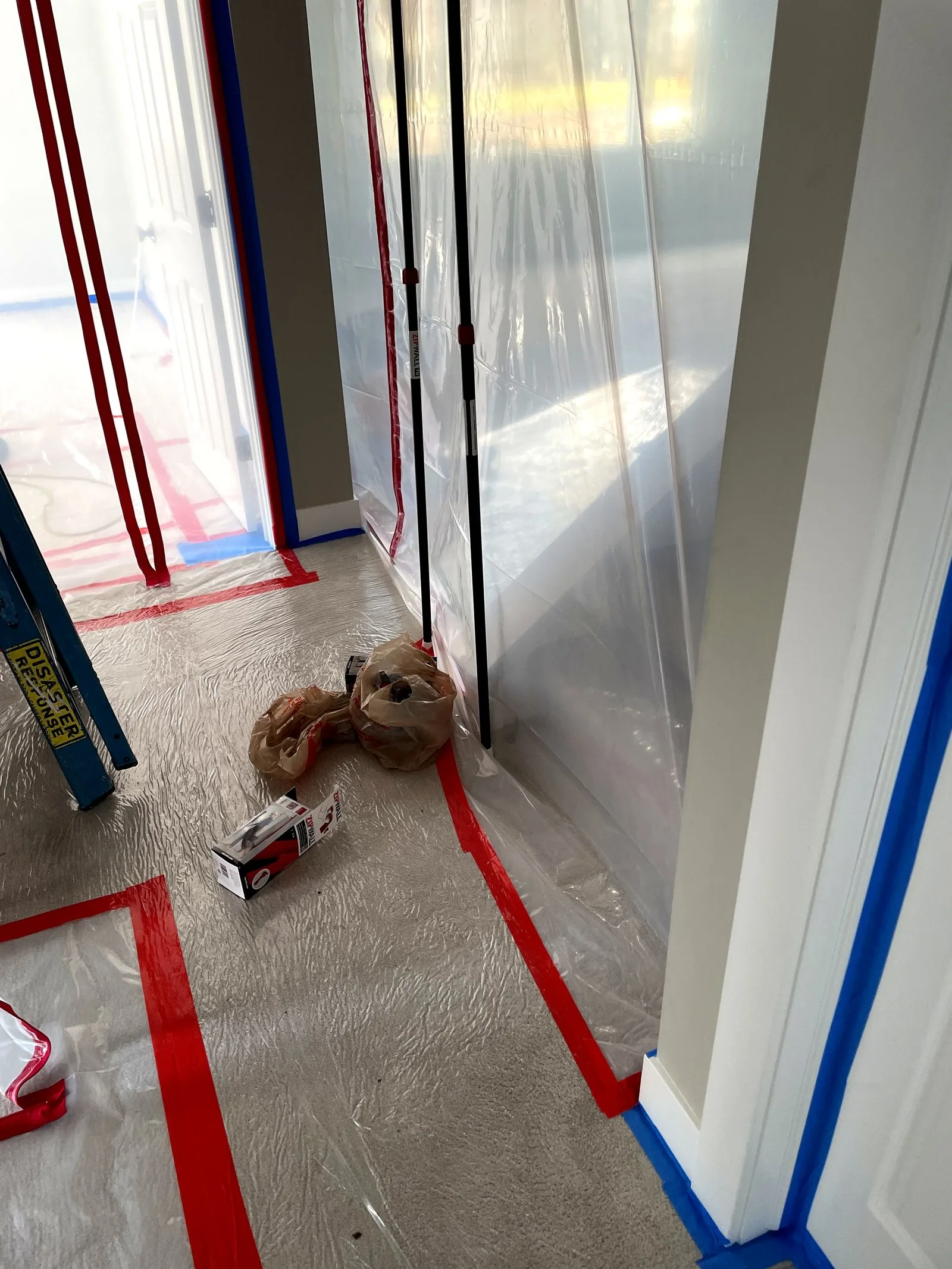 Plastic containment walls and covered floors keep dust and debris inside the work area while damaged materials are removed.
Fix the water first, because mold always comes back if the basement stays damp. Then, for a patch smaller than about 10 square feet, wear an N-95 mask, goggles and gloves, scrub hard surfaces like concrete and block with detergent and water, and dry everything completely. Moldy carpet, cardboard and badly affected drywall usually have to go. Keep the basement between 30 and 50 percent humidity, send rainwater away from the foundation, and call a professional for large areas, mold after flooding or sewage, or mold behind finished walls.
Basements are one of the most common places for mold in Michigan homes. They sit against cold, damp ground, they are often less ventilated than the rest of the house, and small leaks can go unnoticed for weeks. The good news is that most basement mold has a cause you can find and fix. This guide covers how to tell what you are looking at, how to clean it safely, and how to stop it coming back.
First, make sure it is mold
Mold can be black, green, gray, white or even pink, and it usually looks fuzzy, spotty or slimy. It often comes with a musty, earthy smell. Common spots in a basement are the bottom of walls, around windows, on the back of drywall or paneling, on wood framing and floor joists, under carpet, and on stored boxes.
A white, chalky or crystal-like crust on bare concrete or block is often mineral salt left behind as water moves through the wall and dries. It brushes off as powder and is not fuzzy. Either way, both mold and that white crust tell you the same thing: water is getting into the basement.
Find where the water is coming from
Cleaning mold without fixing the moisture is wasted effort. Basement moisture usually comes from one of these:
- Leaks. Plumbing, a water heater, a washing machine hose, or a window well that fills with rain.
- Seepage from outside. Rain and groundwater pushing through cracks or soaking up through the concrete. A damp ring along the bottom of the walls is a common sign.
- Condensation. Warm, humid summer air meets cool basement walls and floors and turns to water. Many people mistake this for a leak.
- Moisture made inside the house. A clothes dryer that is not vented outside, a humidifier, a bathroom without a fan, or laundry dried indoors.
- An open sump pit. It lets damp air from under the house into the basement. Sump pits should have an airtight cover.
A cheap humidity meter, around $10 to $50 at a hardware store, tells you a lot. If the basement reads above 60 percent, the air itself is part of the problem.
Can you clean it yourself?
Usually yes, if all of these are true:
- the moldy area is smaller than about 10 square feet, roughly a 3 by 3 foot patch;
- it is on a surface you can scrub or can easily remove;
- the water was not sewage or floodwater; and
- nobody in the home has asthma, other breathing problems or a weak immune system.
Call a professional when:
- the mold covers more than about 10 square feet, or there has been a lot of water damage;
- the water came from a sewage backup or flooding from outside;
- mold is in or near the furnace, air conditioner or ductwork. Do not run the system if you think it is contaminated, because it can spread mold through the house;
- you smell mold but cannot see it, which often means it is behind drywall, paneling or under carpet; or
- the mold keeps coming back after cleaning.
What to wear
- An N-95 respirator that fits properly, from a hardware store.
- Goggles without vent holes, so spores do not get in your eyes.
- Long gloves that reach the middle of your forearm. Ordinary rubber gloves are fine with soap and water; use nitrile, neoprene or PVC gloves with bleach or strong cleaners.
Open windows if the weather allows, keep children and pets out of the area, and bag moldy debris before carrying it through the house.
Mold in your basement?
We find the moisture, remove the mold and dry the basement properly across Grand Rapids and West Michigan.
(616) 822-1978How to clean basement mold, surface by surface
- Bare concrete and block walls or floors. Scrub with detergent and warm water and a stiff brush, rinse with clean water, and dry the surface completely with fans and a dehumidifier.
- Painted walls. Clean the same way. Do not paint over mold, because paint put on a moldy surface is likely to peel and the mold keeps growing underneath. Once the wall is clean and fully dry, it can be primed and repainted.
- Drywall, paneling and wood trim. A small patch can be cleaned and dried. If there is a lot of mold, or it comes back, the best fix is to cut out that section and replace it, and check the back of the board and the wall cavity behind it.
- Wood framing and floor joists. Scrub surface mold off, then dry the wood well. Heavy growth on structural wood is a job for a professional.
- Carpet, padding, ceiling tiles, cardboard boxes and stored fabrics. These soak up water and mold grows into them, so they usually have to be thrown away once they are moldy. Carpet and furniture that have been wet for two days or more often cannot be saved.
Whatever the surface, the mold has to be removed, not just killed. Dead mold can still cause allergic reactions.
What about bleach?
Bleach is not needed for most mold cleanup. Detergent and water, plus scrubbing, removes mold from hard surfaces. On porous materials like drywall and wood, bleach does not get the mold out of the material, which is why badly affected pieces are cut out and replaced instead.
If you do choose to use bleach on a hard surface:
- mix no more than 1 cup of household bleach with 1 gallon of water, never pool bleach;
- never mix bleach with ammonia or other cleaners, because it makes a poisonous gas;
- open windows and doors for fresh air;
- do not use it if anyone in the home has asthma or other breathing problems; and
- keep it off metal, which it can discolor or rust, and test it on a hidden spot first.
How to know the job is done
- the water or moisture problem has been fixed;
- there is no visible mold and no musty smell (staining may remain);
- when you check again a few weeks later, there are no new signs of water or mold; and
- people can use the space without symptoms.
How to keep mold from coming back
- Keep the humidity down. Aim for 30 to 50 percent, and never above 60 percent. A dehumidifier helps in summer, but on its own it treats the symptoms, not water coming in through the walls.
- Send rainwater away from the house. Keep gutters clean and use downspout extensions that discharge at least 4 feet from the foundation.
- Fix the grading. The ground should slope away from the house, about 1 inch per foot for at least 6 feet.
- Do not air out the basement on hot, humid days. Open windows let humid summer air in, and it condenses on the cool walls.
- Vent moisture outside. Make sure the clothes dryer vents outdoors, and run bathroom fans.
- Insulate cold water pipes that sweat, and cover the sump pit with an airtight lid.
- Keep carpet out of damp basements, and store things in plastic bins rather than cardboard, off the floor.
- Fix water problems before finishing a basement. Walls must be dry before they are insulated and covered, or the mold ends up behind the new drywall.
If water is coming through the walls or floor, the lasting fixes are outside drainage, grading and gutters, or an interior or exterior drainage system to a sump. Coatings painted on the inside of the wall tend to be temporary. Our guide to what to do if your basement floods covers the bigger water problems, and our sump pump guide shows how to check yours.
Do you need a mold test?
Usually not. If you can see the mold, a test will not change what needs to happen: remove it and fix the moisture. There are no federal limits for mold in homes to test against. Where testing and inspection do help is when you smell mold but cannot find it. A moisture inspection with meters and thermal imaging can show where water is getting into walls, floors or ductwork, so you open up the right place.
Does insurance cover basement mold?
It depends on the cause. If the mold came from a sudden, covered event, such as a burst pipe, your homeowners insurance may cover the water damage and the mold repairs that come with it. Mold from long-term dampness, seepage or humidity usually is not covered. When you call your insurer, describe the cause, for example: "I have water damage from a broken pipe. Will my policy cover the repairs to the basement walls and floor?" Our guide to whether homeowners insurance covers mold in Michigan explains it in detail.
Hiring help in Michigan
Michigan does not license or certify mold remediation companies, so ask any company how much mold work they have done, check their references, and get the plan in writing. Michigan’s health department also answers questions about mold on 800-648-6942.
For mold in a Grand Rapids area basement, we can find where the moisture is coming from, remove the mold and affected materials, dry the basement, and rebuild walls and floors. See our mold removal service in Grand Rapids.
Frequently Asked Questions
How do you remove mold from concrete basement walls?
Fix the water problem first. Then, wearing an N-95 mask, goggles and gloves, scrub the wall with detergent and water and a stiff brush, rinse, and dry it completely with fans and a dehumidifier. If the mold comes back, water is still getting in, so the cause needs fixing before more cleaning will help.
Can I remove basement mold myself?
Usually yes, if the mold covers less than about 10 square feet, roughly a 3 by 3 foot patch, it is on a surface you can scrub, and nobody in the home has asthma or other breathing problems. Call a professional for larger areas, mold after sewage or floodwater, mold in the heating ducts, or mold behind finished walls.
Is mold in the basement harmful?
It can be. Mold can cause a stuffy nose, sore throat, coughing, wheezing, itchy eyes or a skin rash, and it can trigger asthma attacks. People with asthma, allergies, lung disease or a weak immune system are affected most. Basements are often connected to the rest of the house through ductwork and stairs, so the air does not stay downstairs.
Can I live in a house with mold in the basement?
Many people do while they deal with it, but it should be cleaned up and the moisture fixed soon, not left to spread. Keep the basement door closed, do not run the furnace or air conditioning if the ducts are moldy, and talk to a doctor if anyone in the home has symptoms or breathing problems.
Does bleach kill mold on basement walls?
Bleach is not needed for most mold cleanup. Scrubbing with detergent and water removes mold from hard surfaces, and dead mold still has to be removed anyway because it can still cause allergies. If you do use bleach, mix no more than 1 cup with 1 gallon of water, never mix it with ammonia or other cleaners, open windows, and do not use it if anyone in the home has asthma.
Can I clean basement mold with dish soap?
Yes. Dish soap or another detergent in warm water, scrubbed on with a brush and then rinsed and dried, is a good way to clean mold off hard surfaces like concrete, block, tile and painted walls. The goal is to remove the mold, not just kill it, and then keep the area dry.
Will homeowners insurance cover mold in the basement?
It depends on what caused it. If the mold came from a sudden, covered event such as a burst pipe, the water damage and the mold repairs may be covered. Mold from long-term dampness, seepage or high humidity usually is not. When you call your insurer, describe the cause, for example water damage from a broken pipe.
Do I need a mold test for my basement?
Usually not. If you can see the mold, a test will not change what needs to be done: remove it and fix the moisture. Testing can add cost without adding answers. When there is a musty smell but no visible mold, a moisture inspection is the better first step to find where water is getting into walls, floors or ductwork.