Does homeowners insurance cover basement flooding? It depends on how the water got in.
A plain guide for Michigan homeowners: which basement floods are covered, which need an add-on, why rain seeping through the walls is usually not covered at all, and how to give your claim the best chance.
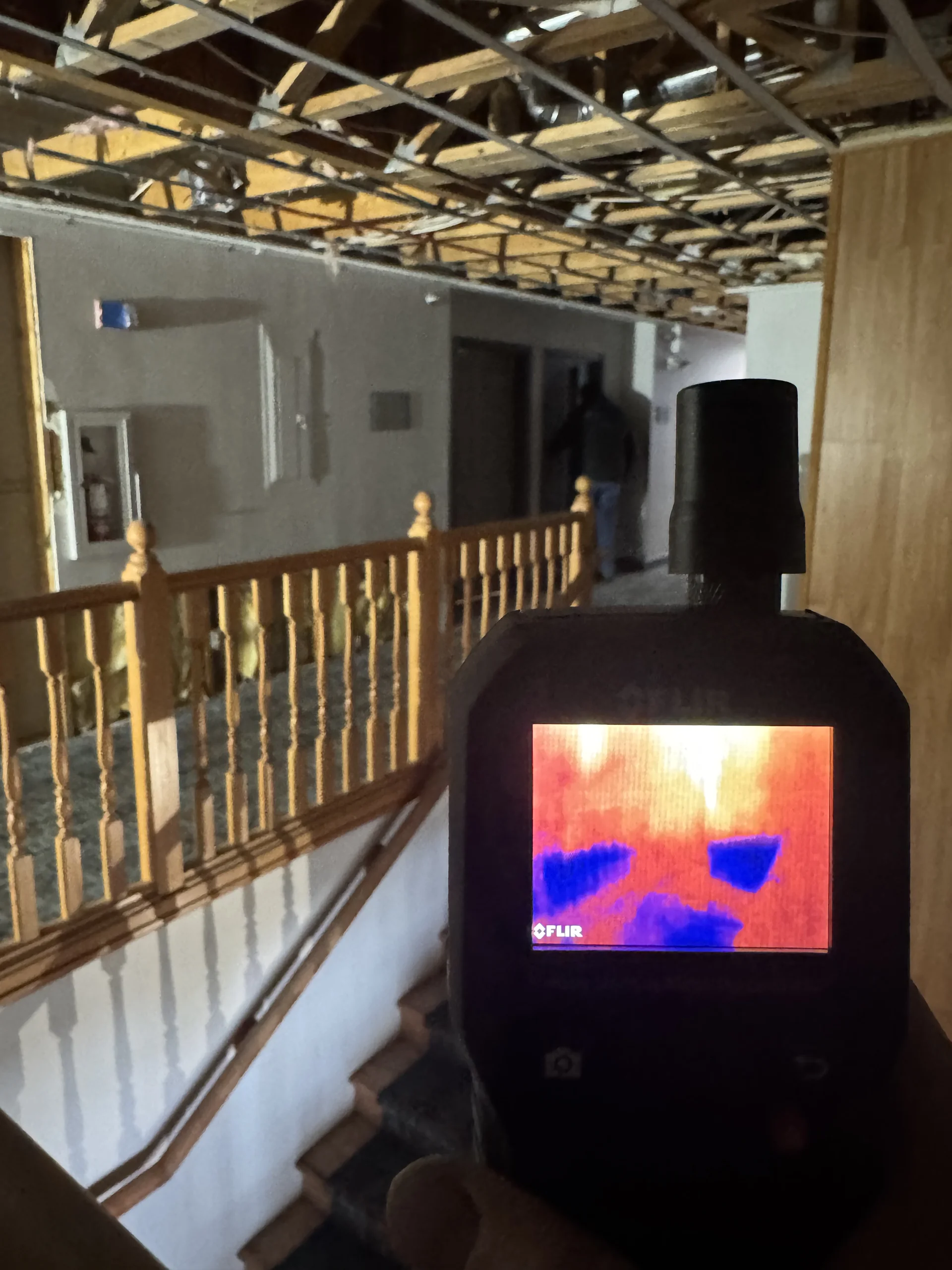 A thermal camera shows where the water went, which helps prove the cause to your insurer
A standard homeowners policy usually covers a flooded basement when the water came suddenly from inside the house, such as a burst pipe, a failed water heater or a broken washing machine hose. It does not cover a sewer or floor drain backup or a failed sump pump unless you added a water backup endorsement. Rain or ground water seeping through the walls or floor is usually not covered by homeowners insurance, and often not by flood insurance either.
When a homeowner calls us about a wet basement, the first question after "how bad is it?" is almost always "will insurance pay?" The honest answer is that the amount of water matters far less than how it got in. Two basements with the same six inches of water can end up with completely different claims.
This guide covers basements specifically. For water damage elsewhere in the house, see our general guide, does homeowners insurance cover water damage in Michigan. Every policy is a little different, so keep your declarations page (the summary page at the front of your policy) handy.
How did the water get in? That decides the claim
| How the water got into the basement | Standard homeowners policy | What decides it |
|---|---|---|
| Burst or frozen pipe, failed water heater, broken washer hose | Usually covered | Sudden and accidental, from inside the house |
| Sewer or floor drain backing up | Not covered | Needs a water backup endorsement |
| Sump pump fails or cannot keep up | Not covered | Needs a water backup endorsement that includes sump overflow |
| Rain or snow melt seeping through walls, cracks or the floor | Usually not covered | Ground and surface water are excluded. Flood insurance only helps if it was a wider flood (see below) |
| A river, street or neighborhood flood pouring in | Not covered | Needs a separate flood insurance policy, and even then basement coverage is limited |
| Slow leak or seepage that went on for weeks | Usually not covered | Treated as wear and maintenance, not an accident |
The pattern is simple. Homeowners insurance is built for sudden accidents inside the house. Water that comes up through drains, or in from the ground outside, is treated differently.
Covered: water that came suddenly from inside the house
The Insurance Information Institute lists sudden, accidental water from plumbing, heating and air conditioning systems and household appliances among the perils most homeowners policies cover. Freezing of those systems is on the same list. In a basement that usually means:
- A supply pipe that splits or a pipe that freezes and bursts
- A water heater that suddenly gives out
- A washing machine hose, utility sink line or water softener that fails
Two conditions matter. The damage has to be sudden, not a slow drip that went on for weeks. And for frozen pipes, most policies expect you to have kept the house heated, or shut off and drained the water if it was empty. The policy usually pays for the water damage. The part that failed, such as the old water heater itself, often is not covered.
Not covered without an add-on: sewer backup and sump pump failure
This is the one that catches the most Michigan homeowners. When water comes up through a floor drain or toilet, or a sump pump fails during a storm, a standard policy does not cover it. Flood insurance does not cover it either. The Insurance Information Institute and Michigan's Department of Insurance and Financial Services (DIFS) both say this coverage has to be added to your policy as an endorsement, often called water backup or sewer and drain backup.
If you have that endorsement, the cleanup is covered up to its dollar limit, minus your deductible. Those limits are often lower than the cost of cleaning up a finished basement, so check the amount, not just whether you have it. Our sump pump failure guide covers what to do in the first hour.
Rain coming through the walls: why it is usually not covered
"My basement floor is wet after heavy rain. Is that covered?" is one of the most common questions online, and the answer is usually no. Water that soaks through foundation walls, comes up through floor cracks, or seeps in around window wells is ground or surface water. Standard homeowners policies exclude it.
Many people assume flood insurance is the answer, but it often is not either. Under FEMA's definition, a "flood" for flood insurance means a general flood covering at least two acres of normally dry land, or at least two properties. Water seeping into just your basement after a storm usually does not meet that test. In practice, that leaves ordinary basement seepage as a maintenance problem: grading, gutters, downspouts, crack repair, waterproofing and a working sump pump are what protect you.
Flood insurance covers less in a basement than you think
If a real flood does reach your home, a federal flood insurance policy through the National Flood Insurance Program (NFIP) still treats basements differently from the rest of the house. As FEMA describes it, basement coverage focuses on the things that make the home safe and working again:
- Usually covered: furnace, water heater, central air conditioner, sump pump, electrical outlets, switches and the breaker box, plus cleanup such as pumping out water
- Only with contents coverage, and only if plugged in: washer, dryer and food freezer
- Not covered: finished walls, finished floors, built-ins and bathroom fixtures in the basement, and personal belongings stored down there, like furniture, electronics and boxes
Two more things to know. An NFIP policy normally takes 30 days to start, so it cannot be bought once the rain is in the forecast. And FEMA has been reviewing basement coverage, so check the current terms with your agent. Private flood policies sometimes cover more. If your agent does not sell flood insurance, the NFIP referral line is 800-427-4661.
The amount of water rarely decides a basement claim. How the water got in almost always does.
If the city sewer backed up: Michigan's 45-day rule
If a public sewer backed up into your home, you may be able to claim against the city, township or county that runs it, separately from your own insurance. Michigan law (Public Act 222 of 2001) sets a strict deadline: you must send a written notice of the claim within 45 days of when the damage was discovered, or should have been discovered. Miss it and you lose the right to pursue the claim.
According to Oakland County's official claim page, the notice must include your name, address and phone number, the address of the damaged property, the date you discovered the damage, and a short description of what happened. Send it to the public works or sewer department of whoever runs the sewer, and keep a copy. In Grand Rapids, our Grand Rapids sewage cleanup page explains the city's process.
How much will insurance pay for a flooded basement?
There is no single number. It depends on which part of your policy applies:
- Covered sudden water (burst pipe, water heater): the cost to dry out and repair the basement, minus your deductible, up to your normal policy limits
- Sewer or sump backup: up to your water backup endorsement’s limit, minus your deductible. If you do not have the endorsement, usually nothing
- Flood: only the basement items FEMA lists above, if you have flood insurance
Your contents may also be paid at actual cash value (what the item was worth, after wear) rather than the cost of buying new, unless your policy includes replacement cost coverage. Your declarations page shows which you have.
How to give your basement claim the best chance
- Stay safe first. Do not walk into standing water near outlets, cords or the electrical panel. If water is near anything electrical, keep out and call for help.
- Find and photograph the source. The burst pipe, the water heater, the floor drain, the sump pit. The cause is what your insurer will decide the claim on.
- Photograph and video everything before you clean. Every wall, every wet item, the water line on the walls. Our documentation checklist shows what adjusters look for.
- Describe what happened, do not just say "flood." DIFS specifically advises Michigan homeowners against simply calling water damage a flood. "Water was coming out of the water heater" or "water came up through the floor drain" gets the right coverage looked at.
- Report it quickly to your insurer's claims line or your agent, with your policy number ready.
- Stop the damage from getting worse. Your policy expects reasonable steps to protect the home, and drying the basement quickly is part of that. Wet drywall and carpet pad can start growing mold within a day or two. Keep every receipt.
- Keep damaged items until your insurer says you can discard them, and photograph them either way.
Protect yourself before the next storm
- Check your declarations page today for a water backup or sewer backup endorsement, and look at its dollar limit. If you have a finished basement or a sump pump, call your agent and ask whether the limit would cover a full cleanup.
- Think about flood insurance early if you live near a river or in a low area, because of the 30-day wait.
- Look after the sump pump. Test it each spring, keep the discharge line clear and pointed away from the house, and consider a battery backup.
- Ask about a backwater valve. It helps stop sewer water from backing up into the basement. Grand Rapids has had a city program for this, so call 311 to ask whether your home qualifies.
- Keep valuables off the basement floor. Shelving and plastic bins protect your belongings, which flood insurance does not cover in a basement anyway.
Water in your basement right now?
Stay away from anything electrical, take a few photos, then call us. We answer 24/7 with an average response under 60 minutes across Kent and Ottawa County.
(616) 822-1978Frequently Asked Questions
Does homeowners insurance cover basement flooding?
It depends on how the water got in. Sudden water from inside the house, such as a burst pipe or a failed water heater, is usually covered. A sewer or floor drain backup or a failed sump pump is only covered if you added a water backup endorsement. Rain or ground water seeping in from outside is usually not covered by homeowners insurance.
Does homeowners insurance cover a basement that flooded from rain?
Usually not. Rain or snow melt that seeps through basement walls or the floor counts as ground or surface water, which standard homeowners policies exclude. Flood insurance only applies if there was a wider flood covering at least two acres or two properties, so seepage into one basement often is not covered by either policy.
Is sump pump failure covered by homeowners insurance?
Not under a standard policy. You need a water backup endorsement that includes sump overflow. Check your declarations page for it, and check its dollar limit as well.
What two events are not covered under homeowners insurance?
Flood and earthquake are the two big ones. Standard homeowners policies exclude both. Flood coverage is bought as a separate policy, and earthquake coverage is usually added as an endorsement. Sewer backup is also excluded unless you add it.
How much will insurance pay for a flooded basement?
It depends on the cause. For a covered burst pipe or water heater, the policy pays to dry out and repair the basement, minus your deductible. For a sewer or sump backup, it pays up to your water backup endorsement’s limit, minus your deductible. Flood insurance pays only for certain basement items, such as the furnace, water heater and sump pump.
How do I get basement flooding covered by insurance?
Before a loss, add a water backup endorsement with a high enough limit, and consider flood insurance if you are in a flood-prone area. After a loss, photograph the source and the damage before cleaning, describe exactly what happened instead of just saying "flood," report it quickly, and get the basement dried promptly.
This article explains general rules for standard Michigan homeowners and flood policies. It is not legal or insurance advice. Your own policy wording and your insurer’s decision apply to your claim. Sources include the Insurance Information Institute, Michigan DIFS, FEMA and Michigan Public Act 222 of 2001. Last reviewed October 2026.