Water in your crawl space? Is it normal, what to do now, and how to keep it out.
Where the water comes from, why it matters for the wood under your floors, and the fixes the U.S. Department of Energy recommends, in order.
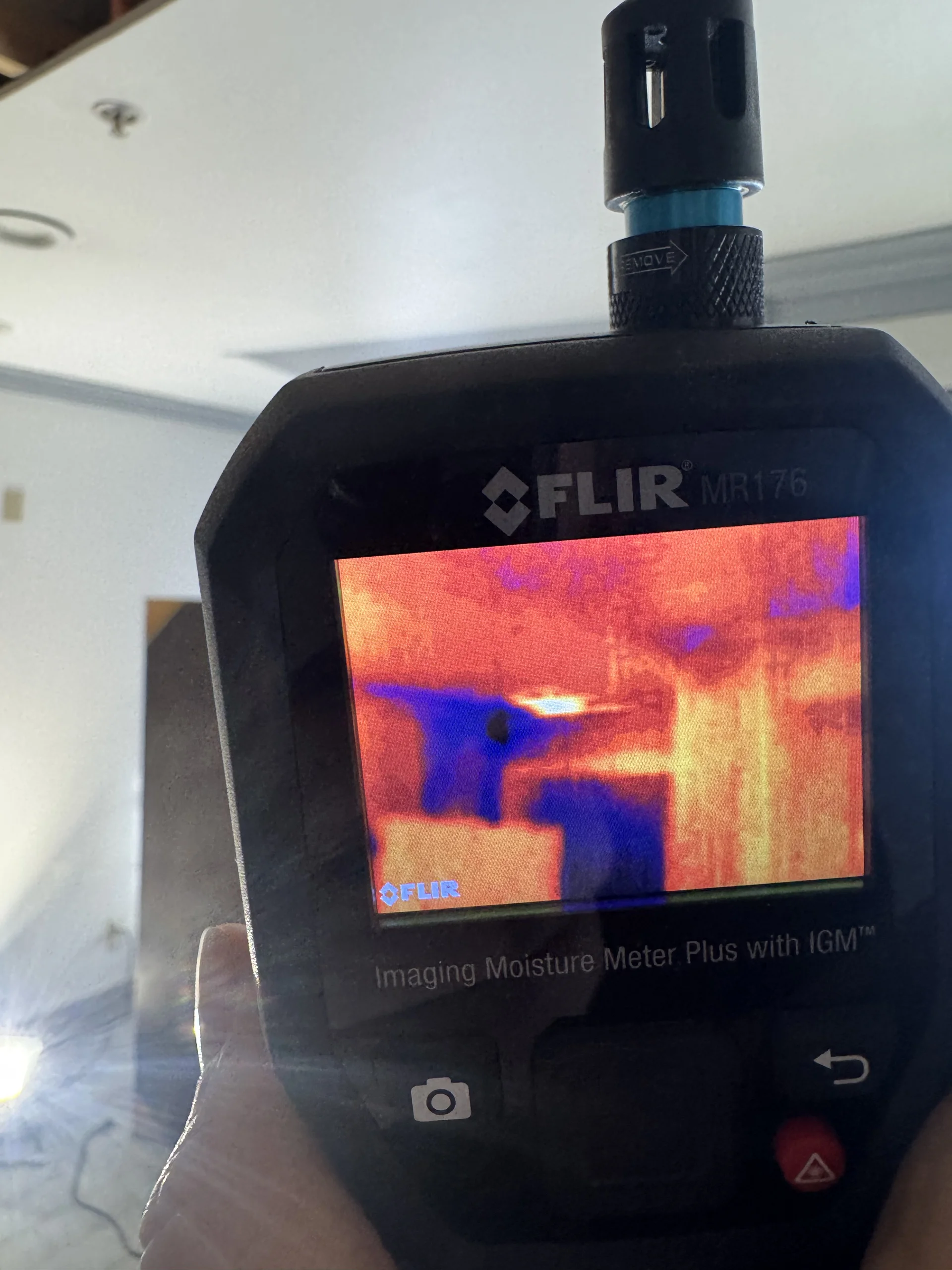 An imaging moisture meter on a water damage job. Tools like this help find damp you cannot see.
Standing water in a crawl space is something to fix, not live with. Government building guides treat it as a sign that rain or groundwater is not being kept away from the house. If there is water now: stay away from wet wiring, check whether a pipe is leaking, get the water out and dry the space, ideally within 24 to 48 hours. Then fix the cause, starting with gutters, downspouts and the slope of the ground, and add a sump pump and a proper vapor barrier if water keeps coming back.
A crawl space is easy to ignore until you open the hatch and see a puddle. This guide covers whether that is normal, why it matters, what to do first, where the water usually comes from and how to keep it out, plus what insurance is likely to cover.
Our sources are the EPA, the CDC, the U.S. Department of Energy, the U.S. Forest Products Laboratory, the Insurance Information Institute, and Michigan’s insurance and licensing departments. We are a water damage restoration company, so removing water and drying is work we sell; we have tried to be clear about what you can do yourself.
Is water in a crawl space normal after heavy rain?
It is common, but none of the official guides we read calls it normal. The Department of Energy’s Building America guide to crawlspace water shows a crawl space with standing water as a “wrong” example, caused by not fixing the site conditions that let water flow in. Its advice is to deal with bulk water first.
Damp ground matters too, even without puddles. The DOE’s installer guide says a bare dirt floor lets ground moisture and soil gases into the space, and that a well-installed vapor barrier helps keep out both, including radon.
Why water in a crawl space matters
- Rot in the floor framing. A U.S. Forest Products Laboratory review explains that wood decay fungi need wet wood, and at moisture contents below 20% their development is completely inhibited; the long-standing guideline is to keep wood below 20%. Liquid water can push wood far past that quickly, and wet wood takes a long time to dry.
- Crawl spaces with bare soil run wettest. The same review found the highest moisture in floor framing over crawl spaces where the ground was not covered with a vapor barrier, and worse where drainage was poor. In studies from before about 1955, in mixed and cold climates, moisture from bare soil condensed on the coldest wood in winter when the vents were missing or closed: the sill plates, rim joists and floor joists near the outside walls.
- Mold. The EPA says the key to mold control is moisture control, and that if wet materials are dried within 24 to 48 hours, in most cases mold will not grow. If you clean up mold but do not fix the water problem, it will most likely come back.
A note on a common claim: some pages, including Google’s AI summary, say mold grows “within 24 to 48 hours.” The EPA puts it the other way round: dry things within 24 to 48 hours and mold usually will not grow.
What to do right now
- Make it safe. If wiring or electrical equipment in or near the crawl space is wet, the CDC says to turn off the power at the main breaker or fuse box, but not to walk through standing water to reach it; call an electrician instead. Never switch power or use electric tools while standing in water.
- Check for a plumbing leak. The EPA’s WaterSense program suggests reading your water meter before and after a two-hour period when no water is used. If the reading changes at all, you probably have a leak. A leak needs a plumber before anything else.
- Take photos before you clean up, and if the cause may be covered, tell your insurer as soon as possible. Michigan’s insurance department also says to keep receipts for emergency work.
- Get the water out with a pump or wet vacuum.
- Dry the space. Aim to dry wet materials within 24 to 48 hours. The EPA suggests dehumidifiers where needed and indoor humidity below 60%, ideally 30 to 50%; a humidity meter costs about $10 to $50.
- Call a professional if it is sewage. If the water came from a sewer line or smells like sewage, the EPA says to use a professional experienced with contaminated water. Our guide to Category 3 sewage water explains why.
- Check for mold. For mold covering more than about 10 square feet, or a lot of water damage, the EPA points to its professional remediation guidance, and says any contractor you hire should have experience with mold. See how crawl space mold is remediated.
Water under your house right now?
We remove water, find the hidden moisture and dry the structure, 24/7 across Kent and Ottawa County. We are there in under 60 minutes on most calls, and we bill your insurer directly.
(616) 822-1978Where the water usually comes from
- Rain that is not carried away. Gutters and downspouts that empty next to the foundation, ground that slopes toward the house, and patios, walks or driveways that slope toward it. Leaky crawl space vents and window wells let water in too (Building America).
- Groundwater. Water that seeps under the foundation walls, or a water table that rises during storms (Building America).
- Plumbing. Leaking supply or drain lines, and pipes that freeze and split in winter. See our guide to frozen pipes. The EPA also notes that cold water pipes can sweat in humid air, and suggests insulating them.
- The ground itself. Moisture rising from a bare dirt floor (DOE).
How to keep water out of your crawl space
The Building America guide puts the fixes in order: stop the bulk water first, then control moisture.
- Gutters, downspouts and grading. Make sure gutters and downspouts carry rainwater away from the foundation, and that the ground slopes away from the house. The EPA gives the same advice: keep gutters clean and repaired, and the ground sloping away so water does not collect around the foundation.
- Drainage. Drain pipes around the outside footings that run to daylight or a drywell. Patios and driveways that slope toward the house may need regrading or drains.
- A sump pump in the lowest part of the crawl space, if water still collects. The guide describes a plastic pit 2 to 3 feet deep with holes drilled in the bottom, so rising groundwater is pumped away before it reaches the floor, and a tight-fitting, gasketed lid. It also warns that a sump pump alone cannot fix water getting in. See how to check that a sump pump is working.
- A vapor barrier over the whole floor. The DOE’s 2024 installer guide says:
- at least 6-mil plastic with a perm rating of 0.1 or less;
- 100% coverage, running at least 6 inches up the walls, piers and columns;
- seams overlapped at least 12 inches, and the edges sealed to the foundation;
- seams and penetrations sealed only in unvented (sealed) crawl spaces;
- and the barrier must not interfere with the drainage.
- Sealing the crawl space, only once it is dry. The Building America guide covers converting a vented crawl space to a sealed, insulated one. It says moisture problems must be dealt with first, describes sealing the vents and windows and adding an exhaust fan that pulls damp air out, and recommends checking temperature, humidity and the moisture in the rim and floor joists for about a year afterward.
A vapor barrier is for ground moisture, not for running water. If you find water on top of or under it, water is still getting in, and the fix is outside or at the source.
Does homeowners insurance cover water in a crawl space?
It depends on the cause. According to the Insurance Information Institute:
- Accidental discharge or overflow of water from plumbing, heating, air conditioning or a household appliance, and the freezing of a plumbing system, are standard covered perils.
- Flood is excluded from standard homeowners policies and needs separate flood insurance.
- Damage caused by lack of maintenance is not covered, and mold generally is not either.
- Sewer backup is not covered unless you added it to your policy.
Michigan’s insurance department adds that storm-related rainwater intrusion and sump pump failure may be covered, depending on your policy. It suggests telling your insurer you have water damage, rather than calling it a flood, because flood has a special meaning in insurance. Read your policy and talk to your agent.
Cost, and who to call
We did not find a neutral source for typical prices. The cost depends on the cause: clearing a gutter is cheap, while drainage work, a sump pump or a sealed crawl space costs more. Get written estimates that state the total price, the payment terms, the materials and the expected time, as Michigan’s licensing department advises.
- A plumber for a leaking pipe.
- A water damage restoration company to remove the water and dry the space and the framing.
- A licensed contractor for drainage or waterproofing. In Michigan, jobs of $600 or more in labor and materials must be done by a licensed contractor; basement waterproofing, excavation and gutters are licensed trades. You can ask to see the contractor’s pocket card or check the license online.
Frequently Asked Questions
Is it normal to have water in a crawl space after heavy rain?
It is common, but none of the official guides we read treats it as normal. The U.S. Department of Energy’s Building America guide shows standing water in a crawl space as the result of site problems that were not fixed, such as ground sloping toward the house or gutters and downspouts that do not carry water away. Fix those first.
How serious is water in a crawl space?
It is worth fixing promptly. The floor framing sits right above it, and the U.S. Forest Products Laboratory says wood decay fungi stop developing when wood stays below about 20% moisture, which is the long-standing guideline for preventing rot. Liquid water can push wood well past that quickly, and wet wood is slow to dry. The EPA says to dry wet areas within 24 to 48 hours to prevent mold.
How do I get water out of my crawl space?
First make it safe: if wiring or equipment is wet, the CDC says to turn off the power at the main breaker, but not to stand in water to reach it. Remove the standing water with a pump or wet vacuum, then dry the space with air movement and a dehumidifier. If water keeps coming back, fix the source: gutters, downspouts and grading first, then a sump pump if needed.
Will homeowners insurance cover water in my crawl space?
It depends on where the water came from. A sudden leak from a pipe, the heating system or an appliance, and pipes that freeze, are generally covered perils. Flood is excluded from standard policies, and so is damage from lack of maintenance. Michigan’s insurance department says storm rainwater intrusion and sump pump failure may be covered depending on your policy, so read it and ask your agent.
How much does it cost to fix water in a crawl space?
We did not find a neutral source for typical prices, and it depends on the cause. Cleaning gutters or extending a downspout costs little; drainage work, a sump pump or a sealed vapor barrier costs more. Get written estimates that state the total price, payment terms, materials and expected time, as Michigan’s licensing department advises.
Who do I call for water in my crawl space?
A plumber if a pipe is leaking, a water damage restoration company to remove the water and dry the space, and a licensed contractor for drainage or waterproofing work. In Michigan, LARA says jobs of $600 or more must be done by a licensed contractor; basement waterproofing, excavation and gutters are licensed trades.
Why is there water under my vapor barrier?
A vapor barrier keeps ground moisture out of the air; it does not stop water flowing in. Water under or on top of it means water is still getting into the crawl space. The Building America guide says to deal with drainage first, and the DOE says a vapor barrier should not interfere with established drainage.
How thick should a crawl space vapor barrier be?
The DOE’s 2024 installer guide says at least 6-mil plastic with a perm rating of 0.1 or less, covering the whole floor and running at least 6 inches up the walls and piers, with seams overlapped at least 12 inches. An older DOE Building America guide says 6-mil or thicker, run 8 to 12 inches up the walls. Google’s AI summary mentions “20mm”, which none of these sources says.
Should I run a dehumidifier in my crawl space?
It helps once the standing water is gone. The EPA suggests using dehumidifiers when needed and keeping indoor humidity below 60%, ideally 30 to 50%, which you can check with an inexpensive humidity meter. For sealed crawl spaces, the Building America guide also describes an exhaust fan that pulls damp air out.