Wet carpet: when it can be saved, how to dry it, and when the pad or carpet has to go.
Why the type of water decides everything, the 24 to 48 hour window, the pad, drying it properly, the floor underneath, musty smells, washing machine floods and insurance.
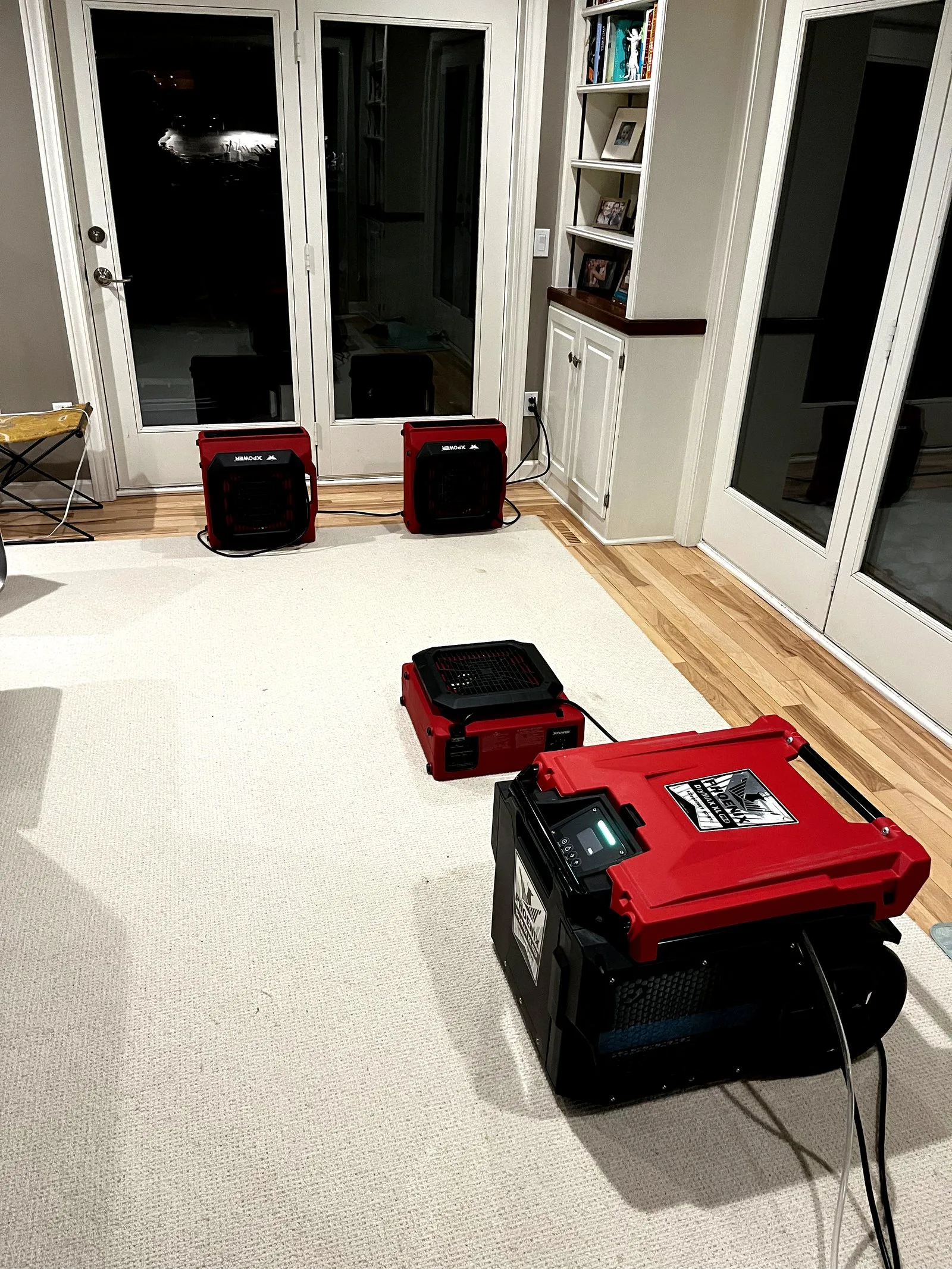 A dehumidifier and air movers drying a carpeted living room.
Whether wet carpet can be saved depends on two things: what kind of water it was and how long it stayed wet. Carpet soaked by clean water, such as a broken supply line or an overflowing sink, can often be cleaned and dried if drying starts within 24 to 48 hours. The pad underneath is usually replaced. Water from a washing machine or dishwasher needs professional cleaning, and carpet soaked by sewage or floodwater should be thrown away. Pull out as much water as you can, keep off it, and dry the room with fans and a dehumidifier.
A soaked carpet is one of the most common sights after a leak, and one of the first things people ask about: can it be saved? Often it can. This guide explains how to tell, how to dry carpet properly, why the pad and the floor underneath matter, and when it is time to replace it.
First steps
- Stop the water. Turn off the supply to the leaking appliance or fixture, or the main valve.
- Work out where the water came from (see the next section). It decides almost everything.
- Keep off the wet carpet. Water weakens the backing, and walking on it can make the backing separate from the carpet.
- Move furniture off the carpet so it cannot stain the carpet or get damaged itself.
- Pull out as much water as you can with a wet/dry vacuum, then blot with dry towels.
- Take photos of the water, the carpet and the source before anything is removed.
- Start drying with fans, the air conditioner and a dehumidifier. Keep windows closed while a dehumidifier runs.
What kind of water was it?
- Clean water: a broken water supply line, a sink or tub that overflowed, or rainwater. If it is caught quickly, carpet soaked by clean water can often be cleaned and dried.
- Gray water: water from a washing machine or dishwasher, a broken aquarium or a punctured waterbed. It is not clean. Carpet soaked by gray water needs professional cleaning with hot water extraction and a disinfectant, and the pad must be thrown away.
- Black water: sewage, or floodwater from rivers, streams or outside. Carpet and pad soaked by black water should be removed and thrown away. Assume it carries germs, wear gloves, and do not run fans until it is cleaned up.
Water does not stay clean for long. Gray water left for more than about 48 hours can become as contaminated as black water. Our guide to sewage backups and Category 3 water covers the dirtiest kind in detail.
The 24 to 48 hour window
Carpet and pad should be dried within 24 to 48 hours. After that, mold can start to grow in the pad and backing, and carpet that has been wet for about two days or more often cannot be saved. If you cannot get it drying within a day or so, it is usually better to have it professionally extracted, or removed and replaced, than to leave it.
The pad almost always goes
The pad under the carpet soaks up water like a sponge and is nearly impossible to clean properly. In most cases it is replaced. A pad can sometimes be kept if only part of it got wet, the water was clean, and it was dried within 48 hours. A pad soaked by washing machine water, sewage or floodwater must always be replaced.
Soaked carpet?
We extract the water, dry the carpet and the floor underneath, and replace what cannot be saved across Grand Rapids and West Michigan.
(616) 822-1978How to dry wet carpet properly
- Extract first. The more water you pull out with a wet/dry vacuum or a professional extractor, the faster everything dries. Fans alone are slow.
- Lift the carpet if it is soaked through. Carpet laid over tack strips can be pulled back so the pad can be cut out and air can reach the floor. It can then be cleaned and relaid.
- Small leak? Pull up and prop the wet section, cut away the wet pad, and dry the floor underneath.
- Do not leave a carpet propped up for days to dry completely. It can stretch out of shape and may not lie flat again.
- Move air and remove moisture. Run fans and the air conditioner, and use a dehumidifier with the windows closed.
- Glued-down carpet without a pad, wet from clean water, can usually be dried and cleaned in place.
- Clean it once it is dry. Vacuum, shampoo or have it professionally cleaned, dry it again and vacuum again. Most modern carpet is nylon and should not be treated with bleach.
Check the floor underneath
Wet carpet often means a wet subfloor. If the subfloor is plywood, take up the wet carpet and pad and let the plywood dry completely. If it is particleboard, it swells and breaks down when it stays wet for a few days, and usually needs replacing. Concrete basement floors need to dry out too. Never put pad and carpet back down until the floor is completely dry. If the carpet sits next to wood flooring, our guide to water-damaged hardwood floors explains how those are dried and repaired.
Getting rid of the musty smell
Once the carpet is completely dry, sprinkle baking soda over it, work it in with a broom or sponge mop, leave it overnight, and vacuum twice, the second time in a different direction. If a musty smell keeps coming back, something is still damp or mold is growing in the pad, backing or floor. Deodorizing will not fix that; finding and drying the moisture will.
Basements: when carpet keeps getting wet
Carpet that gets wet again and again from basement seepage is usually not worth saving, and a damp basement is a poor place for carpet in the first place. Fix the water problem before laying new flooring. Our guides to what to do when your basement floods and basement mold cover the causes.
Washing machine floods
A split washing machine hose can put a lot of water on the floor very quickly, often into carpet in the next room or the basement below. Washing machine water counts as gray water, so:
- turn off the water valves behind the washer and unplug it if you can do so safely;
- wear gloves while you clean up;
- expect the carpet pad to be replaced, and the carpet to need professional hot water extraction and disinfecting; and
- check the ceiling and walls below the laundry room for water stains.
Look at the washer hoses now and then for bulges, cracks or damp fittings, and replace any that look worn.
When to call a professional
- the water was from a washing machine, dishwasher, sewage or flooding;
- the carpet has been wet for more than a day or so, or you cannot get it drying quickly;
- a large area is soaked, or water has reached the floor below or the walls;
- the carpet smells musty or you can see mold; or
- it is a valuable rug.
Does insurance cover wet carpet?
It depends on where the water came from. Sudden, accidental water from inside the house, such as a burst pipe or a split washing machine hose, is usually covered. A slow leak that went on for weeks usually is not, and floodwater from outside is only covered by flood insurance. Take photos, check with your insurer before you throw the carpet away, and keep a piece of it if they ask. Our guides to whether homeowners insurance covers water damage in Michigan and documenting a water damage claim go into more detail.
Getting help in Grand Rapids
For soaked carpet in the Grand Rapids area, we can extract the water, dry the carpet and the floor underneath, clean and disinfect what can be saved, and replace pad and carpet that cannot. See our water damage restoration service in Grand Rapids.
Frequently Asked Questions
Is carpet ruined if it gets wet?
Not necessarily. Carpet soaked by clean water, such as a broken supply line or an overflowing sink, can often be saved if it is dried within 24 to 48 hours. The pad underneath usually has to be replaced. Carpet soaked by sewage or floodwater from outside should be thrown away.
How long can carpet be wet before mold grows?
Wet carpet and padding should be dried within 24 to 48 hours. After that, mold can start to grow, and carpet that has been wet for about two days or more often cannot be saved. The sooner the water is pulled out and drying starts, the better.
Will a wet carpet dry on its own?
A small damp spot may, but a soaked carpet usually will not dry fast enough on its own. The pad and the floor underneath hold water long after the top feels dry. Pull out as much water as you can, then run fans and a dehumidifier, or have the carpet professionally extracted and dried.
What should I do if my carpet is wet?
Stop the water, check where it came from, and keep off the carpet as much as you can. Move furniture off it, pull out as much water as possible with a wet/dry vacuum, then dry the room with fans and a dehumidifier. If the water was dirty, such as sewage or floodwater, do not run fans and call a professional.
Can a flooded carpet be saved?
It depends on the water. Wall-to-wall carpet soaked by clean rainwater or a clean leak can often be cleaned and dried. Carpet covered by sewage-contaminated floodwater should be discarded, because it should be assumed to carry germs. Valuable rugs can sometimes be professionally cleaned.
Does the carpet pad need to be replaced?
Usually yes. The pad soaks up water like a sponge and is nearly impossible to clean, so it is normally replaced. It can sometimes be kept if only part of it got wet from clean water and it was dried within 48 hours. A pad soaked by washing machine water, sewage or floodwater should always be replaced.
How do I get the musty smell out of carpet?
Once the carpet is completely dry, sprinkle baking soda over it, work it in with a broom, leave it overnight and vacuum it up twice, going in different directions. If the smell comes back, the carpet, pad or floor underneath is probably still damp or growing mold and needs checking.
Does homeowners insurance cover wet carpet?
Usually, if the water came from a sudden, accidental event inside the house, such as a burst pipe or a washing machine hose that split. Slow leaks that went on for weeks are usually not covered, and floodwater from outside is only covered by flood insurance. Check with your insurer before you throw carpet away.