Water-damaged hardwood floors: what can be saved, how they get dried, and when boards have to go.
What to do in the first hour, how to read cupping, crowning and buckling, why the subfloor matters, how floors get dried properly, and what insurance usually covers.
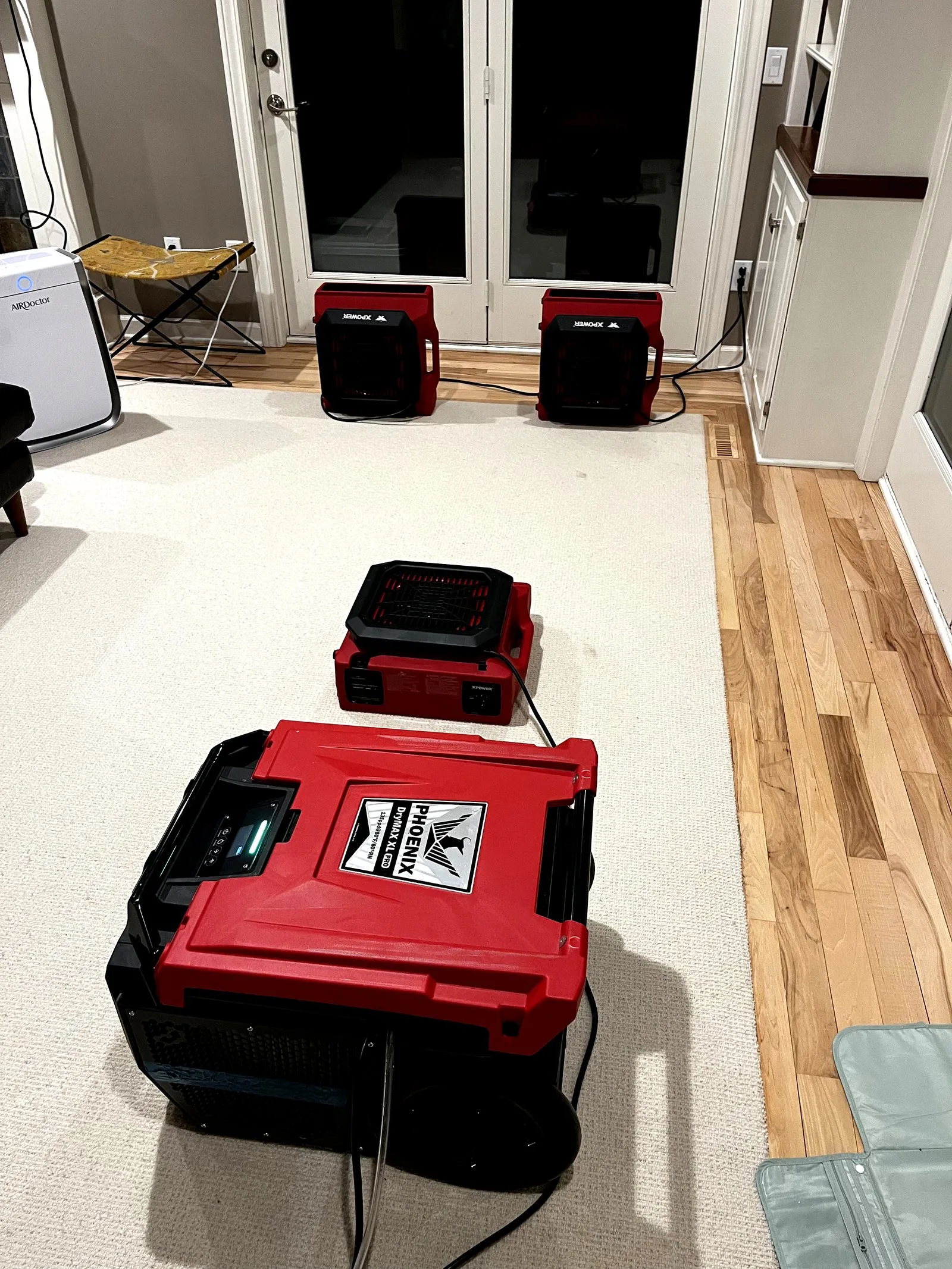 A dehumidifier and air movers drying a living room with hardwood flooring along the edge of the carpet.
Stop the water, soak up what you can, and get the floor drying right away with dehumidifiers and air moving over and, if possible, under it. Dry it slowly, without blasting heat. Then judge the damage. Boards that have only cupped often settle as they dry. Boards that have buckled, lifting off the floor, need to be replaced, and badly warped boards usually cannot be saved. Always check the subfloor underneath, because it can be wetter than the boards on top. Do not sand or refinish until everything is completely dry.
Hardwood is one of the most worrying things to see wet after a leak. The good news is that a lot of hardwood floors can be saved if they are dried properly and nobody rushes the repair. This guide covers what to do in the first hour, how to read the damage, how floors get dried, and how to tell what can be fixed and what has to be replaced.
What to do in the first hour
- Stop the water. Shut off the water supply to the leaking appliance or fixture, or the main valve if you cannot find the source.
- Check what kind of water it is. Clean water from a supply line, water heater or washing machine hose can be dealt with right away. Sewage, a backed-up drain or floodwater from outside is a different job: stay off it, do not run fans, and call a professional.
- Soak up standing water with towels, a mop or a wet/dry vacuum. The less water that sits on the boards, the less soaks into the seams.
- Move rugs, furniture and anything else off the wet floor so the boards can breathe.
- Take photos of the water, the floor and the source before anything is moved or thrown away.
- Start drying: run a dehumidifier, keep the room closed while it runs, and use fans to move air across the floor.
How to read the damage
- Cupping. The edges of each board rise higher than the middle. It means the boards have taken on moisture. Minor cupping often settles as the floor dries.
- Crowning. The opposite of cupping: the middle of each board is higher than the edges.
- Buckling. Boards lift up off the subfloor. This is the most serious sign. The nails or glue no longer hold, and the floor will not go back by itself.
- Dark or black stains, often along the seams. Water has got through the finish and into the wood.
- Gaps, splits or raised edges that were not there before.
- Soft, springy or spongy spots, which can mean the subfloor underneath is soaked or damaged.
- A musty smell, which can mean water is trapped under the floor.
Why the subfloor matters more than you think
When water lands on a wood floor, it does not stay on top. It runs through the seams and soaks into the layer underneath, called the subfloor, which is usually plywood, OSB (oriented strand board) or concrete. That hidden layer can end up wetter and more damaged than the boards you can see.
- Plywood can swell, warp and separate into layers when it gets very wet. Once it is clearly damaged, it should be replaced.
- OSB swells when wet and loses strength, so it no longer holds the flooring nails well. Damaged OSB should be replaced.
- Concrete is not usually harmed by water, but with flooring, glue or sealers on top it dries very slowly and has to be dried and tested before new flooring goes down.
If new flooring goes down over a subfloor that is still wet, the subfloor shrinks as it dries. That leaves gaps, squeaks and loose boards, or the new flooring soaks up moisture and swells. This is one of the most common ways a repair goes wrong.
Water on your hardwood floor?
We dry the floor and the subfloor properly, check them with moisture meters, and repair or replace what cannot be saved across Grand Rapids and West Michigan.
(616) 822-1978How a wet hardwood floor gets dried properly
- Slow and steady. Wood floors should be dried gradually. Drying them too fast with a lot of heat can crack or split the boards.
- Dehumidifiers are the workhorse. Commercial dehumidifiers pull out far more water than household ones. Keep windows and doors closed while they run.
- Get air under the floor. If there is a crawl space or unfinished basement below, open it up so warm, dry air can reach the underside of the subfloor. Insulation or plastic sheeting under the floor may need to come down until everything is dry, then go back up.
- Finished basement ceiling below? Part of it may need to come down, or holes cut between the joists, to let air circulate. Watch out for wires and pipes.
- Special floor drying systems. Restoration companies can lay drying mats on the floor that pull water out through the surface, or force air through the grooves on the underside of the boards. These can save floors that would otherwise be torn out.
- Measure, do not guess. A floor can look dry long before it is. Moisture meters compare the wet boards and subfloor with dry wood elsewhere in the house. The floor is ready for repairs when the readings match.
With commercial drying equipment, many homes can be dried in under a week. After a flood, floors and subfloors can take several weeks.
What can be saved and what has to go
- Minor cupping: often disappears, or nearly disappears, as the floor dries. Give it time before deciding anything.
- Cupping that stays after drying: can usually be sanded flat and refinished once the floor is fully dry.
- Buckled boards: need to be replaced wherever the buckling happened. The rest of the floor can usually be dried and kept.
- Badly warped hardwood: usually cannot be repaired. Old wide pine boards are the exception: they often flatten out again once they are thoroughly dry.
- Dark stains: light ones may sand out; deep black stains often mean replacing those boards.
- Soft, swollen or separated subfloor: replace the damaged sections before the flooring goes back down.
Do not sand or refinish too soon
It is tempting to sand a cupped floor flat as soon as the water is gone. Wait. Minor damage often goes away as the wood dries, and you can only judge what is left once it has. Do not refinish until the floor and subfloor are thoroughly dry and the moisture readings have settled.
Patching vs a whole new floor
You do not always need a new floor. Damaged boards can often be cut out and new ones woven into the existing floor so the joints stagger naturally. The new boards need to match the old ones in species, width, thickness and edge profile, and they should be within about 2 percentage points of the old floor's moisture content before they go in, or the patch will shrink or swell differently. The patch is then finished to match the color and sheen of the rest of the floor. If the floor cannot be saved, a new floor can sometimes be laid over the old one instead of tearing everything out.
Our guide to water-damaged drywall covers the walls around the floor, which often get wet at the same time.
Watch for mold
Wet materials should be dried within 24 to 48 hours to prevent mold. Wood that stays damp, especially under a floor where you cannot see it, can grow mold. Surface mildew on wood floors and trim can be cleaned with a phosphate cleaner, such as powdered automatic dishwasher detergent or trisodium phosphate (4 to 6 tablespoons per gallon of water), then rinsed and dried. A musty smell after the floor looks dry is a reason to check underneath. Our guide on how fast mold grows after water damage explains the timing.
Does insurance cover water-damaged hardwood floors?
It depends on where the water came from.
- Usually covered: sudden, accidental water from inside the house, such as a burst pipe, a failed water heater, a dishwasher or washing machine hose.
- Usually not covered: a slow leak that went on for weeks, such as a dripping supply line under a sink.
- Floodwater from outside: only covered by flood insurance.
Take photos before anything is removed, keep a sample of the damaged boards if your insurer asks, and call them before the floor is torn out. Our guides to whether homeowners insurance covers water damage in Michigan and documenting a water damage claim go into more detail.
Getting help in Grand Rapids
If water has got under a hardwood floor in the Grand Rapids area, we can extract the water, set up drying for the floor and the subfloor, track it with moisture meters, and then repair or replace the boards that cannot be saved. See our water damage restoration service in Grand Rapids.
Frequently Asked Questions
Can hardwood floors be repaired after water damage?
Often, yes. Boards that have only cupped, with the edges raised a little, frequently settle back as they dry. Boards that have buckled, lifting up off the floor, need to be replaced in the buckled area, and badly warped boards usually cannot be repaired. The key is to stop the water and dry the floor and the subfloor under it properly before deciding.
How long does it take hardwood floors to dry out after water damage?
It depends on how much water got in, whether it reached the subfloor, and how the floor is dried. With commercial dehumidifiers and air movers, many homes can be dried in under a week. After a flood, wood floors and subfloors can take several weeks. The floor is dry when moisture readings match dry wood elsewhere in the house, not when the surface looks dry.
Does homeowners insurance cover water damage to hardwood floors?
Usually, if the water came from a sudden, accidental event such as a burst pipe, a failed water heater or an appliance hose. Damage from a slow leak that went on for weeks is usually excluded, and floodwater from outside the house is only covered by flood insurance. Take photos and call your insurer before boards are thrown away.
What do water-damaged hardwood floors look like?
Common signs are cupping, where the edges of each board rise above the middle; buckling, where boards lift up off the floor; dark or black stains, often along the seams; gaps or raised edges; and spots that feel soft or springy when you walk on them. A musty smell can mean water is trapped underneath.
Should the subfloor be replaced after water damage?
Not always. A subfloor that gets wet briefly can often be dried. Plywood that has swollen, separated into layers or gone soft, and OSB that has swollen, should be replaced, because it no longer holds nails well. The subfloor must be fully dry before new flooring goes on top of it.
Will cupped hardwood floors flatten out?
Minor cupping often goes down or disappears as the boards dry out. That is why the floor should be dried and given time before anyone sands it. If the boards stay cupped once everything is dry, they can usually be sanded flat and refinished. Badly warped boards usually need replacing.
Can I use a fan or heater to dry a wet wood floor?
Fans and a dehumidifier help, and steady, moderate warmth is fine. Avoid blasting the floor with heat. Wood that dries too fast can crack or split. If the water was dirty, such as sewage or floodwater, do not run fans until it has been cleaned up, because they can spread contamination.
How do I get black water stains out of a hardwood floor?
Dark stains usually mean water got through the finish and into the wood. Light marks sometimes sand out when the floor is refinished, but deep black stains often need the affected boards replaced. Make sure the floor is completely dry before any sanding or refinishing.