Water-damaged drywall: can it be dried, how much to cut out, and how it gets fixed.
How to tell whether wet drywall can stay, what a flood cut is and how high to cut, why wet insulation usually decides it, and how the wall is repaired.
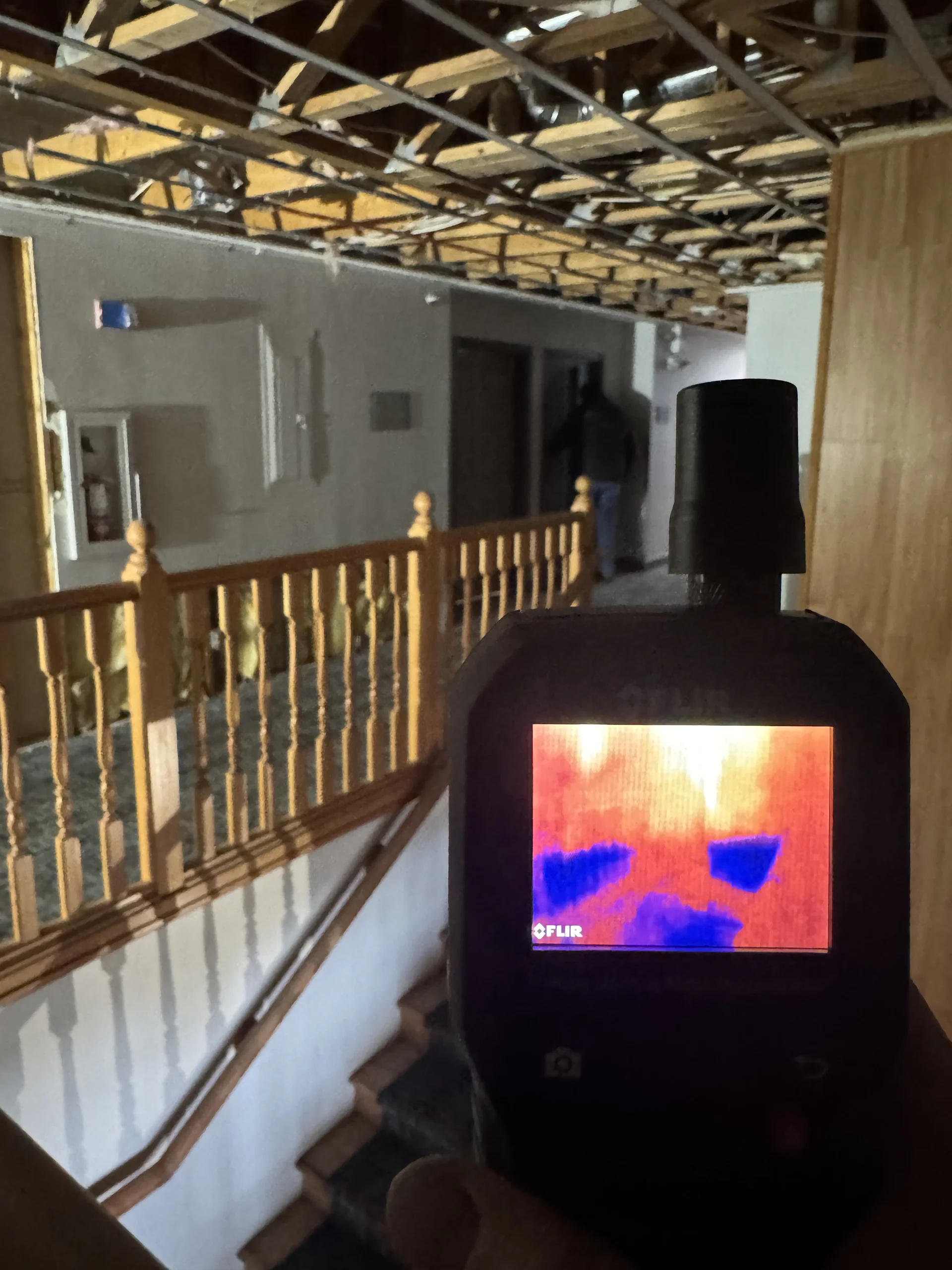 On one of our water damage jobs: the wet ceiling drywall has come down so the space above can dry, and a thermal imaging meter checks what is still wet.
Drywall that got wet with clean water can often be dried in place, as long as it has not swollen, gone soft or sagged, the seams are intact and drying starts quickly. It has to come out if it is soft, swollen, crumbling, sagging or moldy, if the insulation behind it is soaked, or if the water was sewage or floodwater. When it comes out, the usual method is a flood cut: a straight cut across the wall above the wet area, so the wet board and insulation can be removed and the framing can dry. Then the wall is checked with a moisture meter, closed up, taped, primed and painted.
A stain, a soft spot or a bulge in a wall or ceiling raises the same question every time: can this be dried, or does it have to come out? The answer depends on four things: where the water came from, what the drywall looks and feels like, what is behind it, and how fast drying starts. This guide walks through each one, explains flood cuts, and covers the repair.
We are a water damage restoration company in Grand Rapids, so drying walls and replacing drywall is work we sell. Where a small job is fine to do yourself, we say so.
Step one: stop the water and work out where it came from
Nothing gets dried or repaired until the leak has stopped. Close the water valve to the fixture or the main shut-off, or get the roof covered. Turn off power to the area if water is near outlets, switches or lights.
Then think about the water itself, because it changes everything that follows:
- Clean water, such as a burst supply pipe, a leaking water heater or rain through a roof, gives you the best chance of drying drywall in place.
- Dirty water, such as sewage from a floor drain or toilet, or floodwater from outside, contaminates porous materials. Drywall and insulation soaked by it should come out, and the cleanup needs protective gear and a professional crew. Do not run fans until you know the water was clean, because they can spread contamination. Our guide to Category 3 water explains why.
Can it be dried in place?
Drywall wet with clean water can usually stay if all of these are true:
- there is no obvious swelling, and the seams and tape are still intact;
- it feels firm when you press it, not soft, spongy or crumbly;
- it is not sagging or pulling away from the studs or joists;
- the insulation behind it is not soaked; and
- drying can start quickly, ideally within 24 to 48 hours.
If any of those fail, the section should come out. A ceiling that has sagged has to be replaced. See our guide to water leaking from the ceiling for what to do while it is still holding water.
Drying in place still means drying the inside of the wall, not just the face. Small holes near the bottom of the wall, behind where the baseboard sits, let air reach the cavity. After clean water, cutting a 4- to 12-inch strip at the bottom and at the top of the wall creates a chimney effect that moves air through the cavity and speeds drying.
The stain does not tell you how far the water went. Drywall soaks water upward and sideways well past the visible line, and it often bows or swells above the high-water mark. A moisture meter or thermal camera shows where the wet area really ends.
Why the insulation usually decides it
Fiberglass batts and cellulose insulation that have been soaked should be removed and replaced. They hold water against the wood framing for a long time, block air from reaching it, and keep the wall wet long after the drywall face looks dry. Cellulose also settles when it gets wet. Rigid foam boards can sometimes stay, as long as they are not pressed against the studs or sheathing.
You cannot get wet insulation out without opening the wall. That is the most common reason drywall that looks fine still has to come out.
What is a flood cut, and how high should it be?
A flood cut is a straight, level cut across the wall above the wet area. Everything below the line, the drywall and the wet insulation, is removed, and the board above it stays. It opens the wall so the studs can dry, and it leaves a clean edge to patch to.
- The minimum is the highest water line. Drywall that was under water must be replaced.
- In practice, cut higher, above the point where the board is swollen or the meter still reads wet, because water climbs past the visible line.
- Straight lines at 2 or 4 feet are common, because drywall sheets are 4 feet wide and a cut at those heights makes the new pieces fit with one clean seam.
- Older homes with fire blocks (horizontal boards between the studs, common in older balloon-frame houses): if a block sits at or below the water line, remove another 6 to 12 inches above it so the space above can dry.
There is no single fixed height for every job. The water line, the moisture readings, the insulation and the way the wall is built set it.
Before anyone cuts: wiring, pipes, asbestos and lead
- Power off to that wall at the breaker, and watch for pipes, ductwork and wiring. Cut shallow, or use only the tip of the saw blade.
- Asbestos. Some older building materials can contain asbestos, and you cannot tell by looking. If you are not sure, treat it as asbestos: do not saw, sand or scrape it, and have it tested by an accredited professional. Damaged material, like crumbling drywall, is a reason to test before you remodel.
- Lead paint. Homes built before 1978 often have lead-based paint somewhere. Cutting or sanding painted walls can create lead dust, which is especially dangerous for young children. Anyone you pay to disturb paint in a pre-1978 home has to be certified in lead-safe work practices. If you do it yourself, use lead-safe methods.
- Sewage or floodwater: leave the cutting to a professional crew.
Wet walls or ceilings?
We map the moisture with meters and thermal imaging, remove only what cannot be dried, dry the framing and rebuild the walls, 24/7 across Kent and Ottawa County. We are there in under 60 minutes on most calls, and we bill your insurer directly.
(616) 822-1978Drying the wall
Once the wall is open, air movers push air across the studs and dehumidifiers pull the moisture out of the room. Keeping the house warmer than outside lowers the humidity and helps. Open windows only when the air outside is drier than inside.
How long it takes depends on how wet the wall got, the materials and the weather. Walls soaked in a flood can take weeks to dry on their own. Commercial dehumidifiers and air movers can often do it in less than a week.
The wall is dry when the readings say so, not when it looks dry. We compare the wet area with an unaffected wall of the same material and keep drying until they match. Closing a wall that is still wet traps the moisture and invites mold. Our guide to how fast mold grows after water damage explains the 24 to 48 hour window.
How the wall gets fixed
- Confirm the framing is dry and check it for rot or mold.
- Replace the insulation that was removed.
- Cut new drywall the same thickness as the old (usually 1/2 or 5/8 inch) and screw it to the studs.
- Tape and mud the seams in thin coats, sanding lightly between them, until the patch blends in.
- Prime and paint. A stain-blocking primer stops old water stains bleeding through. Match the texture and the sheen, or the patch will show.
For drywall that dried in place and is still firm, the repair may be just a stain-blocking primer and paint. Do not paint over mold: clean it up and dry the surface first.
Does insurance pay for it?
It depends on what caused the water. Under the standard homeowners form, sudden and accidental water from a plumbing system or a household appliance is usually covered, including tearing out and replacing part of the building when that is needed to reach and fix the pipe. The pipe or appliance itself usually is not. Slow leaks, wear and tear, and deterioration are excluded, and so are flooding and groundwater seeping in. Our basement flooding insurance guide explains those.
Take photos of the wet walls before anything is cut, keep receipts for emergency work, and do not throw out damaged material until your insurer says you can. Our guides on water damage and insurance in Michigan and what to document for a claim go further.
When to call a professional
- the water was sewage or floodwater;
- the insulation behind the wall is soaked;
- a ceiling is sagging;
- the wet area is more than a small patch, or covers more than one room;
- there is a musty smell, or mold covering more than about 10 square feet;
- the house is older and you are not sure about asbestos or lead paint.
If you are in the city, see our page on water damage restoration in Grand Rapids. For basements, start with what to do if your basement floods.
Frequently Asked Questions
Does wet drywall always need to be replaced?
No. Drywall that got wet with clean water can often be dried in place if it has not swollen, gone soft or sagged, the seams are still intact, and drying starts quickly. It has to come out if it is soft, swollen, crumbling, sagging or moldy, if the insulation behind it is soaked, or if it was soaked by sewage or floodwater.
How long can drywall stay wet before it has to be replaced?
There is no exact cutoff. The goal is to get it dry within 24 to 48 hours, because materials dried that fast usually do not grow mold. Drywall that stays wet longer is more likely to swell, lose strength and grow mold, but the decision still comes down to the water source and the condition of the board, not just the clock.
How high should a flood cut be?
At least up to the highest water line, and above any part that is still wet or swollen, because drywall soaks water upward past the visible line. A moisture meter shows where the wet area really ends. Crews often cut along a straight line at 2 or 4 feet, because drywall sheets are 4 feet wide and that makes the repair cleaner.
Do I need to remove the insulation behind wet drywall?
Usually, yes. Fiberglass and cellulose insulation that has been soaked should be removed and replaced, because it holds water against the studs and stops the wall from drying. Rigid foam boards can sometimes stay if they are not pressed against the wood framing. Wet insulation is the most common reason a wall has to be opened.
Can I dry wet drywall myself?
For a small area wet with clean water, often yes: stop the leak, use fans and a dehumidifier, and open windows if the air outside is dry. Do not run fans until you know the water was clean. Check the wall with a moisture meter before you paint or close anything up. Call a professional for sewage, floodwater, soaked insulation, a sagging ceiling or a large area.
How do I know when drywall is dry?
Not by touch. Drywall can feel dry on the surface while the back of the board, the insulation and the studs are still wet. A moisture meter reading that matches an unaffected wall of the same material is the reliable test.
Can I just paint over a water stain on drywall?
Only after the leak is fixed and the wall is dry all the way through, and only if the board is still firm. Paint over a wet wall can hide a leak that is still going, and paint put over mold is likely to peel. A stain-blocking primer under the paint stops the stain showing through.
Does homeowners insurance pay to replace water-damaged drywall?
Often, when the water came from a sudden, accidental leak such as a burst pipe or appliance hose. The standard policy form also covers tearing out part of the building when that is needed to reach and fix the leaking pipe. Slow leaks, wear and tear, and flood or groundwater are usually excluded. Check your own policy and call your insurer.